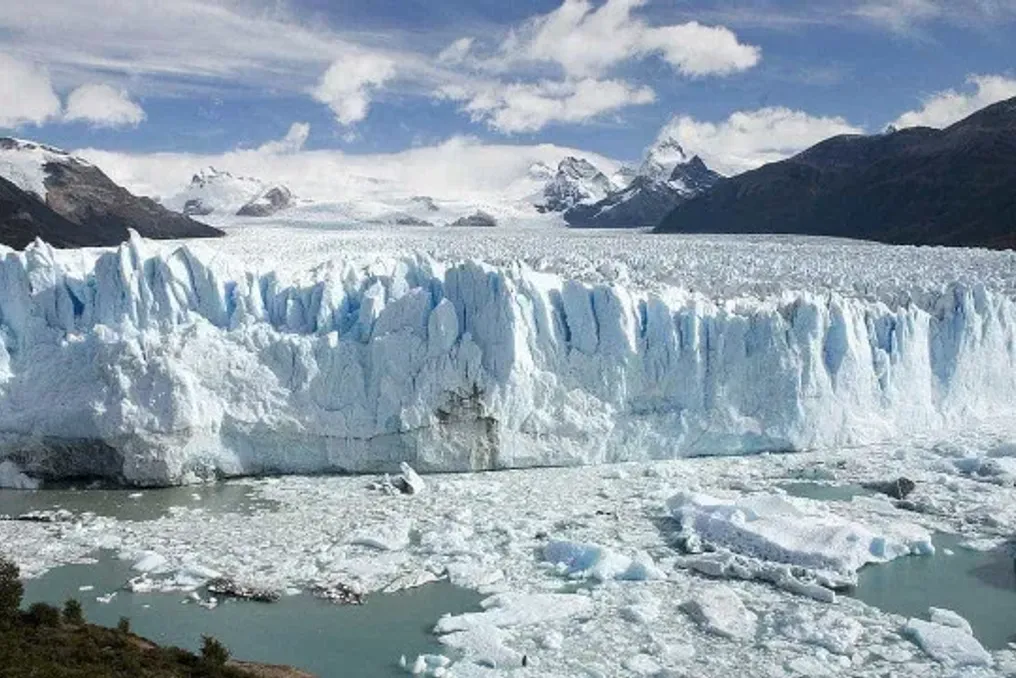
Alpine glaciers face serious long-term survival risks under current climate conditions, according to a statement today from the Swiss glacier monitoring service GLAMOS and the Swiss Academy of Sciences.
Experts indicate that the trend of ice loss has intensified in recent years; in the last five years alone, the volume of ice in Switzerland has decreased by almost one-fifth.
This scientific report reinforces growing concerns about the damage caused by global warming in Europe, a continent that exhibits faster warming rates globally.
Matthias Huss, head of GLAMOS, stated that the current warming can be entirely attributed to anthropogenic climate change, emphasizing that without human emissions or the use of fossil fuels, there would be no warming at this time.
The most significant retreat of glacial ice in Switzerland occurred in 2022. This event resulted from a combination of intense summer heat, low winter snowfall, and an unusual dispersion of reddish dust from the Sahara, which darkened the glaciers and increased their heat absorption.
Huss explained in an interview at the Federal Institute of Technology ETHZ, where he teaches glaciology, that winter snow cover is crucial for two reasons. Firstly, it protects exposed ice from melting, delaying the loss of old ice as long as the snow persists.
Secondly, snow is vital for the formation of new ice, as the greater the amount of snow, the greater the potential to maintain snow at high altitudes and create new ice.
The major melt observed in the European Alps is not an isolated phenomenon. Experts point out that global warming also contributed to the destabilization of a slope in the Himalayas, which collapsed in August, resulting in catastrophic and fatal floods in Nepal.
Satellite observations have confirmed a considerable shrinkage of glaciers in regions such as Greenland and Antarctica over the past five decades.
Experts reported that the 'extreme melting' experienced by Swiss glaciers this year involved a reduction in the average thickness of individual glaciers between 2.5 and 4 meters.
Teams of experts were mobilized to assess the runoff and fissures generated by running water through the glaciers, using red dye in some streams to map the water flows.
Among the glaciers that recorded the greatest historical melt this year were Allalin, Clariden, Rhône, and Aletsch, the latter being the largest in the Alps.
