Challenges in Accessing Finance for South African Farmers and Solutions
Read more
Food For Mzansi
foodformzansi.co.za

Challenges in Accessing Finance for South African Farmers and Solutions

Access to financial resources remains a significant challenge for the agricultural and food sectors of South Africa; however, participants at the South African Food Future Conference in Centurion concluded that the difficulty is not simply a lack of capital.

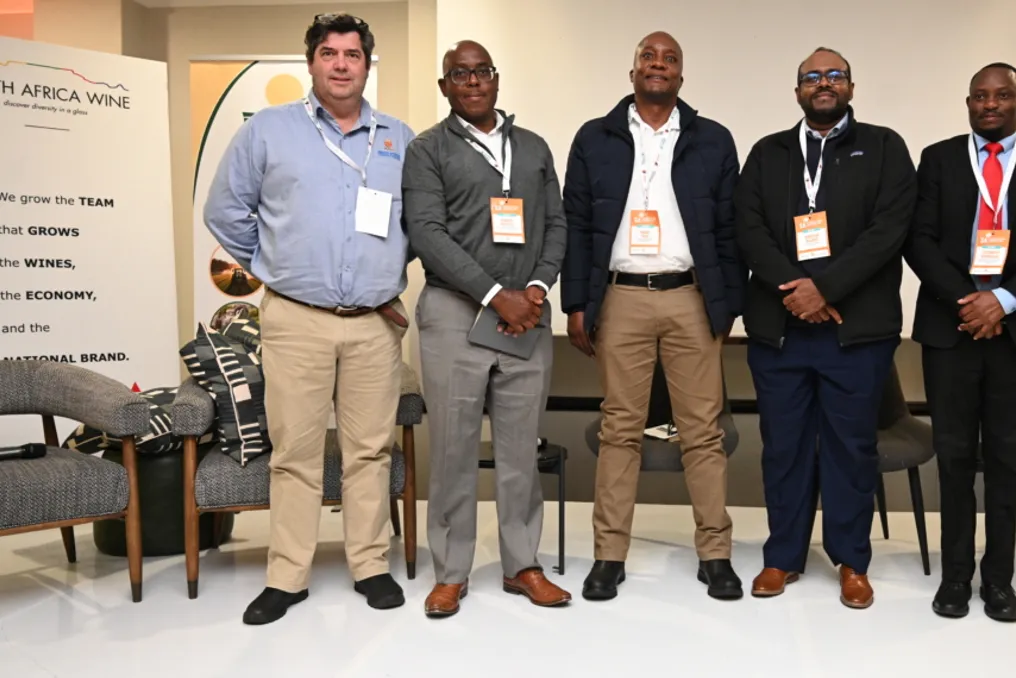
The conference, organized by Food For Mzansi with support from Land Bank and South Africa Wine, gathered stakeholders to explore ways to improve support for farmers and businesses across the entire food system.

Robert Matsila, Head of Agricultural Banking and Support Monitoring at Land Bank, explained that the demand for the bank's products in land and financing was so high that it exhausted the grant component.

Matsila noted: 'The bank has exhausted the grant component for land and financing solely due to the high demand we observed.' He added that Land Bank is negotiating with the government about a possible increase in funds and is also considering how to use its own resources to support farmers during the critical grain sowing period in the summer.

'The bank will provide subsidized loans mixed with commercial loans so that farmers can continue planting,' he stated.

Risk Remains a Central Element of Financing

Deon Shepers, a lecturer in Agricultural Economics, Extension, and Rural Development at the University of Pretoria, argued that the main problem is not the availability of money, but the adequacy of risk solutions associated with agricultural investments.

'There is no doubt that there is enough money in the system,' said Shepers. 'Why isn't it going where it needs to go? The answer is risk.'

Shepers, who also deals with crop insurance and farming, emphasized that reducing risks could stimulate capital flow into parts of the agricultural sector where financing is currently difficult to obtain. He added: 'Money goes where it feels safe. And money goes where there is income.'

He also pointed to difficulties related to land rights and collateral, especially when farmers lack title deeds that could be used as security.

Financial Inclusion Requires Readiness

Quinton Naidu, Head of Socio-Economic Development at Kagiso Trust, reported that the organization received hundreds of applications for agricultural financing but returned some funds last year because it could not deploy them. 'The money is there. The problem is that the systems cannot accept the capital for risk reasons, for reasons we call readiness,' noted Naidu.

Kagiso Trust assesses applicants based on the so-called 'three Es': entrepreneur, enterprise, and ecosystem. He explained that some applicants had strong ideas and technical expertise, but their business was not yet commercially viable.

In response, the organization developed a readiness assessment system and a 'capital ladder' that includes readiness financing, subsidized loans, and other financial products to help enterprises ultimately gain access to mainstream commercial finance.

Developing Finance for the Right Business

Chatbert Kambandje, an expert in agro-food systems, investment, and policy at the regional office of the Food and Agriculture Organization of the UN for South Africa, stated that financial instruments must be designed considering the realities of small and fragmented agricultural enterprises.

He noted that financing tends to follow functioning systems, institutions, and information, whereas many risks facing agriculture are regional rather than confined to individual countries. Kambandje also questioned whether grants alone provide sufficient de-risking to attract commercial capital. 'Money is everywhere. But it doesn't move where it should because we are not mitigating the risk,' he concluded. He called for a combination of financial and regulatory tools, as well as closer regional cooperation, including investments along economic corridors.

Alternative Approaches to Agricultural Financing

Diale Tilo, Executive Director of Kgodiso Development Fund, reported that the fund considers enterprises across the entire food chain: from pre-production and farming to processing, manufacturing, packaging, transportation, and storage. Unlike traditional lending models, Kgodiso does not require physical collateral or equity contributions for the enterprises it finances and can cover 100% of the required amount, according to Tilo. However, enterprises must demonstrate the ability to generate sufficient cash flow to repay the capital and interest.

'Every business has a cycle,' Tilo explained, clarifying that this cycle can range from daily or weekly to annual for grain producers. 'We need to understand what exactly you do in this cycle to turn a product or service into money.'

He stressed that the key question is whether the business has enough free cash flow after covering operating expenses to meet repayment obligations. 'For us, if you are ready, act, and want to grow, you are a suitable business for discussion.'

Tilo also highlighted the scope of opportunities across the broader food system, asserting that investments should not be limited to farming or retail of food products. Opportunities extend to processing, manufacturing, packaging, transportation, and storage. He added that the sector represents a significant opportunity for entrepreneurship and job creation, but stronger business education programs are necessary.
Similar stories

How unity, technology, and added value contribute to the profitability of farms
Read more
foodformzansi.co.za

How unity, technology, and added value contribute to the profitability of farms

Success in modern South African agriculture depends on the ability to adapt, establish thoughtful partnerships, and ensure resilience to climate change. Following the Nampo Cape 2026 event, Daniel Rossouw from Nedbank shared his thoughts on the key trends shaping South Africa's agricultural sector and how strategic collaboration can guarantee long-term commercial sustainability.

As Head of Agricultural Sales at Nedbank, Rossouw noted that this year's Nampo gathering gave the sector a new impetus and a shared sense of purpose. Faced with complex market and operational challenges, industry stakeholders are increasingly uniting to protect productivity and build sustainable growth.

Under the theme 'grow together,' the event highlighted the growing demand for collaboration across the entire agricultural ecosystem. Discussions brought together representatives from organized agriculture, agribusiness, financial institutions, and political leaders, including the Minister of Agriculture and the Minister of Land Reform and Rural Development.

Rossouw emphasized: 'For me, the drive towards greater unity in agriculture was a truly outstanding moment, and I believe very deep discussions took place.' These meetings focused on critical regional and national issues, such as the future viability of the Western Cape grain industry, current biosecurity efforts related to rinderpest vaccination, and the role of local government in maintaining rural infrastructure to support agricultural logistics.

On the exhibition floor, farmers' interest was concentrated on innovations designed to optimize efficiency and reduce environmental risks in crop and livestock farming. Demonstrations of high-quality equipment included localized weather forecasting systems and data management platforms, as well as renewable energy sources designed to protect farms from utility costs.

Equipment developed for climate-smart agriculture also took center stage, with an emphasis on zero and minimum tillage machinery that minimizes soil disturbance. For Nedbank, the main focus was on regenerative agriculture and creating practical links in the value chain to help clients effectively implement sustainable farming principles.

Highlighting the link between environmental stewardship and farm performance, Rossouw asserts that economic success and environmental responsibility are inseparable. Long-term profitability depends on conserving and restoring natural resources, especially soil health and water availability.

He explains: 'You cannot talk about profitability and sustainability without the other. It is a completely integrated system.' He adds that ultimately, any activity of a farmer or agribusiness must be profitable for more than one generation while caring for natural resources.

This focus on long-term resource management underlies the ability of a farm to remain economically viable amid changing climatic cycles and market conditions.

A significant shift in the sector is the move towards vertical integration. Since raw material producers are typically price takers in open commodity markets, moving into processing, local packaging, and specialized export logistics offers a direct path to generating additional profit. Rossouw notes: 'We definitely see a major opportunity beyond primary agriculture.' He continues that instead of increasing raw material production, the focus is on vertical integration, both up and down the value chain. If these connections can be established and greater integration achieved, he believes it will significantly benefit the raw material producer in terms of profitability.

This shift aligns closely with national development goals within the Agricultural and Agri-processing Master Plan (AAMP), which prioritizes localization, export expansion, infrastructure development, and digital integration. By integrating operations upstream or downstream, producers can reduce their exposure to raw material price volatility.

Overcoming market changes, implementing technologies, and adapting to climate requires continuous financial support and a personalized approach to risk management. Financial institutions play a crucial role by going beyond traditional banking services, providing structured, climate-smart solutions that allow producers to diversify, adopt new technologies, and expand into value-adding areas.

To learn how Nedbank can partner with your agricultural business to navigate market transitions and transition to more climate-resilient practices for long-term profitability, contact business@nedbank.co.za or reach out directly to your regional Nedbank business manager.

How South African farmers can protect profits amid rising resource costs
Read more
foodformzansi.co.za

How South African farmers can protect profits amid rising resource costs

While farm success was previously determined by weather and yield, in 2026, rising production resource costs are becoming a priority. Daniel Rossouw, Head of Agricultural Sales at Nedbank, analyzes the economic factors shaping South Africa's agricultural sector and offers producers strategic ways to protect their profits.

Successful farming operations rely on a careful balance of energy, labor, and raw material expenses, which is critical for business survival. Rossouw, with nearly 35 years of experience in agricultural finance, notes that the 2025–2026 period represents one of the most challenging economic landscapes for this sector.

Agricultural enterprises face not a single isolated factor, but cumulative cost pressure across several key areas. Rossouw explains that in 2026, the greatest pressure comes from combined resource prices, including energy, labor, logistics, and finance, rather than any single type of expense. He emphasizes that the severity of these issues varies greatly depending on the specific commodity.

Among the main resources, fertilizers stand out as a significant source of pressure, especially for grains, oilseeds, sugar, and horticulture. In standard grain systems, fertilizers account for 20% to 35% of resource costs, and significantly more in high-intensity operations. According to the latest estimates, fertilizer prices have risen by up to 50% compared to the same period last year.

Since South Africa imports over 80% of its fertilizer needs, local prices are closely linked to global trends in crude oil prices and exchange rate fluctuations.

Fuel presents similar difficulties. Diesel accounts for up to 15% of resource costs in grain production, and because about 70% of diesel fuel in the country is imported, farm expenses are directly dependent on global oil markets.

In addition to energy and fertilizers, other necessary operating costs are steadily increasing:

  • Electricity and utilities: Although power outages have ended for an extended period, electricity tariffs continue to rise. This heavily impacts irrigated agriculture and high-value crops. While more farmers are investing in solar and alternative energy sources, such solutions require significant initial capital investment.
  • Labor dynamics: This is particularly important in labor-intensive, high value-added sectors such as horticulture, viticulture, and sugarcane. Labor costs include not only rising base wages. Increases in the minimum wage, persistent shortage of skilled personnel, and variable productivity make these sectors especially vulnerable to margin compression.
  • Crop protection: Active chemical ingredients are strongly tied to international commodity prices and the US dollar. Unlike optional farm expenses, reducing chemical use directly increases production risks, leaving little room for cost adjustments.

To cope with this pressure, Rossouw insists that producers must expand their financial monitoring beyond traditional metrics such as current commodity prices and local rainfall. Over the next twelve months, farm profitability will be determined by the dynamic interaction of macroeconomic forces.

He points to several critically important variables requiring close attention:

  • Interest rates and inflation: Although potential rate easing offers hope for relief, persistent inflationary spikes could delay further rate cuts, sustaining high financing costs.
  • Exchange rate stability: The Rand has recently shown strong resilience, but currency markets remain inherently volatile and require constant risk management.
  • Geopolitical turmoil: Fuel, oil, and fertilizer markets remain highly sensitive to international conflicts and global supply disruptions.
  • Climate change: Early signs and warnings of the El Niño cycle indicate increased production risks in the 2026 and 2027 seasons.
  • Municipal and infrastructure overheads: Rising municipal tariffs, water costs, and localized power restrictions continue to limit expansion in high-growth and export-oriented regions.

Essentially, managing modern agricultural risks requires looking at the big picture and preparing for economic instability even before purchasing resources or sowing seeds. As market conditions change, it is crucial to collaborate with a financial partner who understands these macroeconomic shifts to maintain liquidity and structural stability.

To learn how Nedbank can become a partner to your agricultural business and support your strategic planning for the 2026–2027 seasons, contact business@nedbank.co.za or reach out directly to your regional Nedbank business manager.

The Value of Local Rapeseed Production for South Africa's Food Future
Read more
foodformzansi.co.za

The Value of Local Rapeseed Production for South Africa's Food Future

Rapeseed grown by local farmers and processed by Southern Oil (SOILL) plays an important role in strengthening grain systems, reducing carbon emissions, and producing nutritious feed. Through the B-well brand, this versatile, heart-healthy ingredient transforms local agricultural resources into everyday food products.

The future of food lies not only in inventing new products but also in more efficiently utilizing crops already grown and processed in South Africa, allowing greater value to be extracted from local agricultural resources. This is precisely what the story of rapeseed demonstrates.

Although rapeseed is often associated only with the name on a bottle of oil, it is part of a much broader value chain based on local production. B-well rapeseed oil is made from 100% South African, non-GMO rapeseed seed, which is grown by local farmers and processed in the city of Stellenbosch by Southern Oil (SOILL). This product connects farmers, processors, food manufacturers, retailers, and consumers, spreading from farms in the Western Cape to kitchens across the country.

For grain farmers, rapeseed serves a significant function in the overall farming system. Instead of continuous planting of grain crops, farmers rotate the cultivation of rapeseed with crops such as wheat and barley. As a cover crop, rapeseed helps control certain weeds and plant diseases, while also improving the yield of subsequent wheat harvests, contributing to a more diverse and sustainable cultivation system. The application of conservation agriculture methods improves soil health and nutrient cycling, and crop rotation supports more efficient fertilizer use.

After harvesting, the rapeseed seeds are sorted, stored, and transported for processing. At the Southern Oil (SOILL) facility, the seeds are cleaned and crushed to separate the oil from the other material. Approximately 42%–44% of the seeds is extracted as oil. The remainder is processed into rapeseed meal—a protein-rich ingredient used as animal feed, including for dairy and poultry. Thus, one seed contributes to both food production and livestock farming.

These two products together form a closed local value chain. The oil goes into consumer products, while the protein-rich meal returns to agriculture through animal feed. The efficient use of both streams helps minimize waste and maintain the flow of value between local farming and food production. This is the meaning of sustainable sourcing in the story of B-well rapeseed.

This is not just a statement that the seed is local; it reflects a combination of interconnected practices and outcomes: the seeds are grown by recognized South African farmers; rapeseed is included in crop rotation systems that support the overall grain production system; the local supply chain ensures a shorter and traceable path from farm to processor; processing takes place in South Africa, reducing the need for international transport; and both main products from the seed are utilized productively, helping to minimize waste and maximize the crop's value.

It should also be emphasized the environmental benefit of local production. A shorter and traceable route contributes to reduced transportation-related emissions compared to oils imported into South Africa from abroad. Furthermore, local sourcing provides a clear logistical advantage by shortening the path from agricultural production to processing and market. Since the rapeseed seeds are grown and processed locally, the agricultural and industrial value remains in South Africa.

Morné Bothes, Commercial Director of SOILL, notes: 'Rapeseed shows what is possible when local agriculture and processing work as a single system: one crop can strengthen crop rotation, provide a local food ingredient, and return valuable protein to the agricultural value chain.'

The extracted oil is ultimately refined and used in cooking oils, mayonnaise, sauces, and dressings. Rapeseed oil is naturally cholesterol-free, very rich in plant omega-3s, and has an omega-6 to omega-3 ratio of approximately 2:1. The B-well brand, created by Southern Oil, brings this rapeseed story to South African kitchens. Through products like B-well rapeseed oil and rapeseed-based mayonnaise, the brand offers consumers practical ways to incorporate rapeseed into their usual daily meals.

B-well rapeseed oil is approved by the South African Heart and Stroke Foundation and has received the Cansa Smart Choice seal. The Cansa seal is awarded to products that meet its scientifically based nutritional criteria in a specific food category. These independent recognitions confirm the product's nutritional quality and help consumers identify it as a conscious choice for everyday cooking oil.

Rapeseed oil also has a neutral taste, allowing the flavor of the food to remain the main focus. Its versatility makes it suitable for frying, baking, roasting, marinating, and salad dressings. The South African Food Future conference brings together people who grow, produce, move, sell, regulate, and buy food. Rapeseed is part of this discussion because its journey connects every part of this system. From local seed in the Western Cape to food and animal feed, rapeseed demonstrates how South African agriculture and local processing can create more value from one crop—supporting farmers, feeding people, and returning protein to agriculture.

Popular