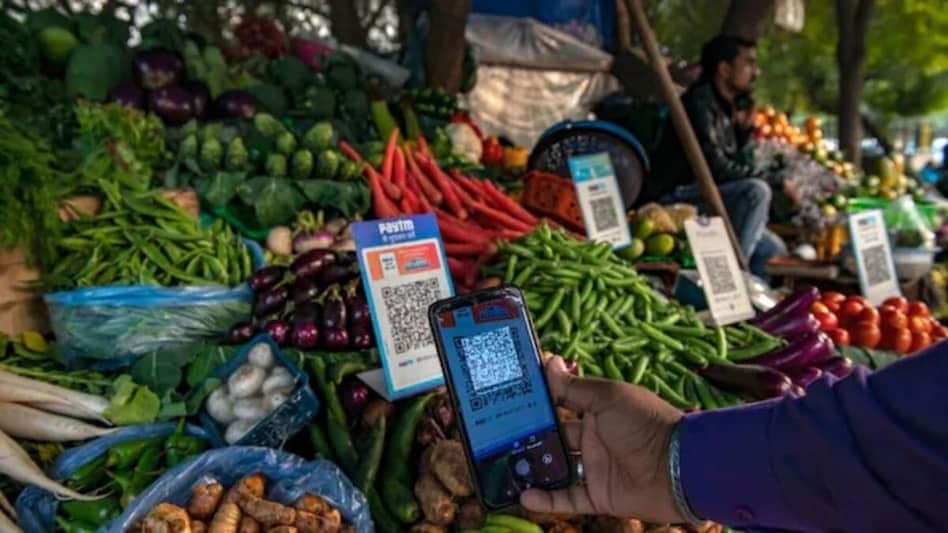
Study shows 3 out of 4 users may abandon UPI for cash due to new MDR rules
Read more
Aaj Tak
www.aajtak.in

Study shows 3 out of 4 users may abandon UPI for cash due to new MDR rules

Concerns are arising regarding the implementation of the Merchant Discount Rate (MDR) rule for UPI payments, which will take effect on October 15. Under the new system, an MDR rate of 0.4% will apply to sellers whose turnover exceeds 2000 rupees. Although the government has clearly stated that this charge should not be levied on the customer but should be covered by the seller themselves, questions arise about consumer behavior if shops start demanding an additional fee.

According to data from a recent LocalCircles survey, a significant portion of people may switch to alternative payment methods, such as cash, credit, or debit cards, if the seller requires the MDR to be paid for a transaction exceeding 2000 rupees.

In the survey conducted by LocalCircles among over 67,000 UPI users across 291 districts, people were asked what they would do if a seller requested the MDR commission for a payment exceeding 2000 rupees. The majority of respondents indicated a shift to other payment methods, including cash, credit, or debit cards, or abandoning the purchase.

Only 14% of survey participants stated that they would continue using UPI and cover the additional costs themselves. The remaining 76% reported that they would use a different payment method or postpone the purchase. Thus, three out of four respondents admitted that if the burden of MDR is placed on them, they will move away from UPI to cash or cards.

This data emerged shortly before the new MDR system comes into force. Previously, in a LocalCircles survey in August 2026, 53% of UPI users noted a willingness to switch to other payment methods if MDR was passed on to the buyer; of these, 27% chose credit cards, 14% chose debit cards, and 12% chose cash or bank transfer.

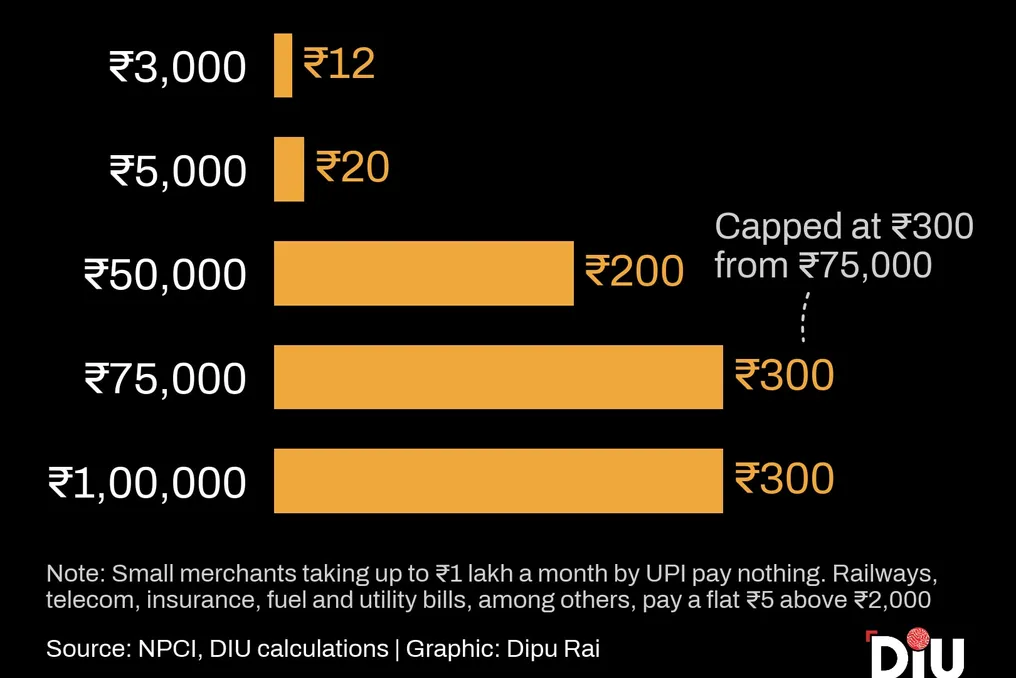
When making a payment of 5000 rupees, the MDR commission will be 20 rupees (0.4%). For a purchase of 50,000 rupees, the amount will increase to 200 rupees, and for 75,000 rupees—to 300 rupees, after which the maximum MDR limit will be 300 rupees. This means that the impact of the new rule will be most noticeable when purchasing expensive goods such as electronics, furniture, household items, restaurant services, or travel, rather than with daily payments of 100, 500, or 1500 rupees.

The other side of the issue is represented by a LocalCircles survey among 32,796 traders and shop owners. Only 17% of them are willing to bear the 0.4% MDR cost themselves. 41% stated they would not apply MDR at all, and 9% refuse to accept UPI altogether. Another 15% of entrepreneurs agreed to cover MDR only up to 0.04%. This indicates limited business readiness to absorb the 0.4% MDR cost.

Previously, a zero MDR system was in place for UPI sellers, meaning no extra charges upon receiving payment. Now, starting October 15, an MDR of 0.4% will be charged for P2M (person-to-merchant) transactions exceeding 2000 rupees. The maximum amount of this charge is capped at 300 rupees for transactions of 75,000 rupees and above. It is important to note that P2P (peer-to-peer) payments remain completely free. Furthermore, sellers receiving up to 100,000 rupees per month via QR are exempt from this system.

The Ministry of Finance emphasized that the MDR burden should not be shifted to the consumer, as it is not a tax or a fee for using UPI. Banks and relevant institutions have been instructed to ensure that sellers do not charge this cost to customers. For example, if a purchase costs 5000 rupees, the MDR will be 20 rupees, but according to the rules, the seller must not demand this amount separately.

The situation is significant because UPI is no longer limited to small payments. In August 2026, 24.51 billion transactions were made through UPI totaling approximately 29.82 trillion rupees. Of these, about 15.51 billion payments were directed to sellers amounting to 8.95 trillion rupees. Consequently, the introduction of MDR in large transactions will affect not only the small charge between the seller and the buyer but will also show how committed users will be to UPI when making large purchases.
Similar stories

Government reports that the MDR commission on UPI payments over 2000 rupees will not be passed on to consumers
Read more
yourstory.com

Government reports that the MDR commission on UPI payments over 2000 rupees will not be passed on to consumers

According to government sources, the proposed trade commission of 0.4% on UPI transactions exceeding 2000 rupees will not be imposed on end consumers. This measure will come into effect on October 15, when a Merchant Discount Rate (MDR) of 0.4% will be levied on merchants for UPI operations above 2000 rupees. Furthermore, no charges will be levied on transactions between individuals, regardless of the amount.

Government sources refuted criticism from opposition parties, including the Congress, asserting that this is not a consumer tax because not a single penny of the proposed MDR will go into the state treasury. The collected funds will be distributed among banks and other participants in the UPI ecosystem. According to the plan, 40% of the collected MDR will go to customer banks, 30% to payment gateways, 20% to the UPI application itself, and the remaining 10% to the sponsoring bank of the UPI application.

Sources emphasized that the 0.4% MDR commission on UPI transactions over 2000 rupees will not be passed on to consumers. Banks and the Indian Banks' Association will work to clarify misconceptions regarding MDR charges and their impact on users. It was also clarified that MDR is neither a tax, nor a fee, nor a surcharge.

Sources also stated that consumer concerns about reverting to cash transactions due to the merchant fee on UPI are unfounded. They expressed hope that the GST Council will consider an 18% tax on the merchant fee for UPI transactions over 2000 rupees in the greater interest of consumers, similar to how it was done with insurance premiums.

The Indian Banks' Association (IBA) will soon conduct an information campaign to dispel various misconceptions and rumors about the introduction of a 0.4% MDR on UPI transactions exceeding 2000 rupees. The introduction of 0.4% MDR on certain UPI transactions over 2000 rupees aims to create a sustainable revenue structure for the digital payments ecosystem. MDR is a fee paid by merchants to payment service providers for processing digital transactions.

Starting October 15, 0.4% MDR will apply to payments from an individual to a merchant via UPI exceeding 2000 rupees. Merchants, not consumers, will pay the fee, and it will be capped at 300 rupees for transactions of 75,000 rupees or more. Payments between private individuals, as well as the vast majority of daily merchant payments, will remain free. For essential services such as railways, telecommunications, fuel, and insurance, a fixed fee of 5 rupees will be charged for transactions over 2000 rupees. Stock market transactions (mutual funds, brokerage services) have a lower rate of 0.02%, also capped at 300 rupees.

Small traders receiving up to 1 lakh rupees per month through UPI QR codes are completely exempt from any new charges, covering about 96% of all merchant transactions. NPCI, the operator of the UPI platform, issued a circular on September 15 providing for MDR on certain UPI transactions, which was done to create a sustainable revenue system for the digital payments ecosystem. A special fund will be created to promote the use of UPI by small traders, into which 5% of the total MDR collection will be directed. This initiative will expand UPI adoption, stimulate continuous usage, and accelerate the inclusion of small businesses into India's digital payments ecosystem.

New UPI Commission Rule: Details on MDR for Merchants and Application Conditions
Read more
www.aajtak.in

New UPI Commission Rule: Details on MDR for Merchants and Application Conditions

The Modi government has provided complete information regarding the new merchant transaction commission rates (UPI MDR Charge) for transactions via UPI. According to a circular issued by the National Payments Corporation of India (NPCI) on Tuesday, the commission is set at zero for transactions under ₹2000, while a Person to Merchant (P2M) rate of 0.40% applies to payments exceeding this threshold.

These revised UPI MDR rates will take effect next month, starting October 15th. According to India Today's calculations, when the new transaction fee is introduced, a shop receiving a payment of ₹2001 will receive less compared to a shop receiving ₹2000, and most traders will have to pay this commission.

The Merchant Discount Rate (MDR) is the amount a seller pays their bank for a payment. After the government provided detailed information on this matter, NPCI responded to related queries. According to NPCI, most traders will pay a 0.40% commission for payments over ₹2000, and no commission is charged up to this amount. For a payment of ₹2001, this amounts to about ₹8, leaving the shop with approximately ₹1993.

NPCI clarified that the case of a ₹2001 transaction is an exception, not the general rule. The corporation stated that over 95% of payments made to traders are below ₹2000 (though NPCI did not specify timelines). The maximum commission limit above this threshold is ₹300. NPCI emphasized that customers will not pay any fees, and transfers between individuals and within families will remain completely free.

India Today's calculations show that most shops will pay a 0.40% commission for large payments, with the maximum commission capped at ₹300. Customers and small traders should incur no costs. According to examples provided in NPCI's responses, for a payment of ₹3000, the seller will pay their bank ₹12, and for ₹50,000, it will be ₹200; this commission will not exceed ₹300. Thus, regardless of whether the payment is ₹75,000 or ₹100,000, the shop will only have to pay ₹300, not ₹400 according to the 0.40% rate.

The calculations clearly indicate that the shop accepting a UPI payment of ₹2000 will only have a slight increase in the payment, which will reduce its income. NPCI confirmed that traders cannot pass on the MDR applied to UPI payments to customers, and UPI applications cannot add their own platform fee.

NPCI explained that sellers who receive up to ₹100,000 monthly directly into their account via a UPI QR code in P2PM (Person-to-Merchant) mode will receive the zero MDR benefit. However, sellers who consistently receive more than ₹100,000 per month for three consecutive months fall into the MDR category. Nevertheless, in some sectors, a fixed commission of ₹5 will apply instead of the stipulated MDR rates for payments over ₹2000. These sectors include railways, telecommunications, insurance, and fuel pumps, as well as utilities such as electricity, water, and piped gas.

For payments made to stockbrokers, securities dealers, and mutual funds, a lower rate of 0.02% will apply, with a maximum limit also set at ₹300. However, a positive aspect is that recurring payments set up through UPI Mandate will not be subject to a fixed MDR. Nevertheless, the FAQs do not specify which rule applies to mutual fund investments made through UPI Mandate.

According to data, in August 2026, approximately 1,551 billion payments were made through UPI to shops totaling ₹8.95 trillion. These payments accounted for 63.3% of the total UPI transactions for the month, but only 30% of the total value. NPCI analysis shows that the average shop payment in August was ₹577, while the average person-to-person (P2P) transfer reached ₹2319. However, these averages do not allow determining how many traders received UPI payments over ₹2000.

According to India Today's analysis, out of 29 types of shops listed in NPCI data, only two had an average payment exceeding ₹2000 in August 2026. These included stockbrokers (₹7569) and debt collection agencies (₹3441). The average payment in grocery stores was ₹217, and for fast food, only ₹122.

Regarding the figure of 4 percent mentioned in news about UPI commissions, it should be noted that this figure is absent from the Ministry of Finance statement dated August 8th. The Ministry stated that for most transactions, traders via UPI would be free, but it did not provide any percentage data.

Some points remain unclear in NPCI's responses regarding the ₹2000 threshold: one response stated that small payments under ₹2000 would not be affected, while another stated otherwise.

Company Director Announces Potential Losses of 1.2 Million Rupees Due to New UPI Fees
Read more
www.aajtak.in

Company Director Announces Potential Losses of 1.2 Million Rupees Due to New UPI Fees

New charges associated with UPI have caused concern among some entrepreneurs, especially those with small profit margins who are trying to stabilize their businesses. The director of a pharmaceutical company made an important statement regarding this.

Rahul Mamman, the director of this pharmaceutical company, assessed the potential impact on his firm, suggesting that the company could incur significant losses, and in such a case, they might restrict the acceptance of payments via UPI.

CA Kanun Bahal shared this message, noting that MDR could become a serious burden for businesses with only a 2–3 percent margin. CA emphasized that with an MDR of 0.4 percent, the total turnover of a company with a 2–3 percent margin could suffer by 11–17 percent.

Mamman, director of MPC Pharma Private Limited, stated in his LinkedIn post that his company has always encouraged customers to use UPI instead of traditional payment methods such as NEFT, cash, and checks. The company processes about 10 million rupees in payments through UPI daily. Based on the proposed commission of 0.4% (MDR), he calculated that the fees could amount to approximately 40,000 rupees daily, equivalent to about 1.2 crore rupees annually.

Mamman noted that this significantly affects the profitability of low-margin businesses. He appealed to the National Payments Corporation of India (NPCI) to reconsider this rule. Furthermore, he stated that if this payment method becomes unprofitable due to additional costs, the company may consider limiting UPI acceptance for large amounts.

According to the revised provisions, an MDR of 0.4 percent will apply to P2M (person-to-merchant) transactions exceeding 2000 rupees, while the overall limit is 300 rupees. Transactions below this threshold are not subject to this fee. This means that 96 percent of traders will not be affected by this rule.

Traders receiving up to 100,000 rupees per month via QR UPI will not pay MDR regardless of the transaction amount. Broader concessions are provided for certain sectors. It was proposed to set a uniform tariff of only 5 rupees, instead of 0.4% MDR, for areas such as railways, telecommunications, insurance, and fuel. For capital market operations, including payments related to mutual funds, brokers, and stocks, a reduced MDR of 0.02% will apply, provided the 300 rupee limit is observed.

Popular