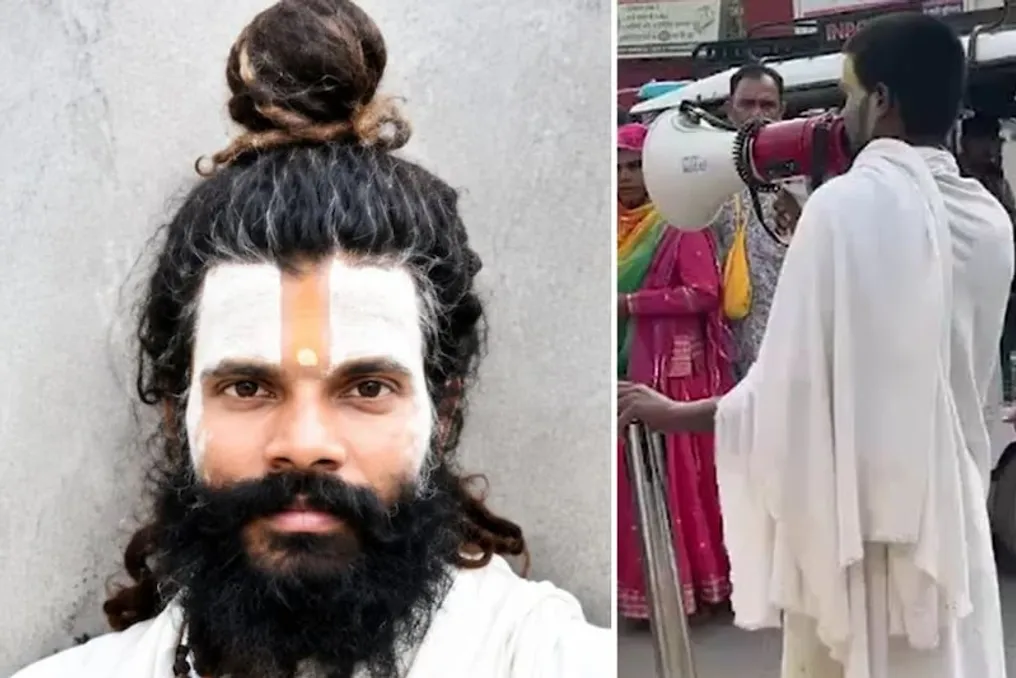
Changes to Visiting Rules at Keli Kundh and Yamuna Vihar Kundh Ashrams Following the Death of Prem Anand Maharaj's Disciple
Read more
Aaj Tak
www.aajtak.in

Changes to Visiting Rules at Keli Kundh and Yamuna Vihar Kundh Ashrams Following the Death of Prem Anand Maharaj's Disciple

Numerous changes have been made to the operating procedures at the ashrams associated with the renowned saint Prem Anand Maharaj from Mathura-Vrindavan following the tragic death of one of his disciples. At the Keli Kundh ashram, the initiation program has been suspended indefinitely, and a ban on visits using tokens has been introduced.

Furthermore, at the Yamuna Vihar Kundh Belwan ashram, where visits for initiated followers were previously organized, all types of meetings have now also been halted. These changes were communicated to devotees through the service providers at the ashrams, and official information was published. Consequently, visitors arriving at the ashrams can no longer expect the previous arrangements.

The most significant change is the indefinite suspension of the initiation program at the Keli Kundh ashram. This means that the process of initiating new followers is temporarily frozen. Ashram staff informed devotees about this via microphone, but no exact date for resuming this suspension has been provided, so it is currently considered indefinite.

The second major revision concerns the visiting system. Visits using tokens have also been suspended indefinitely. This change is significant because a large number of pilgrims arrive at the ashrams specifically through this system. The cancellation of the token system means that devotees will temporarily be unable to visit the ashram using tokens.

The changes were not limited to Keli Kundh. At the Yamuna Vihar Kundh Belwan ashram, the visiting system for initiated followers has also been closed. Thus, on one hand, an initiation ban and a token visit ban have been imposed at Keli Kundh, while on the other hand, visits for initiated followers have been temporarily stopped at Yamuna Vihar Kundh Belwan. Additionally, another change occurred in the ashram's operations: the attire of the serving staff has changed. This change took place when the case of the disciple's death related to the ashram was being discussed.

The situation became a subject of discussion after the death of Prem Anand Maharaj's disciple, Rasik Dulari Sharana, also known as Dipak Lodhi. The death occurred after a fall from a building. Following this incident, the aforementioned adjustments were made to the ashram's operations. Various questions are arising regarding this matter, and the police are conducting an investigation. The scene of the incident and other available evidence are being examined as part of the investigation. The ashram management did not provide detailed comments to the cameras on this issue. However, the staff providing services at the ashram informed the devotees about the new rules via microphone. Therefore, the clearest information at the moment comes from the ashram regarding the implemented changes.

These changes directly affect pilgrims arriving at the ashrams. Those who planned to undergo initiation will have to wait. The token visiting system has also been suspended for those who wished to come using tokens. Moreover, visits for initiated followers at Yamuna Vihar Kundh Belwan are also closed. Pilgrims must arrive aware of the new rules. The picture regarding the future arrangement remains unclear: when will initiation resume? When will token visits return? When will visits for initiated followers at Yamuna Vihar Kundh Belwan begin? And what is the exact reason for the change in the staff's clothing?

The death of Prem Anand Maharaj's disciple, Rasik Dulari Sharana, also known as Dipak Lodhi, occurred in Vrindavan on Friday morning around 10:36 AM. Dipak is from Jabalpur, Madhya Pradesh. According to the police, he was seen falling from the roof of the fourth-floor apartment in surveillance footage. The autopsy revealed serious injuries and severe bleeding on the body. The police are currently trying to determine what happened in the room before the incident. For this, the apartment's DVR, mobile phone, and blood samples have been sent for forensic examination, and they are also trying to find the cause of the incident by examining remote photos and chats from the mobile phone. On the other hand, the Sadhu-Sants of Bridge demanded a high-level investigation into this case.
Similar stories

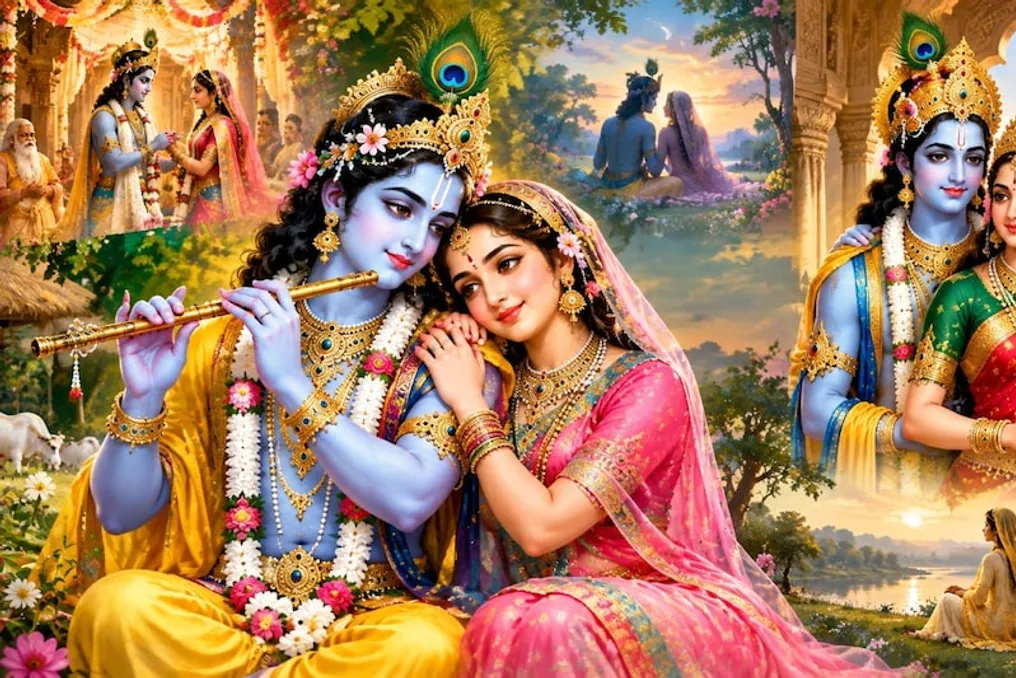
Five Mythological Secrets of Radha Rani and Rukmini Unknown to Most
Read more
www.aajtak.in

Five Mythological Secrets of Radha Rani and Rukmini Unknown to Most

When the name of God Krishna is mentioned, Radha Rani is first recalled. Radha is considered a symbol of love and devotion to Krishna, while Rukmini is revered as his consort. God Krishna experienced love for both in different forms. However, there are many mythological secrets associated with Radha and Rukmini that few people know about. The question arises whether Radha and Rukmini are different manifestations of the goddess Lakshmi, and whether Radha and Krishna were married. These mythological stories related to Radha, Rukmini, and God Krishna are examined further.

Rukmini Made Krishna Her Husband

According to mythological history, Rukmini was the daughter of King Vidhavarhi, Bhishmaka. She was deeply moved by the qualities and personality of God Krishna and internally considered him her husband. Nevertheless, Rukmini's brother, Rukmi, wanted to marry her off to Shishupala. When Rukmini learned of this, she sent a message to God Krishna expressing her desire. According to the legend, before the marriage, God Krishna took Rukmini away, and they later got married. This is why Rukmini holds one of the most significant places among the principal wives of God Krishna.

Why Are Radha and Rukmini Considered Incarnations of Lakshmi?

In the Vaishnava tradition, God Krishna is considered an avatar of God Vishnu. Within this tradition, Rukmini is viewed as an incarnation of the goddess Lakshmi. As for the image of Radha, various Vaishnava traditions offer different interpretations. In the Gaudiya Vaishnava tradition, Radha is considered the Hladini Shakti of Krishna, meaning his divine power of bliss. Because of this, the relationship between Radha and Krishna is explained not only as worldly love but also as a spiritual connection between God and His power.

Did Radha and Krishna Marry?

There are various accounts regarding the marriage of Radha and Krishna in different religious texts and traditions. Traditions associated with the Brahmavivarta Purana and Garg Samhita mention the marriage of Radha and Krishna. According to one famous legend, Brahma arranged the marriage of Radha and Krishna in the forest of Bhandir in Braj. This forest, connected to this belief, remains an important place of religious worship in the Braj region. Therefore, it is fair to say that the story of Radha and Krishna's marriage is accepted in some religious traditions, although it is not uniformly described in all major texts.

The Story of Sita and Rukmini's Connection

In addition to the idea that Radha and Rukmini are manifestations of the goddess Lakshmi, similar concepts are added to some stories of the Ramayana. According to a common legend, during Rama's Ashwamedha Yajna, in the absence of Sita's mother, her golden statue was placed in her stead. This story emphasizes the importance of Sita as the wife of God Rama. In later mythological traditions, Sita, Rukmini, and Lakshmi are also linked to each other. However, the sources and details of these stories vary across different texts.

The Love Relationship of Radha-Krishna and the Marital Relationship of Rukmini

To understand Radha Rani and Rukmini, their relationships must be viewed not through a single lens. The bond between Radha and Krishna is considered a symbol of devotion, love, and spiritual self-renunciation. At the same time, the bond between Rukmini and Krishna manifests as marital relations. Thus, although the roles of Radha and Rukmini in Krishna's life are different, their religious significance is immense.

Stories of Separation Between Radha and Krishna

There are also many mythological and Bhakti stories about the separation of Radha and Krishna. After Shri Krishna left Vrindavan and went to Mathura, and then to Dwarka, the story of their parting became extremely important in Bhakti literature. In some traditions, Krishna's separation is explained by various curses and mythological events. However, the details of these stories do not match across all texts. This separation of Radha and Krishna is considered a symbol of the love between the devotee and God, where memory and devotion to God are valued above the meeting itself.

The Story of Rukmini and Shri Krishna's Parting

Another story related to Rukmini and Shri Krishna pertains to the sage Durvasa. Different versions of this episode exist in various Puranic traditions. This story describes events related to the hospitality of the sage Durvasa and the conduct of God Krishna and Rukmini. In some folk tales, this is also linked to a long period of their separate living. However, due to differences in the versions of this story regarding the events and duration, it should be viewed not as a specific historical event, but as a mythological tradition.

Radha Rani and Rukmini: Each Has Her Own Special Significance

In Indian religious tradition, the relationships of Radha and Rukmini with God Krishna are explained from different perspectives. Radha is considered a symbol of love, devotion, and complete self-renunciation before Krishna. At the same time, Rukmini is associated with the role of wife, domestic life, and the image of the goddess Lakshmi. Consequently, instead of comparing Radha and Rukmini, their religious image and the various traditions associated with them should be considered.

Popular