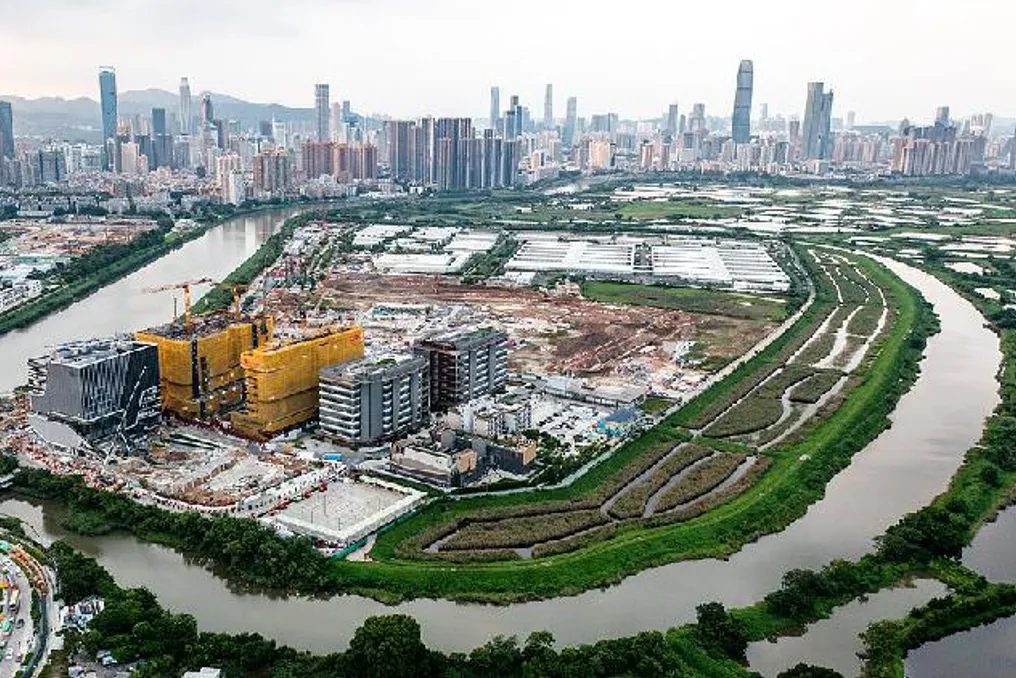
Hong Kong Special Administrative Region rises to 14th place in Global Innovation Index
Read more
CGTN
cgtn.com

Hong Kong Special Administrative Region rises to 14th place in Global Innovation Index

The Hong Kong Special Administrative Region (HKSAR) has improved its standing in the global innovation ranking. It moved up one spot compared to last year, securing 14th place out of 139 economies in the Global Innovation Index for 2026. This index was published by the World Intellectual Property Organization on Tuesday, and Hong Kong maintained its fifth position in Asia.

In terms of innovation resources, Hong Kong held the eighth position globally, while its innovative product indicators rose to 21st place. Among its main strengths, the city ranked second globally for market complexity, and its human capital and research indicators improved, reaching sixth and seventh place for institutions, respectively.

The rating improvement comes amid active efforts by Hong Kong to transform into a global science and technology center, as declared within its five-year plan presented at the beginning of this month. The HKSAR government committed to creating a comprehensive industrial ecosystem covering research and development, commercialization, pilot, and mass production in new technological parks of the Northern Metropolis.

A representative of the HKSAR government stated that a new industrialization, adapted to local conditions, will also be promoted, a distinctive structure for industrial development will be created, and the 'AI+' initiative will be developed. Furthermore, strengthening computing infrastructure and accelerating the adoption of artificial intelligence among small and medium-sized enterprises are planned.

The Global Innovation Index is a ranking of the innovation capabilities and outcomes of economies worldwide. Its assessment includes several indicators such as institutions, human capital, and research infrastructure, lending, investments, supply chains, creation, absorption, and dissemination of knowledge, as well as creative outputs.
Similar stories

According to Night Frank, prices for luxury housing in Mumbai have risen and ranked 8th in the global rating; Delhi and Bangalore are also in the top 20
Read more
www.aajtak.in

According to Night Frank, prices for luxury housing in Mumbai have risen and ranked 8th in the global rating; Delhi and Bangalore are also in the top 20

According to the latest report from Night Frank, the cost of luxury residential real estate in Mumbai increased by 6.2 percent over the year. As a result, this growth allowed Mumbai to enter the top 10 of the global ranking for luxury housing prices. Meanwhile, Bangalore ranked 12th, and New Delhi ranked 17th.

The Prime Global Cities Index Q2 2026 report from Night Frank shows that the 6.2 percent price increase in Mumbai is more than double the global average of 2.6 percent. Furthermore, in the quarter covering April–June 2026, prices for luxury real estate in Mumbai rose by 1.7 percent quarter-on-quarter.

In Night Frank's global ranking, three Indian cities made it into the top 20 list. Mumbai is ranked eighth, Bangalore twelfth, and New Delhi seventeenth. The annual increase in luxury real estate prices in Bangalore was 4.5 percent, while in New Delhi, prices rose by 3.9 percent. Quarter-on-quarter, Bangalore saw a growth of 1 percent, whereas in Delhi, there were no changes in prices.

In the global ranking, Japan's capital, Tokyo, was in first place. Prices for luxury residential real estate in Tokyo rose by 50.7 percent over 12 months. In Q2 2026, Tokyo also recorded a quarterly price increase of 12.6 percent. Manila was second with an annual increase of 14.6 percent. Dubai took third place with a rise of 10.9 percent, Singapore fourth with a rise of 9.5 percent, and Nairobi fifth with a rise of 8.5 percent. Following these are Christchurch sixth (6.9%), Seoul seventh (6.4%), Mumbai eighth (6.2%), Vienna ninth (5.9%), and San Francisco tenth (5.0%).

Not all cities demonstrated price growth in the luxury real estate market; some major cities recorded a decrease in value. The largest drop was noted in Beijing, the capital of China, where luxury real estate prices fell by 8.4 percent, marking the most significant decline in the index. This is followed by Toronto with a drop of 7.3 percent and Wellington with a drop of 5.4 percent. London also saw a decrease in luxury residential property prices by 3.6 percent over the year. According to Night Frank, prices rose in 32 cities year-on-year, while they decreased in 15 cities. Quarter-on-quarter, price growth was recorded in 28 markets, a decrease in 17, and no change in two.

Shishir Baijal, Chairman and Managing Director of Night Frank India, noted that Mumbai's inclusion in the top 10 is an important achievement despite the moderate pace of growth in the global luxury real estate market. He emphasized that the 6.2 percent annual growth in Mumbai indicates strong demand for the premium housing market. Price growth is supported by factors such as location, quality, and diversity of housing products. Limited supply also leads to elite assets being viewed as a means of long-term capital accumulation.

Night Frank reports that in Q2 2026, the annual growth of global luxury real estate prices was 2.6 percent, higher than the 2 percent figure in the previous quarter. Thus, the pace of price growth in the global market has slightly accelerated. Liam Belly, Global Head of Research at Night Frank, stated that signs of a slight improvement have appeared in the global luxury housing market. However, he added that results vary greatly across different cities, and future trends will depend on local supply, currency fluctuations, wealth creation processes, and interest rates.

Popular