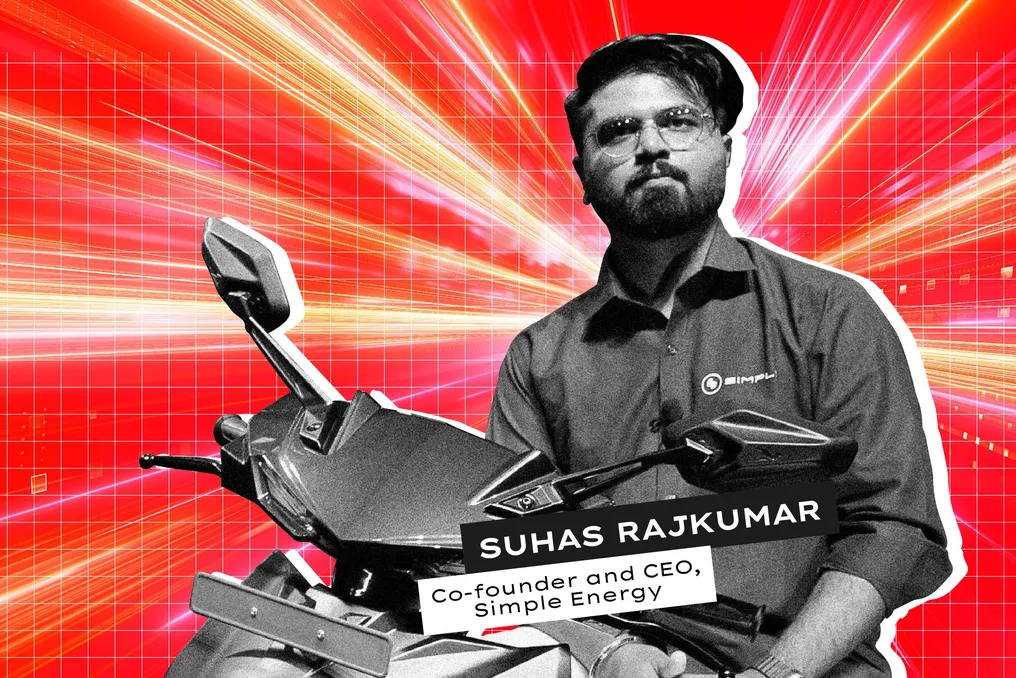
Simple Energy, a manufacturer of electric two-wheelers, raised 1750 crore rupees in Series C funding round on Wednesday. This brings the company's total raised capital to over 2530 crore rupees.
The equity round was led by the Family Office of Dr. Arokiasmavi Velumani's family, with participation from co-founders Suhas Rajkumar and Ankit Gupta, as well as HNI Amit Mishra and Haran Family Office from Bengaluru. This round is one of the largest capital raises in the two-wheeler EV sector.
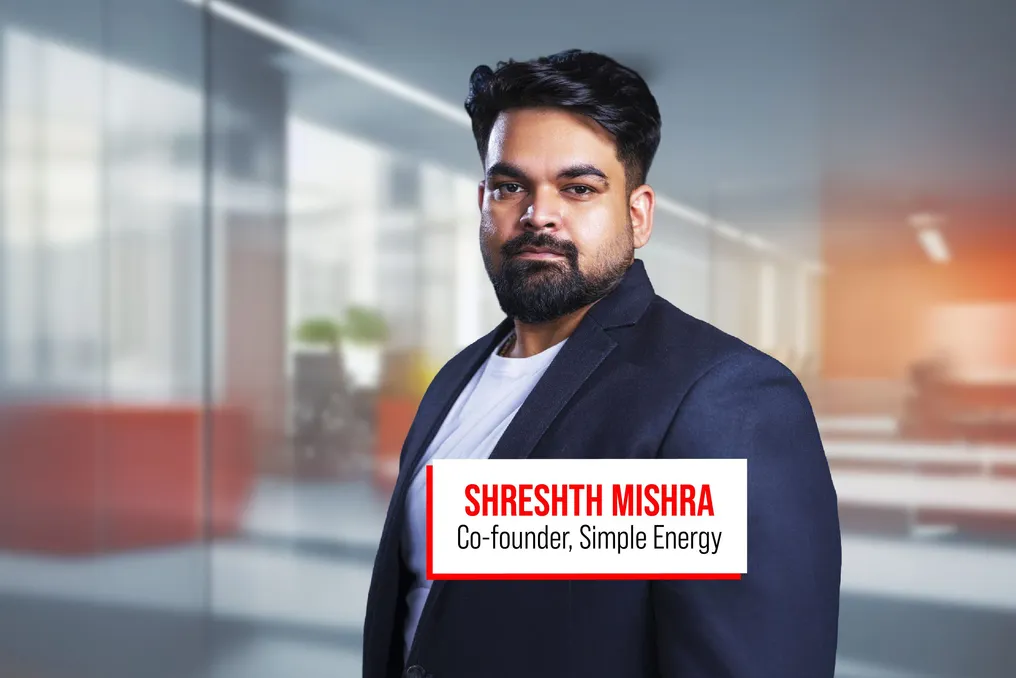
However, for Shreshth Mishra, co-founder of Simple Energy, the primary focus is not so much the size of the funding but what it will enable the company to achieve. Mishra stated in an interview with YourStory: 'This latest round is not just capital; it is a matter of scale.'
Simple Energy was founded in 2019 by Suhas Rajkumar, later joined by Mishra and Ankit Gupta as co-founders. The company develops electric two-wheelers, much of whose architecture is developed in-house, including the chassis, battery pack, motor, and software.
The Bengaluru-based company has also developed its own powertrain, from R&D to production. According to Mishra, this approach became particularly important as the company faced supply chain disruptions and sought greater control over critical components.
He noted: 'When you build a business related to hardware and manufacturing, it is incredibly capital intensive.' In its early years, Simple Energy faced significant challenges such as supply chain bottlenecks and delivery delays that tested customer patience.
Mishra added: 'As a startup, you are always trying to extract the absolute maximum from every minimal input.' He continued: 'Now this capital allows us to eliminate working capital cycles, clear our backlogs, and scale faster to meet our promises.'
Instead of acquiring new land, Simple Energy is focusing on expanding at its existing campus in Krishnagiri, where it plans to ramp up production over the next 10–24 months. The company's in-house engineering capabilities are also intended to reduce its dependence on certain external supply chain shocks.
Mishra shared that 'we have not lost a single day of production line output due to the shortage of rare earth magnets,' highlighting that Simple Energy has become the first Indian OEM to commercially deploy motors without heavy rare earth elements, with about 15,000 units already on the road.
The company also aims to maintain control over other parts of its product development, including the chassis, battery, and software. It claims to have developed its electric two-wheelers based on factors such as range, charging time, and affordability.
The new funds will also support aggressive retail rollout. Expanding beyond its current network of more than 80 sales points in over 60 cities, Simple Energy is targeting Tier II and Tier III markets in the northern, central, and eastern regions of India, utilizing models like Simple One, Simple Wave, and Simple Ultra.
However, Mishra emphasizes that expanding reach means more than just opening showrooms. He noted: 'It is not just about the sales experience; after-sales support is crucial,' adding that each new retail outlet will be accompanied by a specialized service center.
Looking ahead, the company is preparing to mitigate its supply chain risks by partnering with emerging domestic cell manufacturers while managing ongoing global reliance on semiconductors. Regarding charging infrastructure, the company prefers to work with existing networks rather than building a completely proprietary system. By collaborating with operators like Bolt, Simple Energy allows drivers to use existing public infrastructure. Mishra concluded: 'Our goal is to ensure our self-sufficiency in the coming period,' outlining Simple Energy's path toward a potential public market exit.