Men held demonstration in Durban demanding urgent government action against gender-based violence
Read more
IOL
iol.co.za

Men held demonstration in Durban demanding urgent government action against gender-based violence

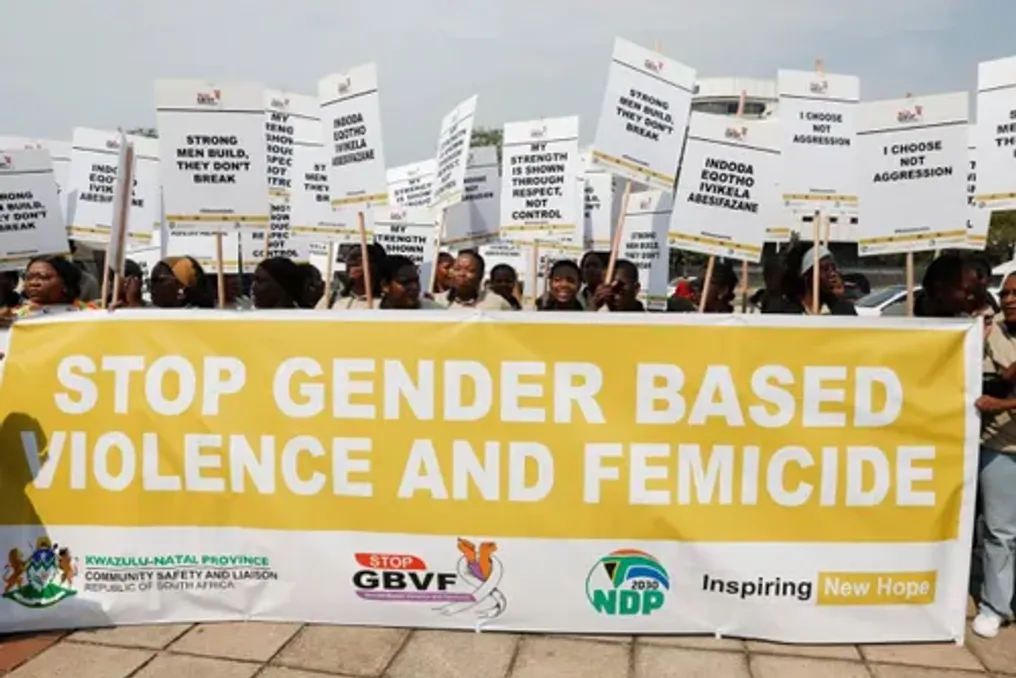
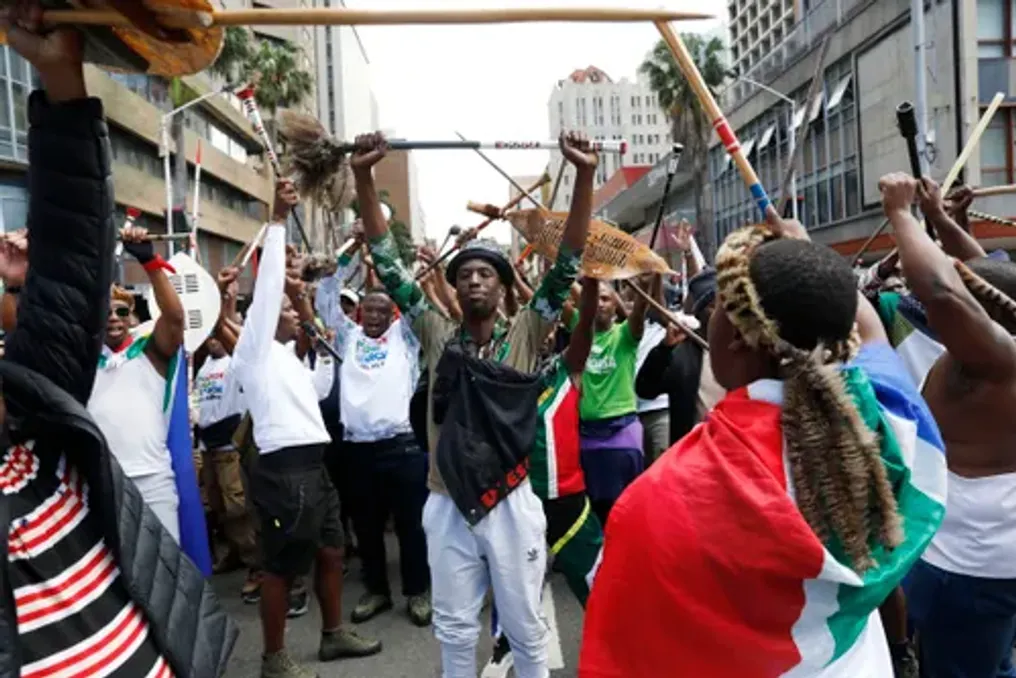
Men participated in a march and demonstration in Durban the day before, calling on the government to take immediate measures to stop gender-based violence and femicide (GBVF).

In addition to demands to combat GBVF, the demonstrators put forward several other requests, including the need to tighten border control, reserve informal economy spaces in settlements for South Africans, reform the Road Accident Fund Act, and increase security levels in high-risk areas.

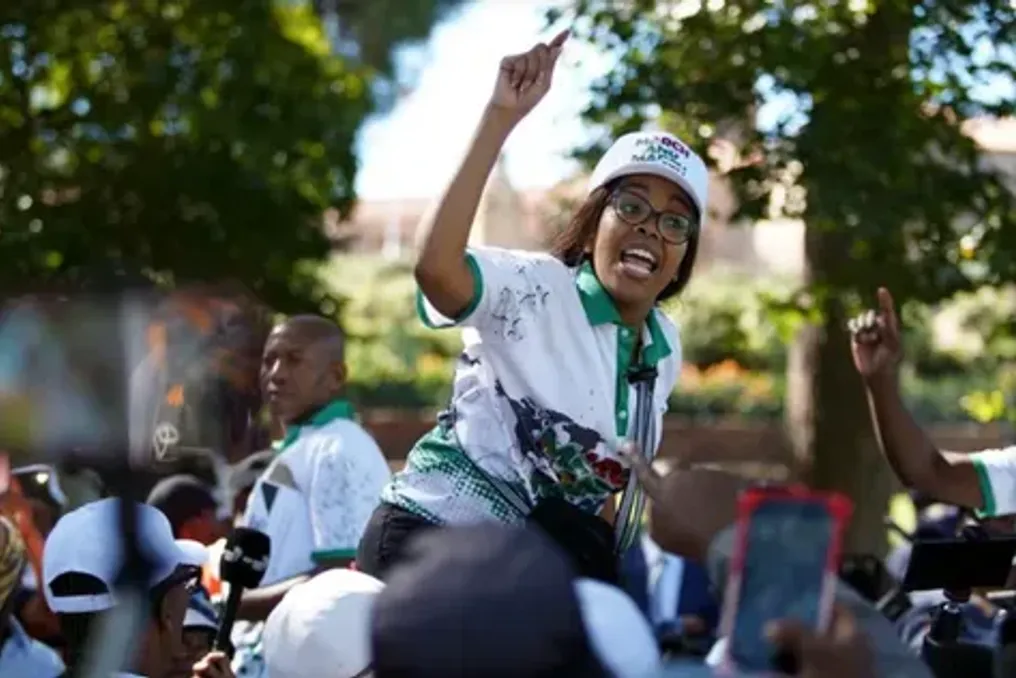
Political parties such as ActionSA, MK Party, and IFP were among the participants in the event.

On Tuesday evening, President Cyril Ramaphosa announced four immediate measures in response to the GBVF issue: conducting a national audit to restore cases and recovery plans for protracted cases under the leadership of the Ministers of Police and Justice; funding a 60-day plan to address backlogs in forensic examination and allocating priority samples; carrying out municipal safety checks within 60 days to eliminate environmental threats alongside strengthening compliance with alcohol sales laws; and submitting a coordinated legislative package within 60 days to reduce alcohol-related violence.

These steps were taken following a recent surge in GBVF cases, which was predominantly observed in Gauteng, after 11 women's bodies were discovered in Ekurhuleni since July.

Jacinta Ngobeze-Zuma, leader of 'March and March', demanded more decisive action against gender-based violence and femicide during the march through the streets of Durban.

Kholani Zuma, Executive Director of SA First Forum, noted that this action differs from previous ones, but the problems remain the same. He stated that the serious issue lies in the hope that the government will provide an immediate solution to these murders.

Zuma emphasized that men must lead this march because the problem is not limited only to men who kill women, but is a societal issue. He urged the government to stop treating incidents involving the killing of women as mere 'events,' insisting on the necessity of practical programs to combat the killing of women and children in the country.

Furthermore, Zuma announced that they are ceasing negotiations and initiating legal battles to force the government to make legislative changes. Specifically, they demand the establishment of strict limits on the number of refugees and the removal of all illegal immigrants within two years.

Commenting on Ramaphosa's speech, Zuma expressed doubt about the existence of substantial practical solutions in the president's four stated plans.

Zwanele Mncwango, ActionSA leader in KZN and mayoral candidate, supported the march, stating that it aligns with their call of 'Enough'. He insisted that the daily killing of women must stop, and physical and emotional abuse by men must be eliminated.

Mncwango noted that it is illogical for only women to complain about GBV. He stressed that men must openly declare their position, as some of them are perpetrators, and they may be friends or relatives of the victims. He believes that such a public gathering sends a very strong signal.

He added that men are raised with respect for women and children, not with the idea of using them as targets. Mncwango concluded that no excuse can justify the killing of women, and that when relationship problems arise, one should separate rather than resort to violence, as conflict itself never justifies murder.

Similar stories

March and March movement calls for national action against gender-based violence
Read more
iol.co.za

March and March movement calls for national action against gender-based violence

The anti-immigrant movement March and March has shifted the focus of its planned national day of protests against illegal immigrants, reorienting it towards the issue of gender-based violence and femicide. Marches are scheduled for Wednesday in the provinces of Gauteng and KwaZulu-Natal, where the movement is calling on men to stand against the killing of women.

Initially, the event was supposed to be dedicated to illegal immigration following a nationwide protest on June 30th, which demanded voluntary deportation of illegal migrants. However, speaking to IOL on Monday, a representative of the movement, Sandile Dubbe, stated that the organization has adjusted the direction of its demonstration due to recent killings and the general crime crisis in the country.

Dubbe noted that although they previously announced a National Day of Action Against Illegal Immigrants, they cannot ignore recent events in the country, especially the overall rise in crime, and primarily crimes related to gender-based violence.

The movement's representative also expressed concern over recent massacres, including the death of 18 people in a tavern in Vedela, near Carletonville in Gauteng, as well as 16 people in three separate shootings in the Western Cape.

Calls to the Minister of Community Safety in Gauteng

The movement is also appealing to the Gauteng Premier, Panyashe Lesufi, demanding the reinstatement of a dedicated Minister of Community Safety. This area of responsibility was transferred to the Premier's Office following changes in provincial government.

Sandile Dubbe stated that the current arrangement is ineffective. He recalled that this sphere was previously overseen by Minister Faith Mazibuko, who was easily accessible, but now, since it falls under the purview of the provincial premier, he considers it redundant.

He argued that Gauteng, which he says accounts for over 40% of the country's crime, needs a dedicated member of the provincial executive responsible for community safety. Dubbe emphasized that the province, where nearly half of South Africa's crimes occur, cannot function like other provinces and requires a dedicated Minister of Community Safety.

Immigration remains part of the movement's agenda

Despite the shift in today's focus, Dubbe confirmed that opposing illegal immigration remains a central element of the movement's activities. He stated that the March and March movement cannot be separated from its stance against illegal immigration, as their main focus has always been this anti-immigration position.

However, he added that they cannot remain solely on this position while events affecting South African residents are unfolding. In any case, the fight against gender-based violence has always been one of the pillars of the movement.

The main demonstrations will take place in Gauteng and KwaZulu-Natal, while organizers await confirmation of events in other provinces.

Marches are scheduled in Gauteng and KwaZulu-Natal

In Gauteng, protesters will gather at Church Square in Tshwane at 9 am, after which they will march through the CBD and Sunnyside towards the Union Buildings. Dubbe explained that the route through Sunnyside is intended to 'create as much noise as possible against the killing of women.'

The movement plans to submit a memorandum to the Minister in the Presidency for Women, Youth and Persons with Disabilities, Sindisive Chikunge. In KwaZulu-Natal, the main march will start at Albert Park in Durban at 9 am and head towards the provincial police headquarters.

Dubbe reported that organizers are awaiting confirmation of the planned march in Sekhukhune district in Limpopo. A demonstration in Cape Town was also expected, and plans for the Eastern Cape remain uncertain.

Men are called to speak out

Dubbe clarified that the event will be a march exclusively for men against gender-based violence, although women are also welcome. He called on men to come out to declare that men cannot remain silent when women are being killed.

Women were invited because they are the primary victims of the violence being protested. Dubbe noted that it would be good if women joined the starting point, but during the march, they could be in the middle, and men in front, to demonstrate the sign that 'we are the perpetrators.'

He wanted to make it very clear that such things should not happen in their name or under their watch as men. Dubbe did not know how many people would attend the event.

Organizers promise peaceful marches

Dubbe assured that the demonstrations would be peaceful and would not involve looting or violence. He noted that the marches organized by the national March and March are usually well-guarded, based on their previous experience.

The movement does not support looting or property damage. Dubbe stated: 'We cannot protect looters. We cannot protect a person who breaks property. It takes many years to build the infrastructure we have, and we cannot destroy it.'

He added that anyone who breaks the law must be arrested. Dubbe stressed: 'Responsibility always lies with the government. Our task is to clearly demand that the government simply arrests anyone who breaks the law.'

Dubbe criticizes government response to GBV

President Cyril Ramaphosa officially classified gender-based violence as a crisis at the G20 Social Issues Summit on November 20, 2025. Nevertheless, women continue to die across South Africa.

Dubbe opined that the government's response has been insufficient. He compared the government's actions to holding 'a very good public event on the issue of gender-based violence, but not necessarily its operationalization.'

He likened the reaction to how the government handled the Covid-19 pandemic, when a national committee was established to coordinate measures and regularly report progress. Dubbe insisted on the need for a clear steering committee dedicated to gender-based violence, which would report regularly and have a clear chairperson, but currently, the situation is 'just quiet. It's just a PR stunt.'

Ramaphosa promises a more decisive response

Meanwhile, Ramaphosa stated that the government must take responsibility for protecting women from GBV while the police investigate the deaths of 11 women whose bodies were found across the Ekurhuleni area in the last two months.

Speaking to journalists at an ANC Veterans fundraising event in Woodmead, Ramaphosa said that the government would strengthen its response by mobilizing more resources and technology. He promised: 'We will do everything possible to find these criminals.'

An interdepartmental committee will also be formed to develop initiatives in response to the crisis. Ramaphosa emphasized: 'We take this very seriously.'

Furthermore, he called on men to change their attitude towards women. He stated that the women of the country, generally and across the nation, should never live in fear of men. Men should never view women as their playground, as people or citizens they can harm or even kill. He urged men to respect and honor women, noting that the women of the country are the builders of the nation and carry it on their shoulders, so abusing or killing them is a true disgrace to all.
Thousands Participate in March Against Gender Violence on Heritage Day
Read more
iol.co.za

Thousands Participate in March Against Gender Violence on Heritage Day

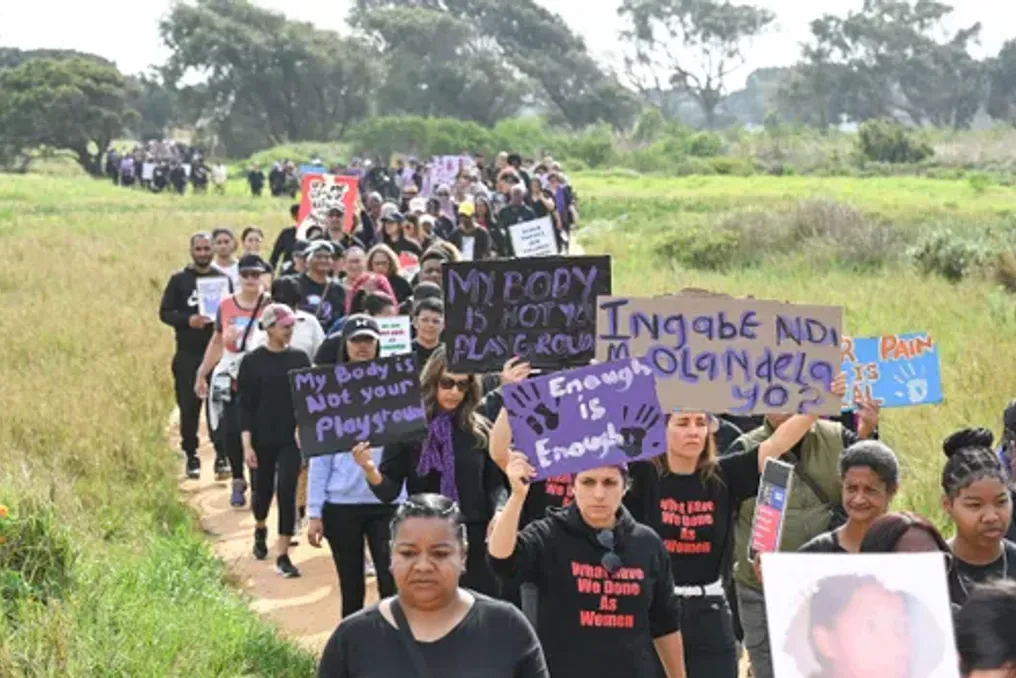
During Heritage Day, hundreds of participants, dressed in black and purple, joined the 'Revolutionary Solidarity One Billion' march in South Africa to protest gender-based violence. Over 2,500 women, men, and children turned this day into a demonstration by marching around Princess Vlei along the M5 highway with activist Lucinda Evans.

Participants protested femicide and gender-based violence (GBV), stating that there were few reasons to celebrate the country's cultural heritage while women continued to suffer violence, rape, and murder across South Africa.

Marchers Demand Action Against Gender Violence

Families, activists, community members, and survivors marched together, predominantly in black and purple, with a unified message: the killing and violence against women must not become the norm. Lucinda Evans noted that such a large turnout demonstrates the strength that arises when communities unite against violence.

She emphasized: 'This is proof that there is strength and unity when women come together to speak with one voice. It is time to take back what is ours. Enough is enough.' Evans also expressed respect for survivors of sexual violence and GBV, assuring them they would not be forgotten.

Women Call for an End to Fear and Violence

For many participants, the symbolism of protesting on Heritage Day was intentional. Participant Hayley Langley stated: 'The sad reality is that femicide and gender-based violence have become the legacy of our women in this country.' She added that action is necessary because the government is inactive, forcing women to rely solely on their voices.

This march takes place against the backdrop of South Africa continuing to face extremely high levels of violence against women. Parliament previously indicated that the femicide rate in South Africa is about nine women per 100,000 people, which is approximately five times the global average. Police data was also cited showing that 957 women were killed between July and September 2024. A study by the South African Medical Research Council showed that about three women die daily at the hands of intimate partners.

Langley noted that women are increasingly refusing to live in fear. She believes the situation in the country has changed, and women no longer wish to be afraid. 'We want to be a little angry so we can change the situation and fight this pandemic in our country. Too many women have fallen, and we must all use our voices if we have nothing else.'

Men Are Called to Help End Gender Violence

Men also joined the march. Evans stressed that the fight against GBV cannot exclude those willing to support women. She thanked the men present, noting that they can stand up for women. She called for creating space for men to participate in solving serious problems.

David Buyssen said he decided to participate because men need to confront violence against women and challenge each other. He stated: 'Men must end what they do, their violent thoughts about women. Women are human beings just like us.' Buyssen also noted that men who witness violence have a responsibility to intervene rather than stand by. 'We must do something. We must act when we see something happening to our children and our women, especially domestic violence. We must not be silent.'

Bernie Gallant, who joined the march with members of the biker club Elusive Ryderz, said that charity and community involvement are part of the club's identity, and confronting gender-based violence is part of this responsibility. Gallant reported that the bikers brought children so they could learn about civic responsibility and fighting violence from an early age. He explained that children must see what the community does and understand what it stands for. 'If we don't teach them at this age, they won't know it.'

Earlier this year, gender-based violence and femicide were classified as a national disaster, after which parliamentary committees demanded greater clarity on the funding and implementation of crisis response measures. For those who marched around Princess Vlei, the demand was not just promises, but real action.

Call to stop blaming women for male-perpetrated violence and focus on prevention
Read more
iol.co.za

Call to stop blaming women for male-perpetrated violence and focus on prevention

Women in South Africa, despite all the diversity, are tired of living in constant fear. They no longer want their names to become a topic of discussion after they have been raped, beaten, or murdered. They are tired of brief bursts of public outrage, vigils, candle lighting, marches against Gender-Based Violence Against Women and Girls (GBVF), wearing black on Fridays, holding symbolic funerals, temporary cessation of economic activity, and creating purple profiles on social media.

Furthermore, women are extremely irritated by promises that are invariably followed by predictable silence and inaction until another name, another face, or another hashtag appears. These people are not just statistics; they were women such as Elizabeth 'Thunto' Moselakgomo (2026), Delana Kader (2023), Tshegofatso Pule (2020), Uiyene Mrvetyana (2019), Zolile Humalo (2018), Karabo Mokoena (2017), Susan Road (2016), Jade Panayotou (2015), Riva Stingkamp (2013), and Anene Buysen (2013).

These examples represent only a small fraction of women who have experienced GBVF; they are the faces of those whose stories remain untold, whose bodies are unrecognized, and whose tragic fates do not make headlines in social or mainstream media. Meanwhile, the latest SAPS crime statistics (April–June 2026) indicate that 569 women were killed, corresponding to an average of more than six victims daily, and that 1052 women reported attempted murder during the same period.

Every quarter, the Minister of Police publishes reports that highlight the cruelty women face in a country that seems to be at war with them. Recently, the first National Study on Gender-Based Violence in South Africa (GBV) was published, providing baseline national estimates of Violence Against Women (VAW) alongside domestic violence perpetrated by men. The findings of this study were intended to serve as a call to action and an opportunity to adjust and accelerate the response to GBVF.

South Africa has some of the world's leading researchers in all forms of violence and femicide. Nevertheless, despite all this evidence, VAW remains the most pressing social problem facing South Africa in the post-apartheid era. Researchers have studied the factors contributing to GBV for decades, identifying gender inequality, harmful gender norms, masculinity constructs, early exposure to violence in childhood, alcohol use, economic stress, relationship dynamics, as well as the social and institutional environment that facilitates and may impede violence.

This work has allowed the focus of prevention to shift from simply engaging men and boys and raising awareness to changing gender relations, social norms, and, importantly, the systems that support inequality and violence, as well as what can prevent violence. The evidence base should indicate where and how to intervene to stop violence perpetrated by men. This evidence base must also translate into actionable interventions whose effectiveness can be measured by a reduction in the number of men committing violence and women experiencing violence in South Africa.

Our National Strategic Plan on Gender-Based Violence and Femicide recognizes this. Among its six pillars is the prevention and restoration of social cohesion, with an emphasis on evidence-based prevention, changing behavior and social norms, and shifting toxic masculinity. Although documented effective methods for preventing VAW exist, they remain small in scale and localized to specific population groups.

To date, not all implemented 'interventions' targeting men are evidence-based. Most are assessed merely by the number of men present, dialogues conducted, or promises signed, and so on. However, the number of participants only indicates whether we reached them. The number of dialogues held shows that an event took place. Neither, on its own, says whether men's behavior has changed.

As we fight the latest wave of femicides and tend to continue doing what we always have done, we must be careful not to confuse activity with real impact. Despite all the investment and allocation of funds for GBVF since the launch of the GBVF NSP, we must ask difficult but important questions. Failure to do so will lead to our own failure.

A quick review of current national work with men and boys often points to achieved figures or trained individuals, men's marches against GBV, signed pledges, dialogues held, Men's and Boys' Parliaments convened, positive masculinity and behavior change workshops, school programs, marches, and awareness campaigns, as well as the recent use of drama and poetry as educational tools to address GBVF issues. Some of these efforts are important for creating critically necessary initial spaces for conversations that many men and boys have never had, and can be gateways to challenging unquestioned gender and masculine norms. However, they cannot stop GBVF and reduce violence if implemented outside a well-funded, sustainable, scientifically sound, and effective prevention agenda.

If we are serious about making our response to GBVF evidence-based, we must ask about outcomes. Has the registered number of VAW cases decreased? Has the level of knowledge increased, and has this led to measurable changes in behavior? Have attitudes and gender norms changed? Have these changes been sustained? Has the amount of destructive behavior decreased? Have reports of physical and/or sexual violence decreased? Are men committing less violence?

Five years into the implementation of the GBVF NSP, its review points to the same problems: significant preventive activity, but a lack of implementation of a Comprehensive National Prevention Strategy and too many efforts remaining short-term. It is important to note that this is not a story of nothing happening. The review notes progress in broader national response and calls for the next five years to include the evaluation of key prevention programs and interventions aimed, among others, at men and boys.

However, there is no doubt about whose behavior we have modified and controlled for decades. We have turned GBVF prevention into a women's issue. Women already participate in informal behavior change programs every day. It is intensive. It starts with us girls. It happens everywhere. And it never truly ends. Women are advised: 'Don't sit like that, sit like a girl. Don't walk alone. Don't wear mini-skirts. Don't run too early. Don't run too late. Check the trunk and back seat before getting in. Share your location. Sit in the front of the Uber. Watch your drink. Don't wear headphones. Make your Strava private. Text me when you get home. Don't walk alone. Don't be out after dark.' And these are just the obvious things.

Underneath all this lies a hypervigilance that many women internalize from childhood. The threat of violence shapes women's lifestyles even on days when nothing is happening. There is love in these warnings, but there is also something deeply wrong with how necessary they have become.

Of course, practical safety tips have their place. We can personally attest to their value. Give us all the tools that can help us get home safely. But we must clearly understand what these tools do. They help us manage the risk of someone else's violence. This can save lives, but managing the risk of violence is not the same as preventing and stopping its commission.

And too often, when all our careful calculations fail, attention turns back to women. After decades of asking women to anticipate violence, avoid violence, cope with violence, and protect themselves from it, it is time to focus our national efforts on preventing and stopping male violence. Why are we normalizing freedom for everyone except women? When will we confront the real problem? Why are we making the environment comfortable for offenders while restricting the freedom of women and young girls? Stop telling women to go into 'lockdown' while offenders should be isolated. Stop asking women to prevent men's violence!

Popular