
How to clean door frames: how to remove ingrained dirt from crevices
Read more
Aaj Tak
www.aajtak.in

How to clean door frames: how to remove ingrained dirt from crevices

When cleaning the house, people usually grab a broom, mop, and dustpan. While we meticulously clean floors, sofas, windows, and tables during cleaning, door frames often get overlooked. Especially in small crevices, corners, and around hinges, so much dust accumulates that even after wiping, the dirt remains. Over time, dirt, hair, cobwebs, and other contaminants accumulate in them.

People buy expensive cleaning agents or send frames for painting and polishing to clean the edges and crevices. However, you don't need to do this. These hard-to-reach areas can be easily cleaned with some common household items. Below is a simple way to clean the frame down to the very base.

How to clean door frames:

First, you need to remove dry dust and cobwebs. Dust often collects on door frames, and spiders weave their webs. Before deep cleaning, it is important to get rid of dry dust, soil, and cobwebs. For this, you should use a vacuum cleaner, microfiber cloth, or dustpan. For small crevices, you can use a vacuum hose attachment. It is not recommended to use a damp cloth at the initial stage, as the dust may stick.

For small crevices, you can use an old toothbrush. Wet the brush in warm water with a small amount of dish soap and gently clean the crevices. When cleaning a wooden frame, do not use too much water, and it must be dried immediately after cleaning.

If dirt has accumulated on the frame, you can use a soapy solution. Mix about one teaspoon of mild dish soap in a cup of warm water. Dip a microfiber cloth in this solution, wring it out well, and wipe the frame. When working with wood, move the cloth along the grain, and then wipe with a dry cloth.

It is also necessary to clean hinges and hardware. Dust and grease can accumulate around hinges and on escutcheons. They should be cleaned with an old toothbrush. After cleaning, it is very important to dry the metal parts thoroughly. If the metal elements remain even slightly damp, the risk of rust increases.

To remove black spots, you can use baking soda. You don't have to scrub black spots immediately; to remove such spots, prepare a light paste of baking soda and water. Gently wipe it with a soft sponge. Excessive scrubbing can damage the frame's finish.

Be careful if you notice mold. If you see black or green spots on the frame resembling mold, first test any strong cleaning agent on a hidden area. When using bleach, wear gloves and never mix it with vinegar or other cleaning agents.

Regular light cleaning

If you want to prevent heavy dirt from accumulating in the frame's crevices, you need to maintain regular cleanliness. Periodically wipe them with a dustpan or microfiber cloth. This will prevent the need to spend hours scrubbing ingrained dirt.

Similar stories

How to turn a balcony into a fruit garden: 5 plants you can plant in October
Read more
www.aajtak.in

How to turn a balcony into a fruit garden: 5 plants you can plant in October

If you are interested in gardening and want to harvest fresh fruits right from your home, October is a favorable month to start working. At this time, the weather is not too hot, and severe cold has not yet set in, which allows many fruit plants to be planted in pots. These types of plants can be planted once and enjoyed for organic fruits over a long period without requiring a large garden.

There are many fruit crops that grow well even in large pots. For example, papaya is an excellent option because you do not have to wait very long to get a harvest. Below is a list of fruit plants that can be planted in October, along with care recommendations for them.

Fruit plants to plant in October:

Papaya: If you want to plant a plant that yields fruit quickly, papaya is perfect. It can be planted around September-October. With sufficient sunlight, suitable soil, and proper care, the first fruits may appear in just a few months. It is important to place the papaya where there is plenty of sunlight, but ensure that water does not stagnate in the soil, as this can damage the roots.

Pear: Growing pears at home is quite simple. Even if you don't have land, you can plant them in deep and large pots. Good drainage must be ensured in the pot, and enough sunlight is required. Regular fertilization promotes good plant growth.

Orange: An orange tree can also be grown in a large pot. A location with good lighting should be chosen for it. The soil in the pot must be loose and prevent waterlogging. With constant care, this plant can not only green up your home but also bear fruit.

Apple and Fig: Apple trees and figs can also be planted in October, but it is crucial to consider the local climate here. They can be considered for planting if sudden severe frosts are not expected in your region and the plants receive enough sunlight.

When choosing fruit crops, both location and weather conditions are critical. Simply planting a plant is not enough; regular care is required. Berinya: If you want to add variety to your garden, you can consider berinya. It requires ensuring the correct planting season, as well as enough space and sunlight.

What to consider before planting a plant

Before planting a fruit plant, you need to choose a spot that receives a lot of daylight. The soil should not retain water, as constant moisture can damage the roots. If you are planting in a pot, choose a large container instead of a small one to give the plant enough room to grow. This is especially true for plants like pear and orange, which require space for root system development.

Do not forget to fertilize every 2–4 months. A single watering is not enough to ensure good growth and fruiting; the soil needs nutrients. You can use well-rotted manure, vermicompost, or other organic fertilizers for this purpose. Applying fertilizer every two to four months will provide the plant with necessary nutrition, although the amount of fertilizer should be adjusted depending on the size of the plant and the pot.

Study reveals that butterflies use optical illusions in wing patterns to confuse predators
Read more
noticiasaominuto.com

Study reveals that butterflies use optical illusions in wing patterns to confuse predators

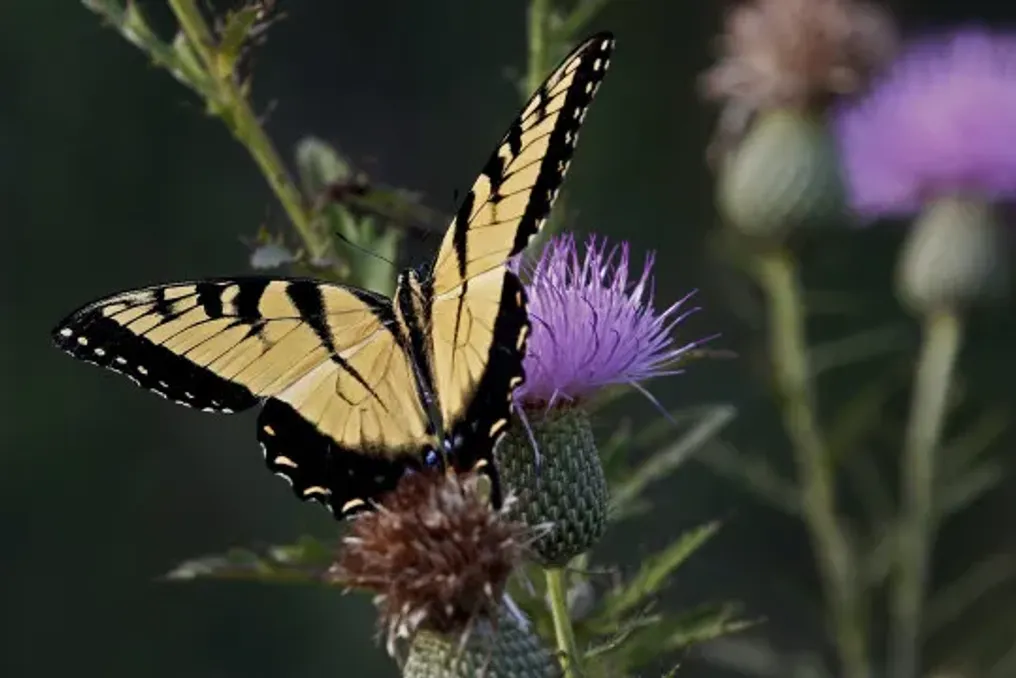
Research conducted by the British universities of Exeter and Essex, whose findings were published in the journal Nature, demonstrated that butterflies utilize powerful optical illusions to avoid being captured by predators.

Scientists discovered that despite possessing striking patterns that make them visible, few species of predators can capture them while they are flying. In contrast, moths are hunted by a wide range of predators that rely heavily on vision.

George Hancock, from the Centre for Ecology and Conservation at the University of Exeter, explained that the stripes and spots present on the wings of many butterflies interfere with how visual systems attempt to determine the direction and speed of moving objects. This generates false displacement signals while simultaneously masking the insect's actual trajectory.

These illusions affect the predator's fundamental visual focus system and destabilize the final moment of the 'ballistic attack,' which lasts only a few tens of milliseconds, when the predator commits to attacking and loses the ability to change course.

Consequently, the researcher observed that birds and other predators frequently miss their strike.

The mechanism behind this phenomenon is comparable to the 'barber pole illusion,' that structure with colored stripes (red, blue, and white) in front of beauty salons, where the lines appear to move vertically, even though the pole is only rotating on its own axis.

Jolyon Troscianko, also from the University of Exeter, detailed that butterfly wings undergo deformations during flight: they collide during ascent and separate during descent. This change in the angle of the stripes causes them to point in different directions as the wings beat.

He added that, combined with unpredictable flight paths, this configuration creates deceptive motion illusions, analogous to those of the barber pole. This leads the predator to completely miss the target or hit a less vital area of the wing, such as the tail or hindwing.

To reach their conclusions, the researchers employed various methodologies, including computational simulations and the use of high-speed cameras capable of recording real butterflies flying at over 1,000 frames per second, simulating bird vision.

The simulations showed that certain characteristics, such as high-contrast vertical stripes, singular bands, and tails on the hindwings, were correlated with an increase in visual confusion.

Troscianko concluded that the study presents an unprecedented approach to analyzing motion vision and believes that this type of visual confusion is much more common in nature than previously imagined, spanning from bird wingbeats to the rapid movements of reptile and fish tails, opening up a new and interesting area of research.

Ecopak Company to Present Organic Solution for Urban Greening at Wetex 2026 Exhibition
Read more
www.khaleejtimes.com

Ecopak Company to Present Organic Solution for Urban Greening at Wetex 2026 Exhibition

The Wetex 2026 exhibition will once again take place in Dubai and will be one of the largest global platforms dedicated to ecology, energy, and water supply issues. The event is scheduled for October 20 to 22 at the Dubai World Trade Centre. The national brand pavilion Made in Russia will participate again, presenting more than twenty Russian companies.

Most goods from these companies have official Made in Russia certification, which serves as a guarantee for buyers in the UAE and the Middle East that the product has undergone strict quality inspection. The Made in Russia program helps Russian producers enter foreign markets by requiring participants to assess production, control quality, and comply with environmental standards. Obtaining this certificate is a significant first step toward international trade for many small and medium-sized Russian exporters, as it gives foreign partners a basis to trust a company they have not previously collaborated with.

Wetex has established itself as one of the key platforms for this program in the Persian Gulf region. At last year's Wetex 2025, the Made in Russia pavilion brought together 30 companies operating in the fields of clean energy, water purification, waste recycling, and sustainable agriculture. The exhibition was divided into four sectors: energy, water treatment, waste management and recycling, and agriculture and infrastructure. The Made in Russia organizers emphasize that at Wetex, Russian companies are not just demonstrating products but also forming long-term partnerships.

This year, the pavilion returns with a similar range of technologies, and among the exhibition participants is the Russian company Ecopak, presenting an organic soil product called Peatgel. Ecopak's product solves problems familiar to every city in a hot climate. Urban trees and green areas face constant pressure: compacted, poor soil from construction and paving; heavy metals and chemicals from road traffic; exhaust fumes that weaken immunity and photosynthesis; extreme summer heat and sharp winter temperature fluctuations; asphalt that hinders natural watering; chemical runoff that disrupts soil pH balance, as well as the high cost of replacing trees that do not survive.

Furthermore, cities with many palms and tropical plants common in the UAE, Saudi Arabia, Egypt, India, and Southeast Asia face the problem of tons of fallen palm leaves, which are usually sent to landfills instead of being utilized. Peatgel is designed to solve several such problems simultaneously. It is a liquid concentrate made from peat, a lowland peat—a natural raw material rich in humic compounds. The product is produced using patented technology that preserves the natural structure of peat in an aqueous suspension.

It contains humic and fulvic acids, which promote root growth and soil restoration, as well as nitrogen, phosphorus, potassium, iron, magnesium, copper, and zinc in a form easily absorbed by plants, plus amino acids that act as natural plant protection against stress. Since it acts simultaneously on the soil, the root system, and the visible part of the plant, it works in two directions: restoring the growing environment and strengthening the plant itself.

There is also the aspect of the circular economy, which aligns well with a region like the UAE. Because Peatgel accelerates humification, it can transform waste from palm and tropical leaves, which are currently viewed primarily as a disposal problem, into a resource for soil restoration. For a country managing large volumes of palm waste annually, this is a practical way to close the loop between green waste and soil health.

Ecopak already exports its products abroad, supplying them to Uzbekistan, Kyrgyzstan, Armenia, and Vietnam. The UAE is the next target market for the company, and over the next year, it plans further expansion into the Middle East and Southeast Asia, including Vietnam, Malaysia, and Dubai. It is important to note that Peatgel already has the Made in Russia certificate, as well as an internal conformity certificate, environmental safety documentation, and a product safety data sheet. This means that the company is presenting at Wetex a product whose production, quality, and environmental impact have already been tested and confirmed by independent certification bodies, a process that typically covers all stages—from sourcing raw materials to the final formulation and its impact on soil, people, animals, and insects.

For landscape design contractors in the UAE, municipal green space managers, and agricultural enterprises seeking solutions to similar problems, the Made in Russia stand at Wetex 2026 will be a place to start such a dialogue. Exhibition visitors will be able to meet the Ecopak team in person and see how Russian peat-based technology, backed by the trust of the national brand Made in Russia, is adapted for one of the world's most challenging growing environments.

Popular