Despite 10 Gold Medals at Asian Games 2026, India Is Not Yet Satisfied with the Results
Read more
Aaj Tak
www.aajtak.in

Despite 10 Gold Medals at Asian Games 2026, India Is Not Yet Satisfied with the Results

Although achieving ten gold medals at the 2026 Asian Games seems like a reason to celebrate, the joy is not yet complete within the Indian sports community. The reason lies not only in the current medal table but also in the benchmark of 28 gold medals achieved in Hangzhou, which has changed the standards of expectation for Indian sports.

As of the 11th day of the 2026 Asian Games, India has secured 10 gold medals, but the question remains whether this pace is sufficient to match the results of 2022. Although the number of gold medals has reached double digits, the ultimate goal is still far off.

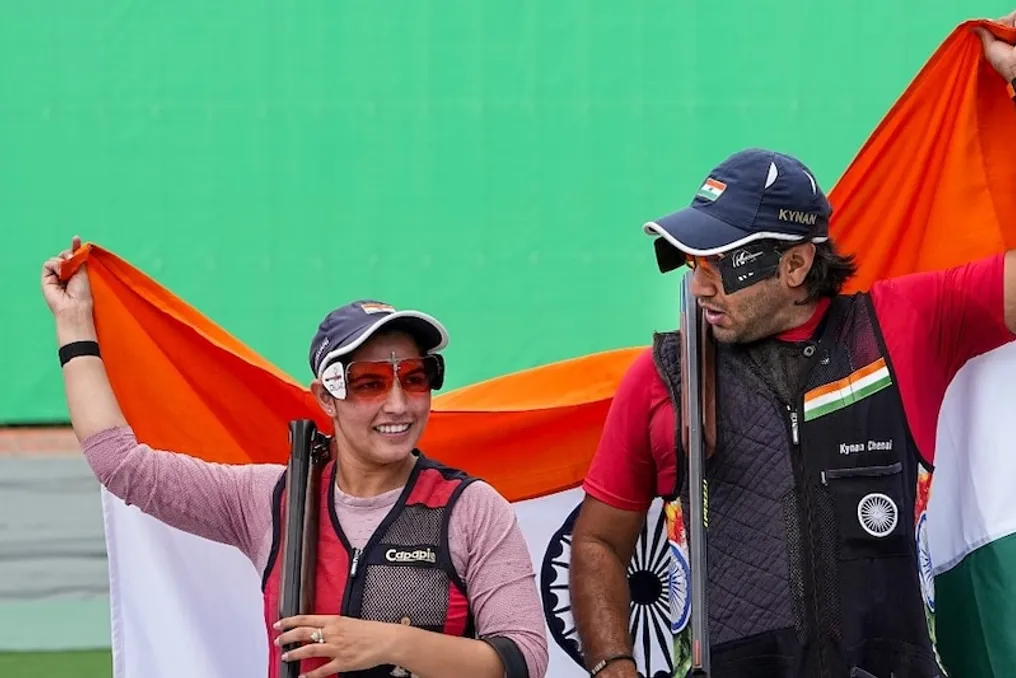
In Nagoya on September 30th, India began gaining momentum in winning gold. The women's compound shooting team, the mixed team, and the men's team each won three gold medals. Additionally, India secured gold in the mixed team trap shooting discipline. Thus, four gold medals were won in a single day, bringing India's total gold count to 10. India now has 60 medals in total (10 gold, 21 silver, and 29 bronze).

Even before that day, on September 29th, India added 6 gold medals thanks to Niru Dande in shooting and the women's 4x400m relay team. Niru became the first Indian woman to win individual trap gold. Consequently, six gold medals were added to India's tally over two days. Nevertheless, despite the rapid increase in gold medals, a serious question arises: has the Indian 'gold machine' truly performed, or was it due to sudden success in several individual sports?

The most significant benchmark for India is Hangzhou. Three years ago, India first surpassed the mark of 100 medals at the Asian Games. At that time, the country ranked fourth with a total of 106 medals and 28 gold. Now, with 10 golds in Nagoya, India still needs 18 more gold medals to match the 2022 performance.

Therefore, one cannot be satisfied with the overall medal count; it is only half the picture. At the Asian Games, the gold medal is the most important criterion.

India has indeed won 60 medals, but among them are 21 silver and 29 bronze compared to 10 gold. This means that Indian athletes consistently reach the podium, but they lack the final step to convert silver and bronze into gold.

This is an important characteristic of the campaign. Indian athletes win medals, but to increase the number of golds, they need to dominate the final competitions.

The medal table further emphasizes the challenges for India. As of the update on September 30th, China leads with 150 gold and 274 total medals. Japan is in second place with 49 gold, and South Korea is third with 24 gold. India, with 10 golds, ranks eighth.

Thus, India has strengthened its presence among major Asian sporting powers, but it is still far from China, Japan, and South Korea when it comes to gold.

However, the story of Nagoya is not over. In the remaining days of the Asian Games, India has several competitions where hope for gold remains. Sports such as hockey, boxing, wrestling, squash, and cricket could significantly increase India's gold medal count.

On September 30th, the women's hockey team defeated South Korea 2-0 in the semi-finals and advanced to the final. Now they have a chance not only to win gold but also to secure a ticket to the Los Angeles 2028 Olympics.

That is, the coming days will determine whether the 10 gold medals will remain just an intermediate stop, or if India can raise its gold medal count to a new level.

In Nagoya, India certainly has a reason to celebrate: 60 medals is a great achievement. But due to the new standard set by Hangzhou, the story does not end at 10 gold medals. The goal of 28 gold medals is still far away, but the narrative continues in Nagoya. In upcoming matches, India has the opportunity not just to increase its medal count but also to turn silver and bronze into gold. Now every final matters, and every gold medal is priceless. India, having reached 10 golds, now faces the main question of Nagoya: at what level will it stop?
Similar stories

Indian athletes achieve success at Asian Games 2026, winning numerous medals
Read more
www.aajtak.in

Indian athletes achieve success at Asian Games 2026, winning numerous medals

The Asian Games reached their peak, and Sunday proved to be a mixed day for Indian athletes. The athletes demonstrated their dedication in disciplines such as running and field sports, hockey, and boxing, thereby bringing pride to the country. On Sunday, India won a total of 7 medals, bringing the overall tally to 37.

In running and field events, Indian athletes showed outstanding results, securing several awards. Sarvesh Kushare received a silver medal in the men's high jump, displaying brilliant performance. Parul Chaudhary won a bronze medal in the women's 3000 meters steeplechase, setting a personal record. In the intense decathlon competition, Tejashwin Shankar added a bronze to the country's collection.

In the women's final of the 200 meters, Harita Bhadra surprised everyone by winning a bronze medal. Ansi Sodjan secured a silver medal in the women's long jump after fierce competition.

Parul Chaudhary won a bronze medal in the women's 3000 meters steeplechase at the Asian Games 2026, setting an impressive national record time of 9:08.67.

The Indian women's hockey team dominated the field, achieving a convincing victory over Singapore with a score of 7:0, thus securing first place in Group B. In this match, Sunelita Toppo scored two excellent goals.

What happened in boxing? Indian boxers continue to show excellent results. Ankush, Parvin, and Nrendra won their bouts, advancing to the semi-finals and guaranteeing the country at least bronze medals.

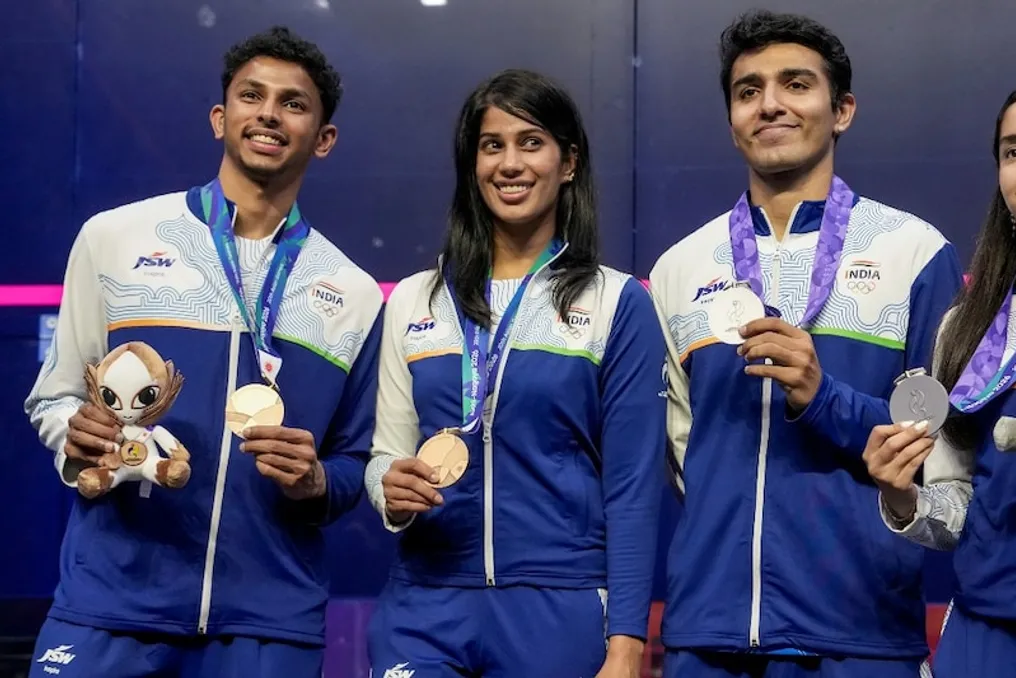
In squash, India had to fight a bit to win a silver medal. Abhay Singh and young talent Anahat Singh both finished in second place, losing to Malaysian athletes in their singles finals.

Indian archers demonstrated excellent form on Sunday, successfully qualifying for the semi-finals in five different disciplines—compound and recurve. The day was difficult for Indian athletes in badminton: all six players in singles and doubles, including P.V. Sindhu and Unnati Hooda, were eliminated from the tournament after losing in intense matches. Meanwhile, the Indian men's volleyball team confidently started its journey, defeating Vietnam with a score of 3:0.

Asian Games 2026 Quarterfinal Schedule: India to Play Afghanistan, Pakistan to Meet Hong Kong
Read more
www.aajtak.in

Asian Games 2026 Quarterfinal Schedule: India to Play Afghanistan, Pakistan to Meet Hong Kong

The quarterfinals of the men's cricket tournament at the Asian Games 2026 in Nagoya have been fully determined. After the match in Group A was cancelled due to rain on September 26 (Saturday), Nepal and Afghanistan advanced to the next round, while the host country Japan was eliminated from the tournament.

Malaysia and Hong Kong advanced to the next stage from Group B. In the last match of Group A, Nepal and Japan faced each other. This match took place at Korogi Sports Park in Nishin city. Nepal, having lost the toss, started with bat, scoring a strong total of 149/4 in 15 overs. Sandeep Jora and Lokesh Bam helped the team reach a good position, but then it started raining. Due to the continuous rain, Japan's innings did not begin, and the match ended without a winner.

This result brought direct benefits to Nepal and Afghanistan. Earlier, Nepal achieved a major surprise in Group A by defeating Afghanistan. For Japan, this match was the last chance to remain in the tournament, but the rain dashed its hopes.

In Group B, the match between Malaysia and Oman was also cancelled due to rain, and no balls were bowled. As a result of this match, Malaysia and Hong Kong qualified for the quarterfinals, and Oman's campaign ended.

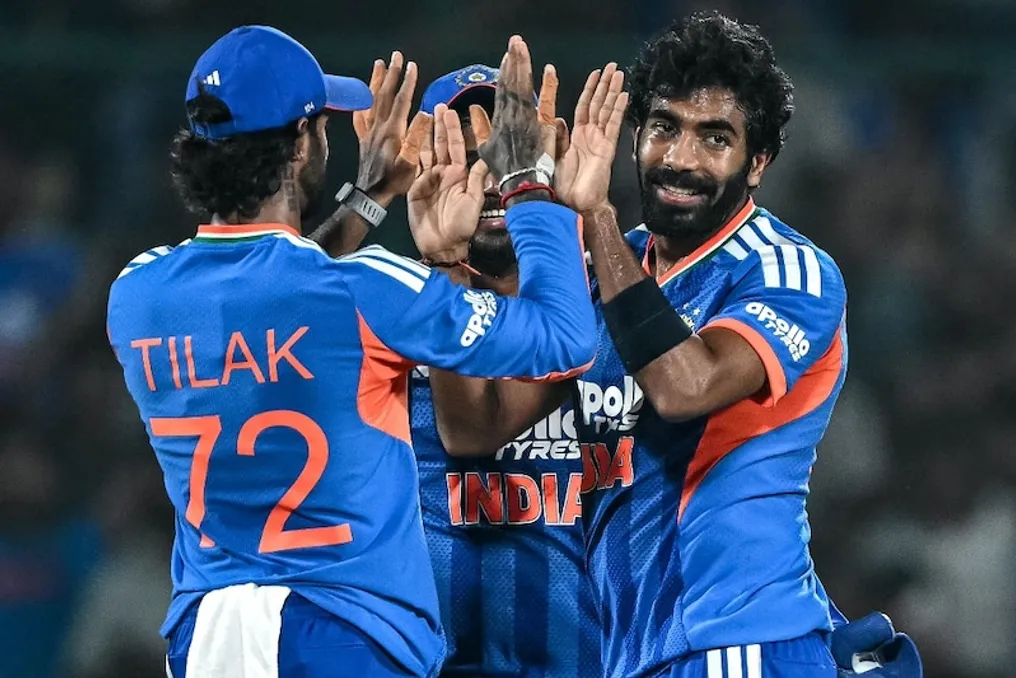
Following the completion of the preliminary round matches, the full quarterfinal schedule was announced. India will face Afghanistan on September 28 (Monday) at 10:00 AM. On the same day, at 5:30 AM Indian time, Pakistan and Hong Kong will meet. The third quarterfinal match will feature Sri Lanka against Nepal, and in the fourth quarterfinal, Malaysia will play against Bangladesh. Both of these matches will take place on September 29 (Tuesday).

Nagoya questions India's sporting prowess at Asian Games: 1 gold medal after preparation costing 800 billion rupees
Read more
www.aajtak.in

Nagoya questions India's sporting prowess at Asian Games: 1 gold medal after preparation costing 800 billion rupees

India invested significant funds in preparing for the Asian Games, allocating approximately 702.86 billion rupees over the last three years for athlete training, international experience, equipment, coach and expert services. Furthermore, 97.84 billion rupees was allocated through the Target Olympic Podium Scheme (TOPS), bringing the total government contribution to preparations to 800.70 billion rupees.

This comparison is quite telling, as the Ministry of Sports budgeted 190 billion rupees for World Cup and Asian Games preparations in 2022–23. However, preparations over three years required investments of nearly 800 billion rupees.

A direct question arises: what is the true picture of India in Nagoya after such massive investments? As of September 24, India has won 1 gold, 7 silver, and 9 bronze medals, totaling only 17 awards. Although the overall medal count may seem acceptable, the situation on the medal table is worrying, as India ranks 14th.

The leaders of the table include China with 126 medals, including 78 gold; Japan with 89 medals and 20 gold; and South Korea with 50 medals and 10 gold. Meanwhile, India currently holds only one gold medal, which is a key feature of these games in Nagoya.

At the 2023 Asian Games in Hangzhou, India achieved a historic result by surpassing the 100-medal mark, winning 106 medals, including 28 gold, 38 silver, and 40 bronze. India placed fourth, demonstrating its best performance at the Asian Games. Prior to this, India's best result was achieved in Jakarta in 2018, where it won 70 medals.

Thus, Hangzhou represented not just a good result, but a shift in expectations in Indian sports. Now, over 100 medals are considered a standard goal. Although the Nagoya games are not yet finished and final figures are unknown, the initial pace raised a serious question: 28 golds in Hangzhou, but only one in Nagoya so far?

While this comparison does not provide a complete picture, as the competition continues, it indicates that the dominance India showed in previous games was not evident at the start of the current tournament.

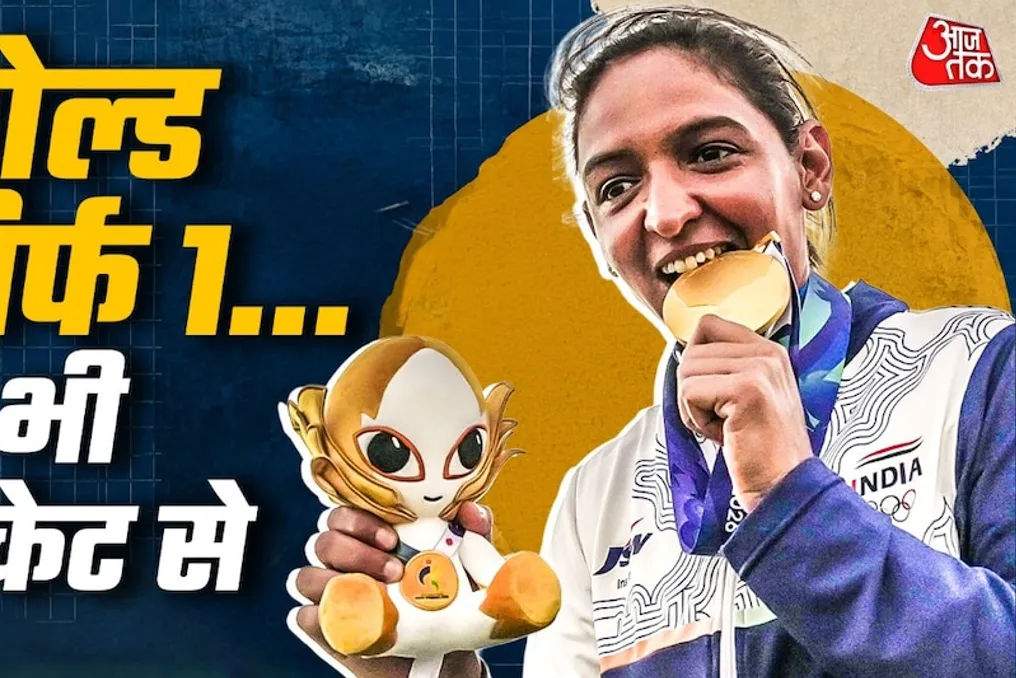
India's sole gold medal was won by the women's cricket team, which secured gold for the second consecutive time at the Asian Games by defeating Sri Lanka with a score of 147 runs.

Subsequently, the number of silver and bronze medals increased. Therefore, the question is not whether India is returning empty-handed. The question is much deeper: is India becoming a force capable of claiming gold in Asia, or is it remaining merely a country that wins medals?

The figure of 800 billion rupees is not just a headline. 251.4 billion rupees was spent on international experience, 118.3 billion on domestic training, 89.2 billion on equipment, 86.3 billion on foreign experts, and 39.8 billion on overseas training.

This time, 501 athletes are participating in the competition, 310 of whom are debuting at the Asian Games. The team also includes 265 support staff. This suggests an attempt to prepare not only the current team but also the next generation.

Therefore, decisions about the future cannot be made solely based on the medal table. However, money does not solve all problems. Investments can improve preparation, but they do not guarantee medals. And the Nagoya arena is currently testing these very investments.

India's problem is not just one gold medal. The main question is how many different sports disciplines India has a consistent ability to win gold in? In Hangzhou, shooting and athletics played a major role. Only in athletics were 29 medals won, and in shooting—22. Of these, 7 golds came from shooting, and 6 golds from athletics.

This means that India's strength has indeed increased in certain individual sports, but the question of consistently winning gold across many disciplines, like sporting powers such as China, Japan, and South Korea, remains open.

This is why the fact of winning 17 medals is less important than why there is only one gold among them.

India's history at the Asian Games exacerbates this discussion. Over decades, India has undoubtedly increased its medal count, but the gap with leading Asian powers remains significant. Despite winning 106 medals in Hangzhou, India ranked fourth behind China, Japan, and South Korea. Even at the initial stage of the current games, these three countries significantly outpace India.

Therefore, the next step for India cannot solely be about crossing the 100-medal mark. It needs to ask itself: how many golds? In how many sports? And in which sports can India not just compete, but dominate China, Japan, and Korea?

The Asian Games are not the final destination. They are an important step towards the Los Angeles Olympics in 2028. Results in some sports at the Asian Games are relevant to Olympic preparation.

Popular