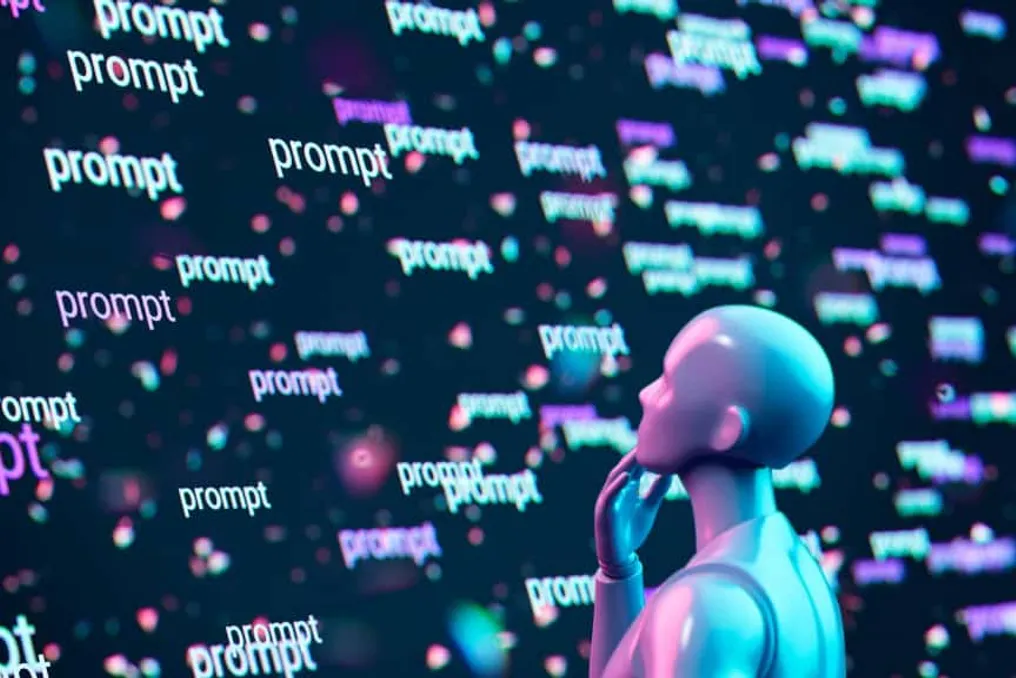
Artificial intelligence (AI) has undergone significant transformations since the launch of ChatGPT in late 2022, becoming a tool that optimizes various activities, both in personal and professional spheres. Although the use of this technology may seem harmless, Cristiano Nabuco, a psychologist and rector of the Artmed School of Psychology (APSY), warned that there is a future 'toll' to be paid.
This warning from the specialist does not refer to financial issues, but rather to cognitive aspects, meaning how individuals process thoughts when performing tasks. Nabuco detailed that there has been a change in the relationship with technology: before 2022, platforms aimed to keep the user engaged through stimuli like likes and flashes, presenting increasingly personalized content.
With AI, this dynamic has advanced because it interacts with the user in a way that simulates a person, a phenomenon called anthropomorphism. Users have begun to react to the machine as if it were an individual or a professional. For example, Google started to be replaced because users began to desire more elaborate and conversational information.
Initially, AI functioned as a mere search engine, but it evolved into a tutor, allowing users not only to search for data but also to ask questions such as 'How do I do this?' or 'Where do I go from here?'. This tutoring led people to address personal topics, such as difficulties with bosses or the need to talk to someone. Thus, AI ceased to be just a search engine or tutor, transforming into a coach and subsequently, a psychologist.
This evolution culminated in an even deeper stage, where AI began to introduce nuances of an affective, almost loving relationship. There are reports of people becoming emotionally dependent on AI to make decisions. What was once a minor concern has become something much more impactful today.
Nabuco questioned whether AI is making people lazy or less intelligent, raising the hypothesis of losing cognitive and intellectual friction. He explained that the brain responds to the demands presented. Comparing it to the past, when calculators did not exist, mathematical learning required manual effort. Currently, although the machine exists, the level of complexity offered by AI transcends what was previously seen.
AI can function as a personal portal that performs complex calculations, such as water flow in hydraulic engineering projects, or discusses the merits of trips. This allows the user to have a panoramic view, as if observing a work of art from afar. However, he stressed that many no longer perform tasks like writing or creating presentations, delegating the process.
He proposed that current society has a generation with one foot in analog life and one in digital. These new generations may not develop crucial skills because they outsource learning to AI. Although it is possible to use AI to analyze scientific texts, the risk lies in those who skip the step of learning how to do the calculations or perform the work manually.
Although there is no definitive scientific proof, research indicates that important skills are being lost due to lack of practice, which represents a future cost. Having all conveniences ready can generate problems, especially when the individual has never learned the skill and simply delegates it to AI, forming adults without competence in various areas.
The healthy use of AI should be as support. For example, when writing a text, the user organizes their ideas and only then uses AI to correct errors or refine concepts, as excessive writing can trap the author's interpretation. AI can point out corrections that a reviewer would make in seconds, reducing distances.
Regarding whether AI is inherently bad, Nabuco stated that it depends on the mode of use, comparing it to eating chocolate: pleasurable, but harmful in excess. He argued that the population needs to be educated in digital literacy, understanding how and when to use the tool and what its potential harms are.
Companies are reacting too late, as no one predicted that AI would occupy such a relevant emotional space. Since AI does not generate friction—that is, it does not disagree or present different opinions—it creates a barrier that makes it difficult for the user to perceive reality as it is. Despite this, he considers AI an incomparable and essential aid tool.
However, its use can be dangerous for people with psychological problems or mental illnesses, as it can atrophy human development. It is vital to understand life as a constant exercise in improvisation. Instead of asking AI for a ready answer, the individual must force themselves to think and draw upon their own experiences. Challenging circumstances are what improve us. Therefore, AI must be used with reservations. Nabuco concluded that his generation is serving as a test for large corporations, which is unfair given the state of vulnerability of contemporary society.