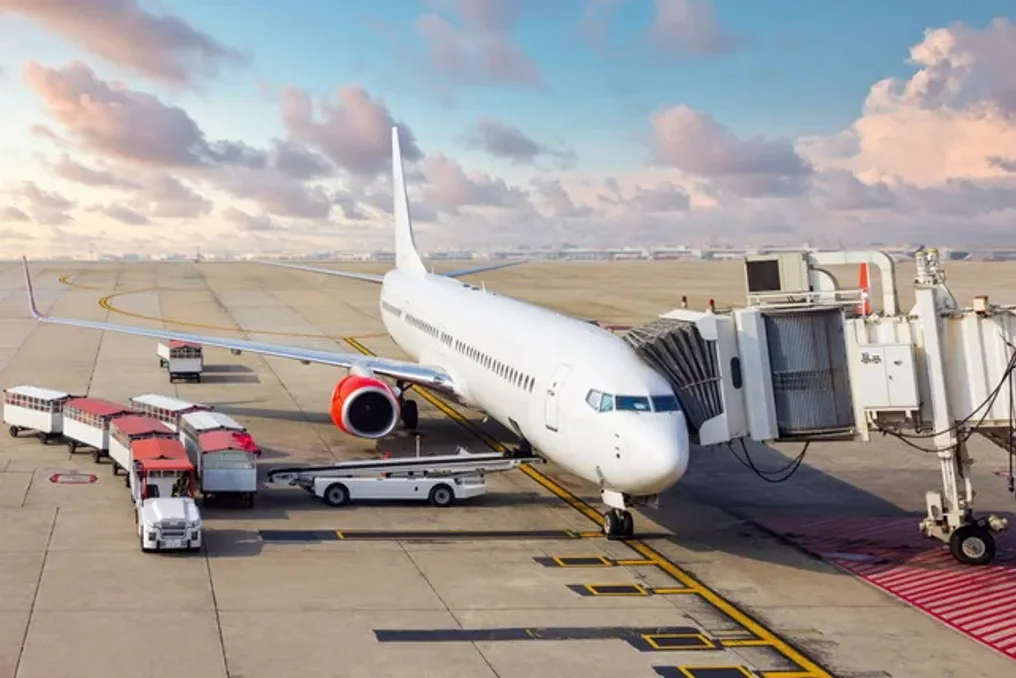
The International Air Transport Association (IATA) has released a new report titled 'The Growing Role of Central Asia in Global Cargo Flows,' which indicates that Central Asia is strengthening its position as a transit corridor for global freight and is gradually becoming an alternative route between Europe and Asia.
Since 2019, the volume of regional air cargo transport has more than doubled. Furthermore, the share of direct transits in the total volume of Central Asian cargo transport has increased from 59% to approximately 65%.
The most significant growth among the region's countries has been recorded in Uzbekistan and Kazakhstan. Between 2019 and 2024, the cumulative volume of incoming, outgoing, and direct transit cargo shipments in Uzbekistan grew by 182%, and in Kazakhstan by 149%.
IATA noted that the increase in outgoing cargo flows demonstrates the expansion of the region's role. Central Asia is moving beyond its traditional function as a technical stopover, developing logistics and consolidation capabilities connecting Europe and China.
Improved transport connectivity, increased activity of airlines, and integration into major trade corridors are creating conditions for the region's further development as a multimodal logistics hub. However, IATA emphasized that realizing this potential requires continuous investment in infrastructure, transport connectivity, and operational efficiency.
The Association identified three crucial areas for governments and industry stakeholders. The first is the further digitalization of cargo transport. According to IATA, cargo information is still stored in disparate systems, leading to process duplication, risk of delays, and difficulties in meeting compliance requirements.
Starting in January 2026, the IATA ONE Record standard will become the preferred method for exchanging cargo data. Airlines handling over 70% of the global air waybill volume plan to implement this standard with the support of technology providers, forwarders, and other participants in the digital supply chain.
The second area is the consistent application of global standards. IATA pointed out that fragmentation complicates processes, which in turn increases the risk of delays.
The third area concerns the security and safety of the supply chain. The ICAO Annex 18 remains the global basis for the safe carriage of dangerous goods, but IATA believes it needs modernization to reflect industry changes. Among the risks identified by the association are undeclared dangerous goods, improper handling of lithium batteries, and deliberate attempts to exploit cargo systems.
IATA believes that updating Annex 18 will bring regulations in line with current operational realities and strengthen the safety of the entire supply chain.
Brendan Sullivan, IATA's Global Head of Cargo, stated: 'The region's growth potential is enormous. Nevertheless, it is important that airlines, governments, and all participants in the cargo industry adhere to the global standards underpinning the transformation of freight transport.' According to Sullivan, this will help accelerate the delivery of goods to markets while improving the safety and security of air transport.