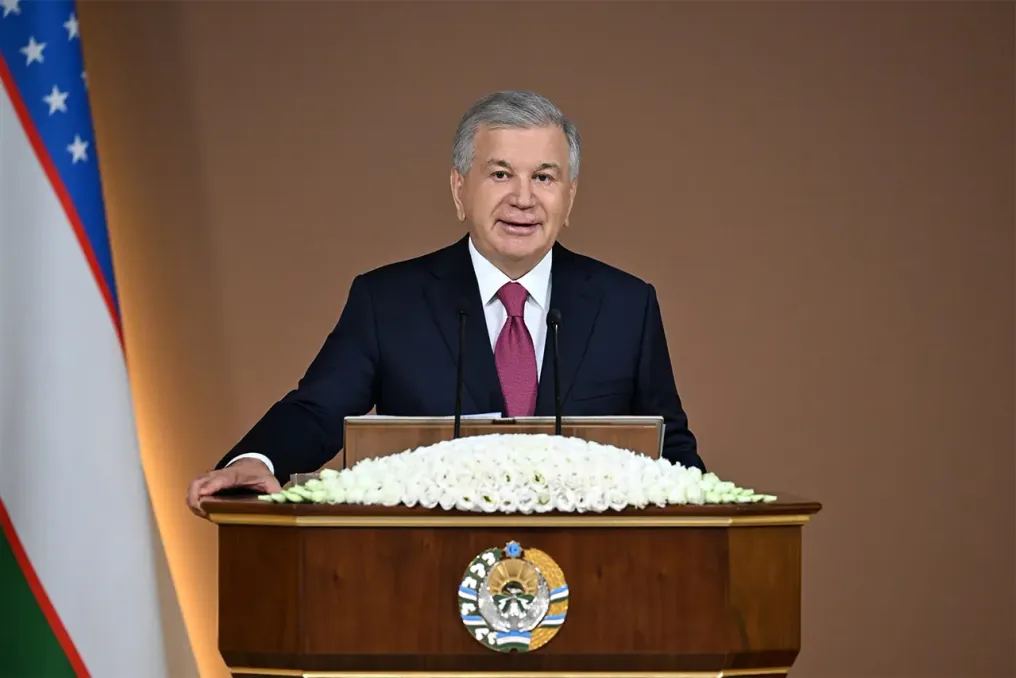
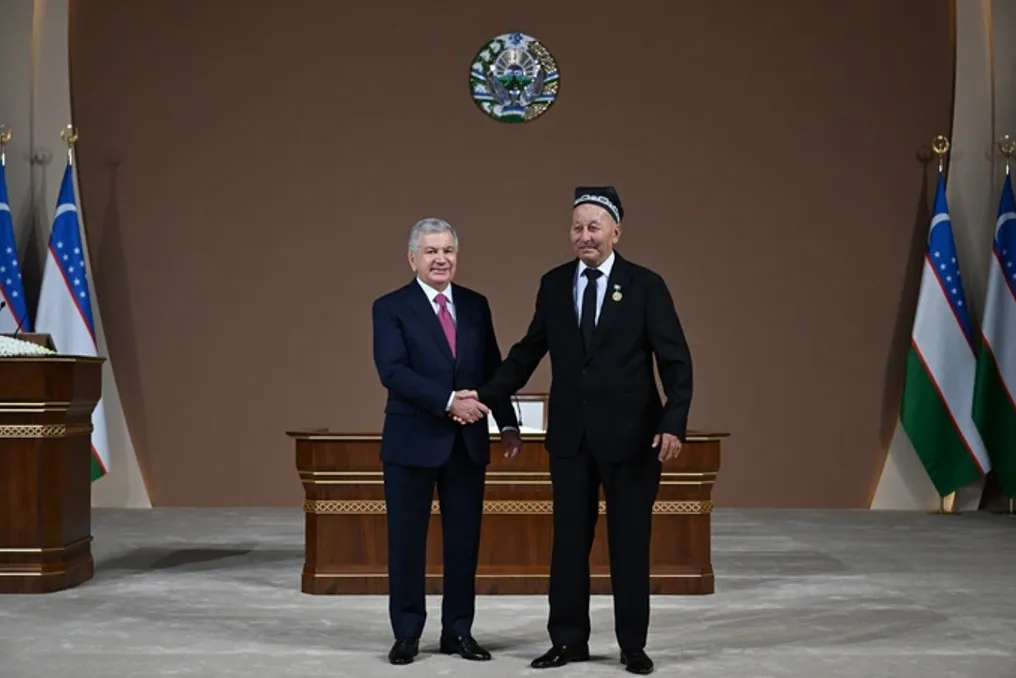
The President of Uzbekistan, Shavkat Mirziyoyev, during a meeting with educators held before Teacher's and Mentor's Day, congratulated them on the professional holiday and presented state awards. The head of state initiated the creation of a new state award named after Abdulla Avloni, which will be given to outstanding educators at all levels of the education system. The first presentation of this award is scheduled for the day before October 1st of next year.
Shavkat Mirziyoyev emphasized that the development of education plays a critically important role in the process of forming New Uzbekistan. Over the past decade, kindergartens for 1.8 million places and schools for 1.5 million places have been built, and over 10 thousand educational institutions have been modernized. Nevertheless, the president stressed that the quality and content of education are more significant than the development of the material base.
He noted that it has been possible to bring children from agricultural fields back into classrooms and teachers back into the educational process. Since 2018, work has been underway to develop textbooks of a new generation based on foreign experience, and textbooks up to the eighth grade have been updated. It is planned to complete the update of textbooks for senior grades by 2030.
In the last five years, the number of teachers holding both international and national certificates has increased from 29 thousand to 143 thousand, which has helped reduce the shortage of teaching staff in schools threefold. The President announced that currently, 40 thousand teachers receive a salary of $1000, and another 1500 educators earn over $2000. It was proposed to expand the 'Teacher of the Year' competition to include kindergarten educators and technical college masters.
Shavkat Mirziyoyev stated that a school graduate should start adult life with a profession and knowledge of a foreign language. School principals will be granted additional powers to implement this direction, and conditions will be created for interaction with entrepreneurs. A special commission on youth vocational training will be formed to ensure continuity between educational levels.
For the technological progress of the economy, special attention will be paid to the in-depth study of mathematics, physics, chemistry, and biology. In classes where the number of students exceeds 25, the teaching of these disciplines will be organized by dividing them into two groups. Teachers with a national certificate will receive a 50% bonus. Annually, prizes will be awarded to leading teachers from 208 districts and cities, and one thousand educators will have the opportunity to undergo internships abroad. Teachers who have prepared olympiad winners will automatically receive the highest qualification category.
Subject competitions will be held for primary school students. Starting next year, winners of the contest among fourth-grade students will be awarded computers, and their teachers will receive monetary bonuses depending on the stage of the contest. From the new academic year, mathematics, informatics, and natural sciences will be taught entirely in English in 100 schools. Preschool group educators participating in this project will receive a 100% bonus.
A 'quality index' will be introduced to evaluate schools, classifying educational institutions based on learning outcomes and teacher potential. Schools that contribute to improving the category of other institutions will receive a 30% bonus for their teaching staff. Instead of mandatory monthly advanced training courses, vouchers will be introduced, allowing teachers to independently choose training lasting from 18 to 72 hours according to their results.
The President also announced measures to support private educational institutions amid the growing demand for places. In 52 districts with high pressure on the education system, private schools will be provided with preferential loans and subsidies. Vacant state buildings can be transferred to private schools for free rent for ten years, and half of the costs for international accreditation will be covered by the state. Furthermore, the tax-free income threshold will be doubled for parents whose children attend private schools.
Attention will be increased to creating an inclusive educational environment for children with special needs. Over two years, the number of inclusive schools has increased almost fivefold, reaching 3,591. The experience of the multifunctional inclusive resource school launched in Tashkent will be disseminated in Khorezm, Jizzakh, and Samarkand regions by the end of the current year, and then cover all regions of the country within the next two years.
Shavkat Mirziyoyev emphasized that kindergarten should promote the development of a child's abilities. 180 thousand educators and teachers are undergoing training based on a program developed from advanced international experience and focused on play-based learning. This program will be implemented in all more than 38 thousand kindergartens by the end of the year. Equipping state kindergartens with equipment will be carried out as part of a three-year program.
To support working mothers, starting January 1, 2027, the state will begin compensating for the costs of keeping children in family kindergartens (for children aged 2–3) from the state budget. From the new academic year, educators wishing to obtain higher education without leaving work will be able to reduce the study period in pedagogical universities from four to three years. This opportunity will also be available to assistant educators who have worked in kindergartens for at least five years.
The first 'Builders of New Uzbekistan' competition attracted 170 thousand participants. It will become an annual event, and the best participants will undergo preparation for the World Skills Championship to be held in Tokyo in 2028.
Tax and land benefits will also be provided for establishing private technical colleges that train personnel for priority industries. In such institutions, half of the students will study on state grants, and they will be supported in attracting international educational programs and equipping laboratories.
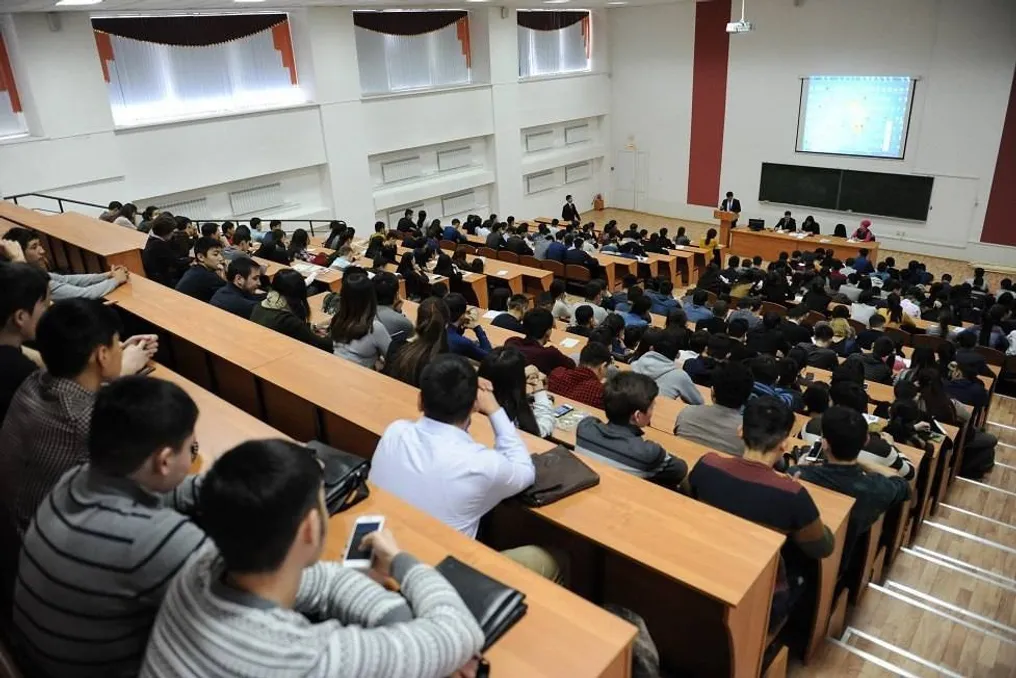
Addressing higher education, the head of state noted that the number of students in Uzbekistan has reached 1.6 million, and seven universities have entered international rankings in 17 disciplines. However, he criticized the content of textbooks and the level of specialist training in universities. Engineering and medical institutions have been instructed to intensify work on creating new educational materials, as well as translating and adapting advanced foreign publications. The responsibility of rectors for the quality and results of education will be increased.
Two-thirds of the members of the supervisory boards of state universities will be formed from representatives of the private sector and foreign universities. These boards will annually review curricula in line with labor market demands and develop at least 50 textbooks. Scientific research and diploma theses must be aimed at solving practical economic problems.
A management system similar to the one implemented at Inha University and Tashkent Architectural and Construction University will be extended to another 20 universities. A resolution on developing dual education in higher education based on the 'enterprise—university—target cadre' model was also discussed. Starting next year, the system will be launched in 75 universities, and by 2028, it will cover all universities in the country. Enterprises will be able to apply to train specialists according to their needs, and admission will be based on interviews. The state will compensate half of the salary of a student employed at the enterprise. Students demonstrating high achievements will be eligible for a state grant from the second year.
Mentors assigned to students in enterprises will be encouraged, and students will be compensated for housing rent if necessary. Universities and partner enterprises that successfully implement dual education will be awarded, with half of the award going to their teaching staff.
The head of state also ordered the attraction of branches of 300 leading world universities to the country. Private universities opening branches of famous foreign universities will be compensated for part of the costs of creating laboratories, purchasing equipment, using the brand, and developing the campus. Priority areas include engineering, agriculture and water management, energy, artificial intelligence, and medicine.
In conclusion, the president stated: 'Valuing a teacher means valuing not just a representative of one profession, but the future of an entire nation.'