Microsoft improves integration between Linux and Windows with native container support in WSL
Read more
Tecnoblog
tecnoblog.net

Microsoft improves integration between Linux and Windows with native container support in WSL

Microsoft has implemented a significant enhancement to the integration between Windows 11 and the Linux ecosystem, officially releasing support for containers in the Windows Subsystem for Linux (WSL). This feature is particularly relevant for development professionals.

For those unfamiliar, WSL is a utility that allows running various Linux distributions within the Windows environment, eliminating the need to use virtual machines or configure a dual boot in certain scenarios. Although introduced in Windows 10, it has received substantial improvements in Windows 11.

One of the notable additions is container support. A container can be understood as a package that groups an application along with all its dependencies—including libraries, configuration files, and modules—allowing it to be executed in a standardized manner across various computing environments.

Although developers, IT administrators, and other professionals could already work with containers in WSL, they had to rely on third-party solutions. With this update to the Windows Subsystem for Linux, the tool itself now offers native support for this capability.

The feature, officially named WSL Containers (WSLC), was presented in June during the Build 2026 event. After a period of testing and refinement, it is now being widely made available concurrently with the release of Windows 11 version 26H2, although the two new features are not intrinsically linked. It is important to note that the current focus of WSL is on Windows 11, but it maintains compatibility with Windows 10 and Windows Server.

The operation of WSL Containers occurs through a command-line interface (CLI). Microsoft highlighted several use cases. A fundamental command is the one that starts WSLC, depending on specific parameters. For example, a simple command allows activating an Ubuntu environment, executing the echo command to display the message 'Hello, world!', and subsequently removing the container using the –rm parameter:

wslc run --rm ubuntu:latest bash -c «echo Hello, world!»

Additionally, WSLC can be triggered via an API. This enables applications developed for Windows to run containers in WSL directly, which can be very useful for automating certain tasks.

To access this new functionality, users must type the command wsl –update in PowerShell or Command Prompt to ensure WSL is up to date (version 2.9.3 or higher is required). If the tool is not yet installed, it can be installed using the command wsl –install. More information on how to use WSLC is available in the official documentation.
Similar stories

Microsoft CEO Satya Nadella notes technology growth in Seattle and deepening ties with India
Read more
timesofindia.indiatimes.com

Microsoft CEO Satya Nadella notes technology growth in Seattle and deepening ties with India

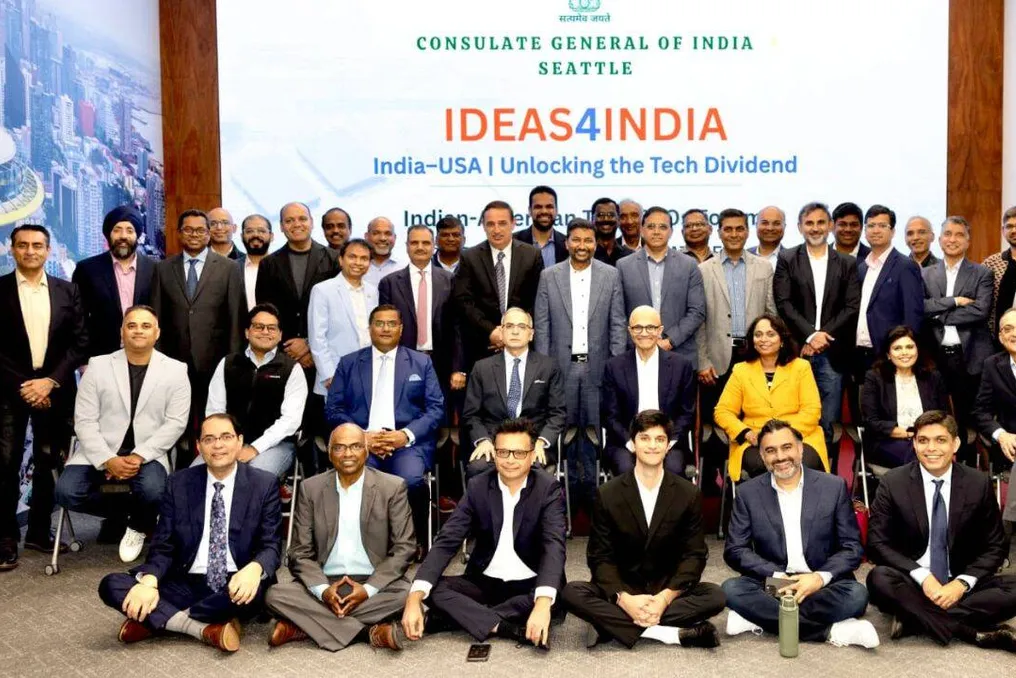
Microsoft CEO Satya Nadella highly praised the developing technological ecosystem of Seattle and the strengthening of this region's ties with India. He addressed over forty technology executives and technical directors of Indian origin from various sectors, including artificial intelligence, quantum computing, and enterprise software.

Nadella participated as a guest of honor at the first 'IDEAS4INDIA: Forum of Indo-American Tech CEOs | Unlocking the Technology Dividend' forum, organized by the Consulate General of India in Seattle under the leadership of Consul General Prakash Gupta.

The forum took place on Thursday at the consulate premises and followed the AI Impact Summit in India, which was held in New Delhi in February. The event gathered leaders of Indo-American tech companies from the Greater Seattle area to discuss ways to strengthen technological partnership between India and the United States.

Speaking at the event, Nadella expressed pride in the development of the Seattle tech community over the past approximately 35 years and was pleased to see how it is strengthening relations with India, according to the consulate. He defined artificial intelligence as a general-purpose technology whose benefit will depend on its widespread adoption across countries, communities, and sectors.

Attendees at the forum included leaders working in AI, quantum computing, semiconductors, cloud infrastructure, aerospace, and enterprise software. Participants included representatives from companies such as Microsoft, Amazon, Boeing, OpenAI, Anthropic, Intel, Veeam Software, Helion, Rhythms AI, Zenoti, Anicca Data, and SeekOut. Ajay Bhatt, inventor of USB-C and former Intel executive, also participated in the discussions.

India's Ambassador to the US, Vinay Kwatra, welcomed the participants' interest in deepening technological cooperation between India and the US. Kwatra affirmed the government's commitment to ensuring that India's AI Mission remains based on the principles of 'inclusivity, openness, sovereignty, democratized access, security, and trust.'

During an interactive session, technology leaders exchanged ideas on strengthening cooperation in areas such as AI infrastructure, data centers, semiconductor design and manufacturing, quantum research, talent development, and aerospace and advanced manufacturing. The discussions also highlighted the bilateral nature of technological relations, as several companies represented at the forum conduct significant engineering, research, and business activities in India.

The consulate noted that the forum should become an important platform for strengthening technological ties between India and the US, including within the TRUST India-US Initiative (Transforming Relations through Strategic Technologies). Under this initiative, both countries are working to connect their innovative ecosystems and promote cooperation in artificial intelligence, quantum technologies, semiconductors, space, telecommunications, and biotechnology.

Several American technology companies also announced major investments in India. Microsoft announced investments of $17.5 billion in India between 2026 and 2029, its largest investment in Asia, aimed at expanding cloud and AI infrastructure, training, and operations. Amazon announced investments of $48 billion between 2026 and 2030, including the expansion of AWS data center capacity in Mumbai and Hyderabad. Additionally, Costco plans to open its first Global Center of Excellence in Hyderabad.

The event began with a moment of silence in memory of two Indian-origin tech leaders from Seattle who recently passed away: Samir Bodas, co-founder and CEO of Icertis, and S. Somasegar, Managing Director of Madrona Venture Group and former Vice President of Corporate Affairs at Microsoft. They were remembered for their contribution to the Seattle tech ecosystem and support for Indian-origin startups.

Popular