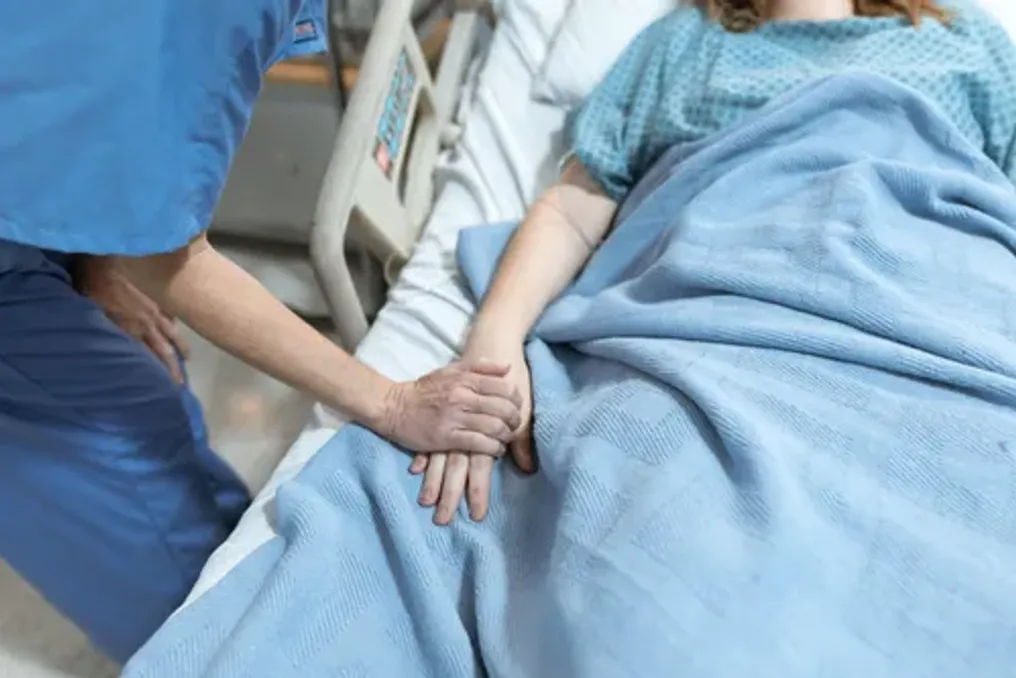
During parliamentary hearings, it was revealed that mothers giving birth in Eastern Cape hospitals were forced to sleep on cold floors and share beds due to a lack of space. The Gender Equality Commission found that in one of the six hospitals surveyed in the province, patients shared beds, there was blood visible on the floor, and shower stalls were covered in mold.
The head of the commission's legal service, Tsietsi Shupin, reported that these findings were obtained during hearings with the hospitals and the provincial health department, as well as during surprise visits by commissioners in October 2023. Shupin noted that patients from remote rural areas are forced to share beds, and traces of blood were observed on the floor, which negatively affects their dignity.
These terrible conditions were recorded at St. Elizabeth's Hospital in Mtatheke, where women who underwent surgery bathed in showers with green and black growths on the ceiling. At Frere Hospital in Gugongo town, formerly known as East London, the commission discovered exposed electrical wires in the underground tunnel leading to the maternity ward, as well as a room used for abortion, which, according to Shupin, deprived women of their dignity.
Shupin also pointed out the condition of the beds, the general state of the wards, the lack of equipment, and the absence of cabinets for storing supplies, highlighting the inhumanity of the conditions and the potential to deter people from undergoing abortions in such facilities. Furthermore, the hospital lacks a fence, and accumulated garbage requires cleaning, which she deemed unacceptable.
The commission also established that women at Bhisho Hospital had to bring their own bedding to the postnatal ward. Member of Parliament Nomphumelelo Mkhlongo stated that the abortion room lacked privacy, was dirty, and had cutlery lying on the windowsill. Mkhlongo emphasized that no one should allow such treatment and that people must take responsibility for it.
Member of Parliament Paulinta Marais told the committee that during her inspections in the Sarah Bartman district, pregnant women living with HIV were sent to distant parts of the clinics to receive antiretroviral drugs. Marais expressed concern that people continue to be stigmatized in 2026, leading to mothers losing their children.
DA party member, Dr. Carl le Roux, a former rural doctor in the Eastern Cape, reported that patients reported verbal and physical abuse during childbirth in hospitals across the country, and asked whether the commissioners spoke to the women about the quality of their care.
The investigation by the Tutuzela support centers commission, where victims of rape should receive medical, police, and legal assistance in one place, showed that only one of the seven visited centers had a security guard. The Deputy CEO of the Eastern Cape Health Department informed the committee that maternal mortality in the province decreased from 127 in 2024 to 85 in 2025. He specified that the department used allocations of 897 million rand from the Minister of Health to purchase bedding and hospital beds, solving the shortage of linen at Bhisho Hospital and the shortage of beds at St. Elizabeth's Hospital.
However, he admitted that due to funding and budget constraints, they have not yet reached the desired level but continue to work on efficiency and prioritizing maternal and newborn health services with available resources. Committee Chairperson Faith Mutambi gave the department until October 15 to provide a full report on the work done since the publication of the commission's findings.