A few months ago, the question of whether this was the final stage of Rohit Sharma's international career hung over every ODI match. However, the situation has changed. Although the 2027 World Cup is still far off, Shubman Gill is leading the Indian squad, and young players are constantly vying for a spot in the starting lineup as openers.
Despite this, it has become harder to ignore Rohit. When the Indian team for the three-match ODI series against the West Indies was announced, Rohit Sharma's name appeared on the list again. Alongside him were options such as Yashasvi Jaiswal and Ritwick Ghosh. Thus, this selection is not a decision to block one player's path, but part of the process of forming the team for 2027.
But the real turning point in this story is not the presence of Rohit's name in the squad. The main story is how the path from question to answer regarding Rohit Sharma changed in two months.
After Shubman Gill was entrusted with the captaincy in ODIs, Rohit's role completely transformed. Now, the entire team was not built around him; he was just a batsman, and his place depended on his performance, like all other players.
This change was particularly significant because Rohit now plays only ODIs for India. After retiring from Tests and T20 Internationals, he has limited chances left to prove his form. In such circumstances, a poor run of form becomes not just a poor run, but part of the debate about the squad.
In Australia, Rohit demonstrated that the story was not over, scoring 73 and then an unbeaten 121 runs. However, in the subsequent 11 matches, he scored 57, 14, 75, 26, 24, 11, 16, 48, 79, 11, and 26 runs.
Among these were innings of 75 and 79, but there was no single big, decisive innings that could outweigh all other discussions.
Then came the series against England. In Birmingham, he scored 11 runs, and in Cardiff, 26 runs off 47 balls. The questions became even sharper: should Rohit even be considered until 2027? Is it time to promote young openers?
England posted a substantial total of 387 runs. To chase this target, India needed an innings that could take control of the match. Rohit did exactly that...
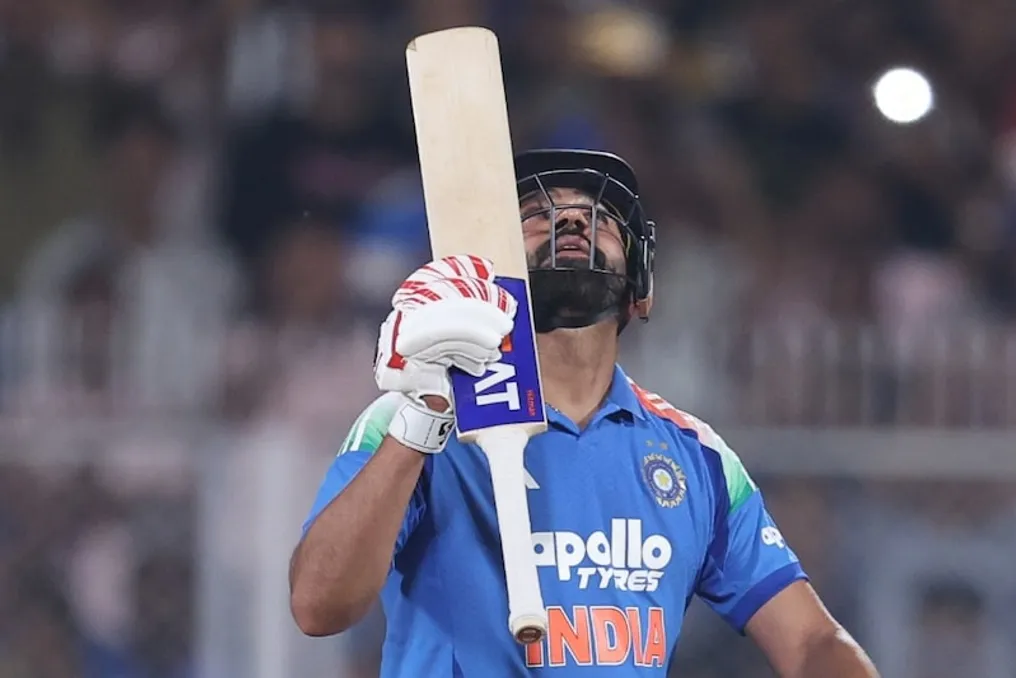
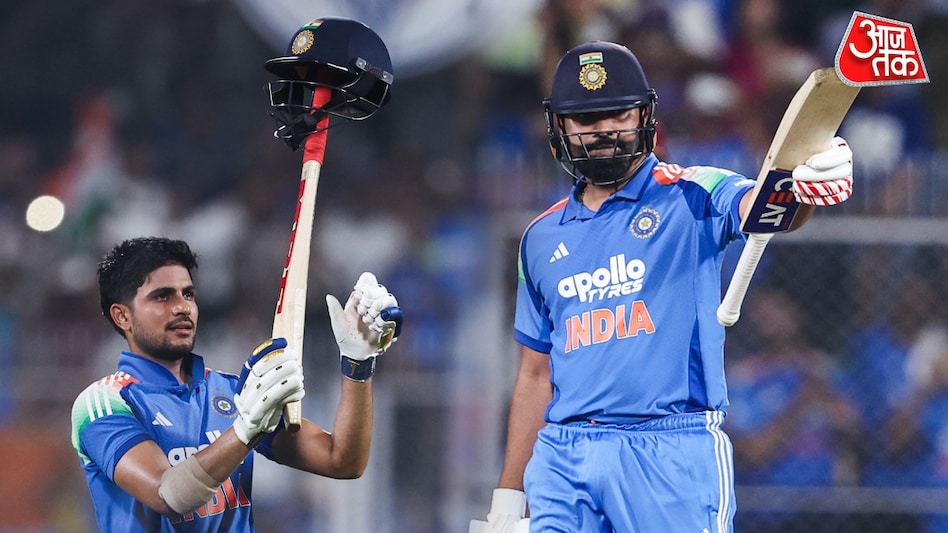
He scored 138 runs off just 110 balls, including 17 fours and 5 sixes. Although India ultimately lost the match by 27 runs, Rohit won another match that day—the debate about his future.
This innings was important not because Rohit scored another hundred, but because it happened at a time when there were the most questions about his future. The 39-year-old batsman showed that despite his age and recent form statistics, his bat still has the ability to deliver an ODI innings capable of changing the course of a match.
It was at this point that the question changed. The initial question was: how much longer does Rohit need to play? Now the question is: if Rohit continues to deliver such innings, how can he be dropped?
This does not mean that Rohit's ticket to the 2027 World Cup is guaranteed. It would be hasty to assume so. India has several options at the top. Yashasvi Jaiswal could be part of the long-term plan. Ritwick Ghosh is also present in the ODI squad. Shubman Gill has already become the captain and central batsman of the team. The BCCI included these options in the ODI against the West Indies.
This means that Rohit should not occupy a spot based on privilege. He must score runs, stay in form, and constantly prove his worth. However, 138 runs at Lord's were enough to make the door for Rohit look open again.
The real test begins now. The series against the West Indies starts on September 27, and all three matches will be held in India. Following this, ODI series against New Zealand in November, Sri Lanka in December, and Zimbabwe in January 2027 are scheduled. This gives India many opportunities to test its ODI squad before the 2027 World Cup. For Rohit, this is also a real test.
One big innings changed the debate, but did not end it. 138 runs at Lord's did not secure him a place in the 2027 team, but they complicated the task for selectors—Rohit Sharma cannot be ruled out of the future picture from the start.
In cricket, the greatest strength of great players often lies not only in their statistics. It is the ability to play such an innings when the whole world starts considering you an old character in history, forcing them to rewrite that history.
Rohit Sharma did something similar at Lord's. His ticket to the 2027 World Cup is not yet in anyone's hands, but he proved one thing: when planning India's path, his name cannot be ignored.