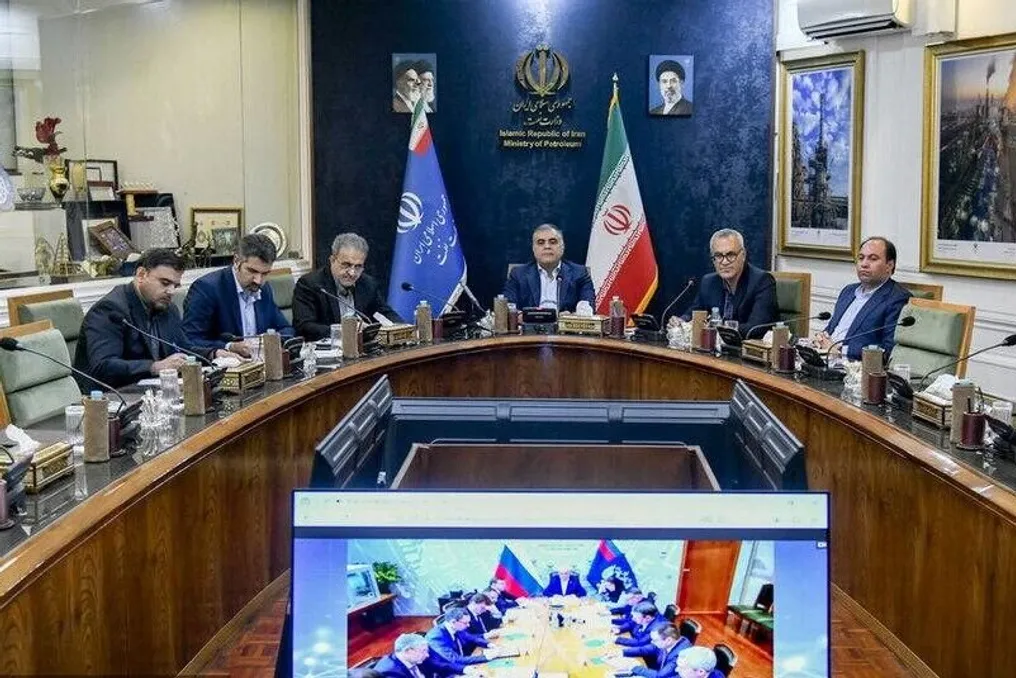
The Iranian Minister of Oil announced that Iran and Russia have put forward bilateral proposals aimed at eliminating existing obstacles and accelerating the implementation of decisions and agreements adopted within the Joint Committee for Economic Cooperation.
According to IRNA, citing the Ministry of Oil, Mohsen Paknejad reported on a video conference with Sergey Tsivillev, the Russian Minister of Energy. During this meeting, detailed discussions were held on issues previously defined within the Joint Committee for Economic Cooperation between the Islamic Republic of Iran and the Russian Federation.
The Oil Minister emphasized that both sides presented solutions to overcome current barriers in order to achieve more significant results in the shortest possible time.
The Joint Committee for Economic Cooperation is a key mechanism for developing interaction between the two countries in various economic spheres. This commission addresses issues related to energy, investment, trade, and the implementation of joint projects.
At the 19th meeting of the Joint Committee for Economic Cooperation between Iran and Russia, which took place in February 2025 at the International Conference Center of the National Iranian Oil Company (Koushk), a wide range of topics was considered. These included the completion of the North-South International Transcontinental Corridor, the transmission of gas from Russia to Iran, as well as the development of cooperation in the space industry, nuclear energy, commercial and economic matters, finance and banking, customs, industry and mining, agriculture, healthcare, culture and tourism, science and technology. The results of these negotiations were formalized in a committee document and signed by the ministers of both countries.
Previously, the Iranian Minister of Oil and the Russian Minister of Energy met in Tehran this year. They assessed the progress of implementing the agreements reached at the 19th meeting of the Iran-Russia Joint Committee, as well as the implementation of 146 agreed points between the two states, by studying the existing problems hindering their execution.