Uzbekistan plans to create 1,342 titles of new educational materials and teaching aids by 2027. This initiative was presented to President Shavkat Mirziyoyev at an event dedicated to reforming the school education system.
The need to update educational materials arose due to existing shortcomings. Specialists analyzed 260 publications and found 1,257 errors, with 464 translation errors identified in 51 textbooks. Furthermore, some materials were not age-appropriate, and the presentation of topics was excessively complex.
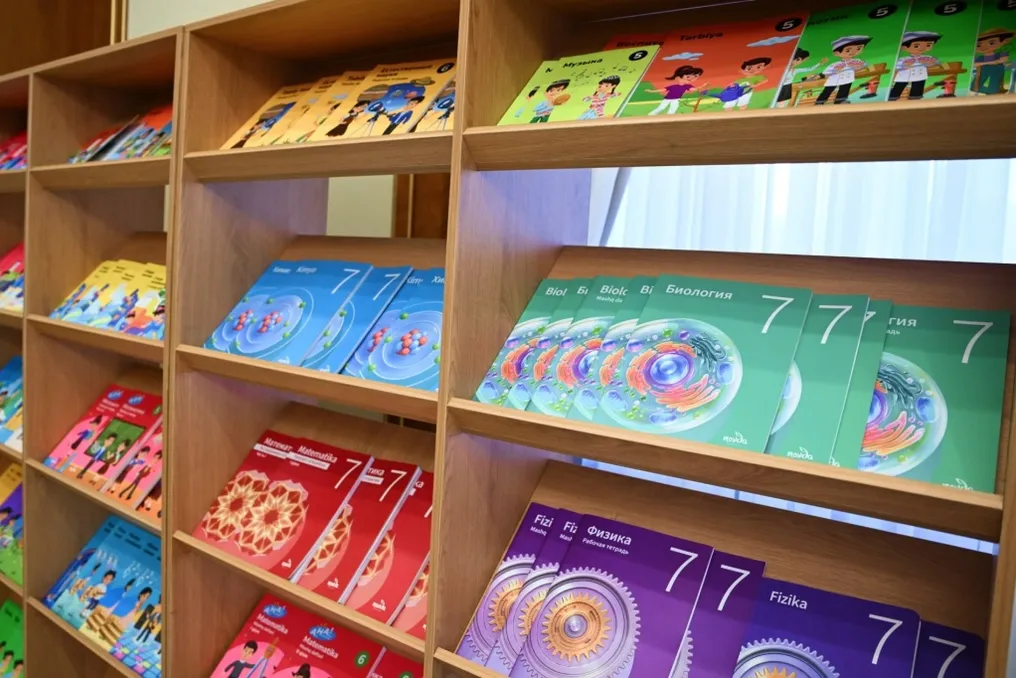
When creating the new textbooks, the leadership decided to rely on global experience. Textbooks for primary grades received certification from the Finnish Educational Alliance, while materials on subjects such as mathematics, physics, chemistry, and biology for fifth and seventh graders are based on Singaporean textbooks.
The new methodological approach involves precisely defining the competencies and skills that a student must master by the end of each academic year. The textbooks will include an increased number of problems aimed at developing critical thinking, communication skills, teamwork, and creativity. Students will learn not just to memorize information, but also to analyze it, justify their viewpoints, and apply knowledge in practice.
Significant attention is paid to career guidance: 255 lessons have already been created to help children better understand their inclinations and make an informed career choice in the future. Materials on financial and digital literacy are also provided, and over 300 topics are dedicated to environmental awareness.
The updating of the educational base is accompanied by work on improving the qualifications of teaching staff. Professional development programs have been adjusted in accordance with the new content of education. 110 thousand primary school teachers have already undergone training. Additionally, with the support of Singaporean partners, 121 master trainers and 739 mentor teachers were prepared, who further trained 90 thousand educators.
A new knowledge assessment system has been implemented in 5,000 educational institutions. It evaluates not only the student's ability to memorize information but also their understanding of the material and their ability to apply acquired knowledge in real situations.
The President noted that merely creating new textbooks is insufficient; their successful implementation requires simultaneous improvement in teacher training, teaching methods, and the entire knowledge assessment system.