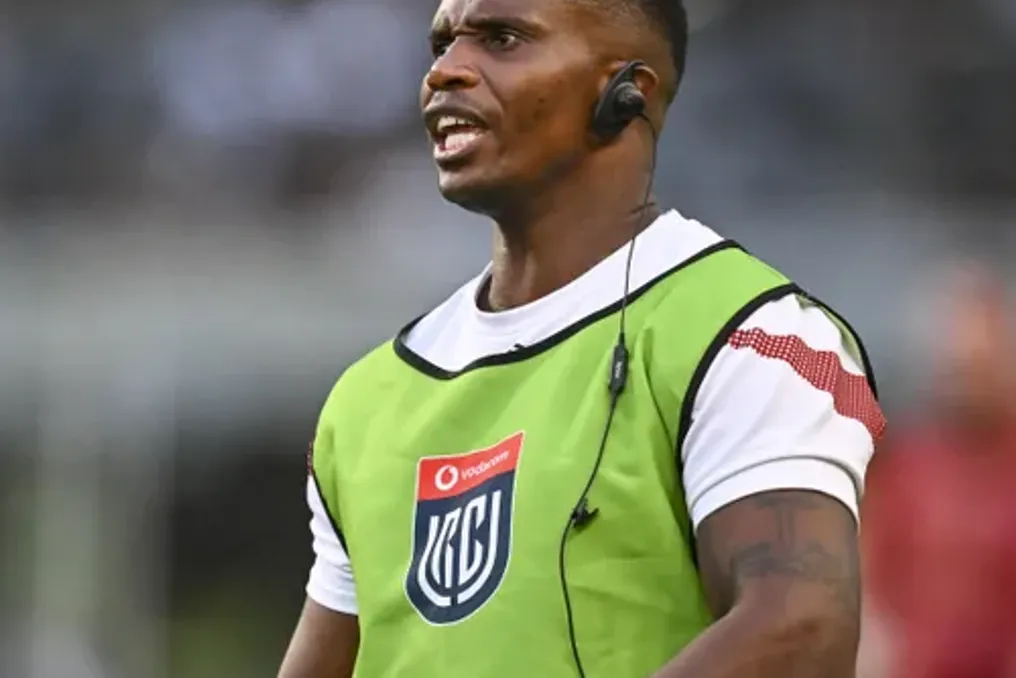
Sharks Coach's Assistant Joey Mongalo Believes Club Has Achieved Necessary Structure for Success
Read more
IOL
iol.co.za

Sharks Coach's Assistant Joey Mongalo Believes Club Has Achieved Necessary Structure for Success

Joey Mongalo, assistant coach for the Sharks team, expressed optimism about the future of the Durban-based team following a series of promising changes that led to former players taking on key leadership roles.

The Sharks had long been in a state of instability, particularly after the departure of long-time CEO Brian van Zyl at the end of 2012, who had managed the team for over two decades. In 2021, a consortium led by New York lawyer and former Durban native Marco Massotti acquired a controlling stake in the club.

Since then, numerous structural transformations have taken place at the highest levels of the organization, yet success remained elusive in the United Rugby Championship and the elite Champions Cup. Nevertheless, assistant coach Joey Mongalo is convinced that the Sharks have finally established structure, laying the groundwork for sustainable success.

Mongalo, who previously played for the Junior Springboks and Bulls, and later worked as a coach for the Bulls and Lions, joined the Sharks in 2023 when John Plamtree began his second term as head coach. Holding a degree in industrial psychology, Mongalo utilized elements of his education when analyzing the club's changes during a press conference on Tuesday.

Structural Changes in the Club

Mongalo believes that the most significant change has been the creation of a stable system where everyone understands their role. He noted that the Sharks traditionally experienced many changes: 'I think to give a good answer, you need to go back and say that traditionally the Sharks have gone through a huge number of changes.' He added that over the last five or ten years, there were about thirty assistant coaches or five to six head coaches, which hindered the team from forming an identity.

Currently, in Mongalo's view, a comprehensive analysis of the Sharks as a system has been conducted. He explained that in psychology, a system has a goal, parts, and interconnections between those parts. 'So, the main parts have finally been resolved,' he stated. He listed key elements: the owner, the appointed CEO, and Dave Williams, a former attack coach, appointed as General Manager. Furthermore, a head of staff, Rory Duncan, a former Sharks player, has emerged at the top level. There is also a senior level composed of former rugby players who can discuss the team's needs with the CEO to achieve results.

Next is Head Coach JP Petersen, a former Springbok player and Currie Cup winner, who is allowed to delegate tasks to his assistants. Mongalo gave an example of task distribution: 'Almost as if they said: Joey Mongalo, do well in defense; Scott Matie, handle the attack; Warren Whitly, take care of your set-piece stuff.' He emphasized that the team has direct access to decision-makers regarding finance and player recruitment, and this system is functioning.

Stability in Player Roster

Mongalo believes that greater stability extends to the playing core, as the proportion of players developed within the Sharks and former club players providing continuity increases. He mentioned players such as Fepsy Buthelezi, who has been with the club for a long time, as well as Thomas du Toit and Stefan Levy, who have returned to the system. Additionally, there is a young generation of Sharks players, such as Littlele Bester, Jaco Williams, and Wusi Moyo, who trained at the club.

Mongalo concluded that the combination of these three systems—strong leadership, JP's coaching process, and young players who went through the system, alongside attracting top players who are either Sharks representatives or integrated into the club—is a good sign for the Sharks as an organization. He acknowledged that good things take time and predicts that the team will be better this year than last. However, in his opinion, the flourishing of this system will occur in three to five years.
Similar stories

Sharks team players launched campaign against gender-based violence in South Africa
Read more
iol.co.za

Sharks team players launched campaign against gender-based violence in South Africa

Players from the Sharks team, including Makhazole Mapimpi and Vincent Koch, launched an emotional campaign in four languages, urging South African men to take responsibility and end gender-based violence.

The Sharks team demonstrated a firm stance against femicide and gender-based violence by presenting a unified message to South Africa through four of its leading players. In an emotional video shared on Sharks' social platforms, players Vincent Koch, Makhazole Mapimpi, Fepsy Buthelezi, and Nick Hutton call for an end to 'meaningless killing and violence' directed at women.

The four athletes, dressed in black, delivered their messages in Afrikaans, isiXhosa, isiZulu, and English. The campaign began with a statement that gender-based violence continues to destroy families and communities across South Africa, and they stand in solidarity with all affected women and children, as well as families grieving the loss of a loved one.

The message concludes with a call for the creation of a country where everyone can live safely, freely, and without fear, with the phrase: 'Enough. Today. Always.'

Koch, speaking in Afrikaans, stated that the senseless killing of women and girls in the country must stop, and every woman must have the opportunity to live, walk, work, and love without fear. Mapimpi, addressing in isiXhosa, placed special responsibility on men, emphasizing that they are obligated to speak about it, point out the problem, and never remain silent.

Buthelezi, using isiZulu, addressed families who have lost loved ones, expressing support for sisters and mothers. He stated: 'We will always love and protect you.'

Nick Hutton concluded the message in English, noting that since this is their country, they bear mutual responsibility as citizens of South Africa, and that 'Enough.'

The Sharks' initiative comes amid renewed public concern over gender-based violence in South Africa. This followed criticism from sports commentator Cindy Palotie, who questioned the initial silence of major sports organizations and prominent men. Furthermore, Springbok captain Siya Kolisi also issued an emotional appeal to South African men on Friday to move from words to action against violence against women.

For the Sharks club, this statement is part of a longer commitment to the issue. Previously, the club ran a 'Fight Against Gender-Based Violence' campaign, linking financial donations to the number of tackles made by the team and directing funds to organizations working against GBV.

Andre Esterhuizen to lead Sharks team, with Tsikuta, Van Heerden, and Hatton as his deputies in URC
Read more
iol.co.za

Andre Esterhuizen to lead Sharks team, with Tsikuta, Van Heerden, and Hatton as his deputies in URC

The era at the Sharks club where all responsibility for the professional rugby club's leadership rested on one captain is coming to an end. Ahead of the new United Rugby Championship (URC) season, coach JP Pietersen introduced an updated leadership structure that distributes duties between players on the field and those responsible for maintaining standards off the field.

South Africa's national team center, Andre Esterhuizen, remains the captain of the Sharks, which was expected after he was named Player of the Year by the players at last season's awards ceremony. However, he will now be supported by three deputies: Emil van Heerden, Nick Hatton, and Vincent Tsikuta. In the event of Esterhuizen's absence due to national team commitments or unavailability, Van Heerden, Hatton, or Tsikuta will take over the captaincy role.

Furthermore, another significant change has occurred: South Africa national veteran prop Vincent Koch and Fepsy Buthelezi have been appointed Club Captains. Their functions extend beyond game day and cover the training ground, gym, and locker room.

Sharks Leadership Structure

Pietersen believes that this structure ensures that leadership will no longer be concentrated in the hands of a single player but will become a collective responsibility. He noted: 'Andre was an outstanding leader, and I am absolutely confident that he will continue to set that standard on the field.' He added that the specialty of this group lies in squad depth: 'Emil, Nick, and Vincent Tsikuta will share this responsibility as deputies, while Vincent Koch and Fepsy Buthelezi will work alongside Andre and our coaching staff to raise standards.'

The Sharks coach has placed discipline, accountability, and respect at the core of his high-performance culture and wishes for every player to have a leader monitoring adherence to these norms. Pietersen emphasized: 'Every player in this squad has a leader next to them. This means that all of us—players and coaches—are accountable to each other. No one is above the standard; everyone adheres to it equally. This is the culture we will promote.'

Esterhuizen's role essentially corresponds to the traditional function of a captain: managing the game, making decisions under pressure, demanding discipline, and setting the physical level for teammates. The club captains carry a much broader mandate. Koch and Buthelezi will be custodians of the environment in which the Sharks prepare for games, helping to set standards in the locker room, gym, and training ground, acting as a link between the playing squad and the coaching and management groups. This is a deliberate attempt to ensure that the Sharks' identity does not depend on a single voice.

The new system also empowers two senior players with the responsibility of preserving team traditions while helping to define what the next generation of Sharks should inherit. For Pietersen, the message is clear: leadership is no longer the job of one person wearing the captain's armband. The Sharks will begin their URC season with a home match against the Ospreys on Saturday, September 26.

Popular