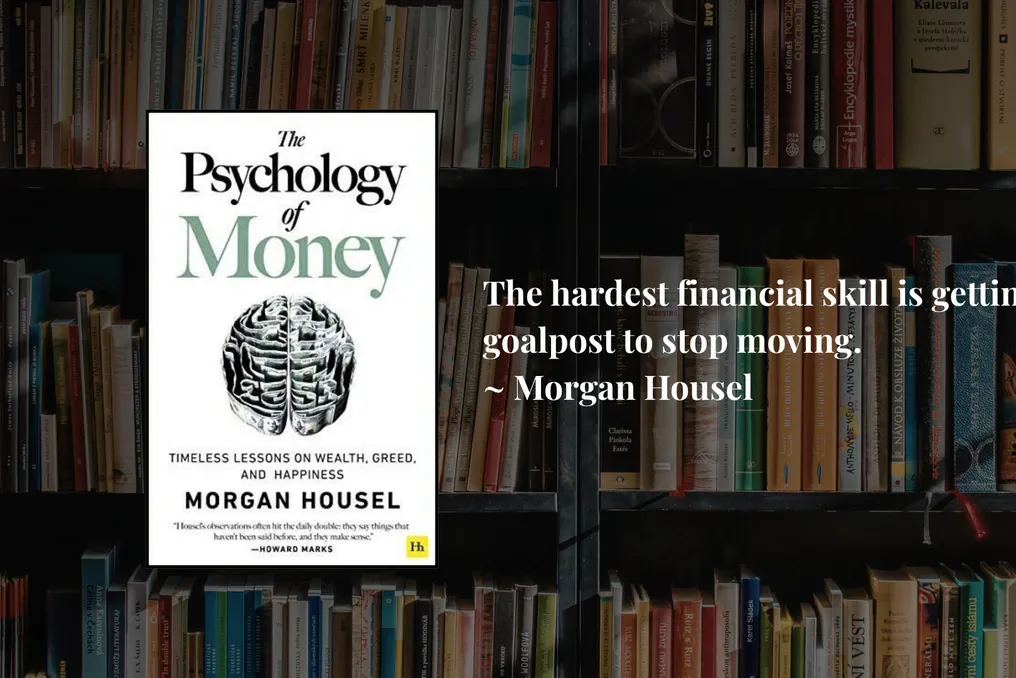
When people think about wealth, they often focus on stock market forecasts, investment strategies, or complex financial formulas. However, according to Morgan Housel's bestseller 'The Psychology of Money,' financial success often depends less on knowledge and more on behavior.
Through engaging stories and timeless ideas, Housel explores how emotions, habits, and personal experiences shape people's relationship with money. The book argues that wealth is not just the result of high earnings, but rather the consequence of consistently making more measured decisions over time.
Below are five valuable lessons from 'The Psychology of Money' on how to create and preserve wealth.
Many associate wealth with expensive cars, luxury homes, or designer goods. Housel disputes this view, explaining that true wealth is often invisible. Real wealth consists of assets that have not yet been spent—it is saved, invested, and allowed to grow money.
People who appear wealthy may not be financially secure, whereas those who live modestly may be accumulating significant wealth unnoticed by others. The lesson is this: one should worry less about the outward appearance of wealth and focus more on achieving financial stability.
High income alone does not guarantee wealth. It matters what portion of that income is directed toward savings and investments. Housel emphasizes that building wealth often depends on creating a gap between what a person earns and what they spend. Even people with average incomes can accumulate significant wealth if they consistently save over a long period.
This principle highlights financial discipline, not just increasing earnings.
One of the key themes of the book is the power of compound interest. Small amounts regularly invested in assets can increase significantly with enough time. Housel cites examples of successful long-term investors who benefited not only from good decisions but also from having those decisions grow for decades.
This lesson calls for patience, as wealth is usually built gradually, not through quick wins or sudden breakthroughs.
Many strive for money to acquire things, but Housel argues that the greatest value of wealth lies in control over one's own time. Financial freedom allows one to make decisions without being completely dependent on a salary or external pressure. It enables people to dedicate time to meaningful work, relationships, hobbies, and personal goals. According to the book, the ability to decide how to spend one's days independently is one of the most valuable forms of wealth.
Comparison can be one of the biggest obstacles to capital accumulation. It often stimulates unnecessary spending and pushes people toward lifestyles they cannot afford. Housel explains that there will always be someone with more money, a bigger house, or a more impressive lifestyle. Constant comparison creates a cycle where satisfaction is difficult to achieve.
Instead, the book encourages readers to define their own financial goals and make decisions based on personal values, rather than the expectations of others.
'The Psychology of Money' offers a fresh perspective on the concept of wealth. Instead of focusing on complicated financial schemes, it illuminates the mindsets and behaviors that often determine long-term success. The book reminds readers that wealth is not about impressing others or chasing endless growth; it is about making thoughtful decisions, saving regularly, planning for the long term, and gaining the freedom to live by one's own rules.