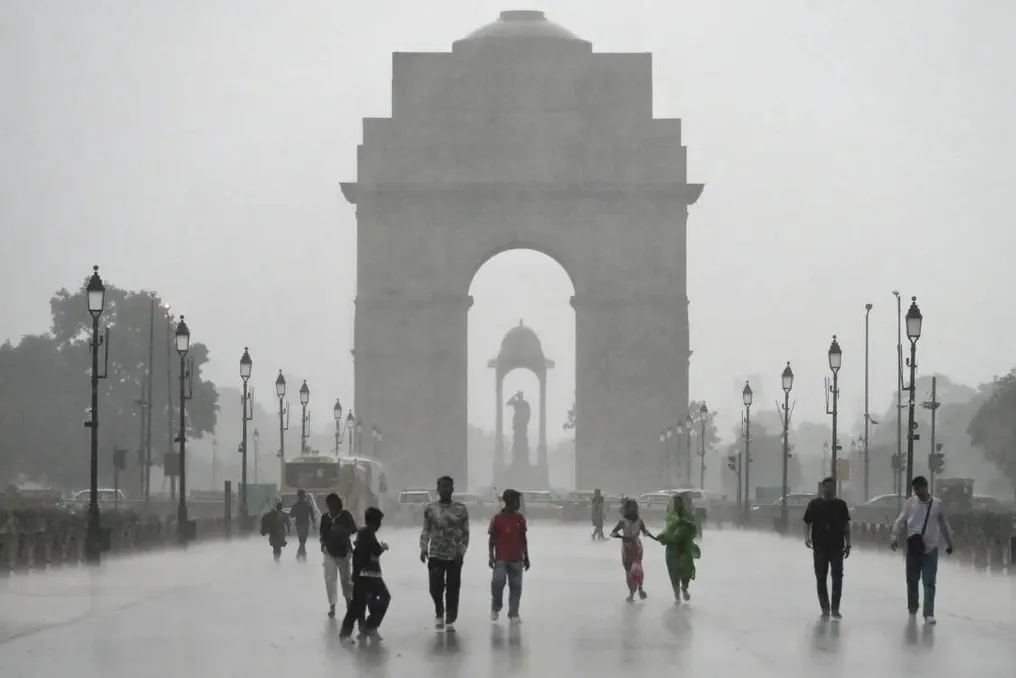
India received less than the average annual rainfall during the 2026 Southwest Monsoon
Read more
The times of India
timesofindia.indiatimes.com

India received less than the average annual rainfall during the 2026 Southwest Monsoon

According to data from the India Meteorological Department (IMD), during June-September of this year, India received 87.4 percent of its Long Period Average (LPA) rainfall, making this monsoon the fourth lowest since 2001.

The country recorded 759.4 mm of rainfall against a normal seasonal average of 868.6 mm, indicating a deficit of approximately 13 percent for the period from June 1 to September 30. IMD reported this on Wednesday.

Seasonal rainfall was characterized by uneven distribution across various regions of the country; despite heavy rains at the end of the monsoon period, many areas registered significant deficits.

A senior IMD official told Reuters that India received 12.6 percent less rainfall than the average for June-September, with the El Niño weather pattern contributing to the weakening of precipitation. The meteorological department forecasts that India is likely to receive below-normal rainfall in October, and most regions are expected to see below-average rainfall from October to December.

The LPA used by IMD denotes the average amount of rainfall recorded in a specific region over a set period, calculated based on a long-term period, usually spanning 30 to 50 years. The 2026 monsoon was the first deficit season since 2015. IMD classifies seasonal rainfall as deficient if it is 10 percent or more below the LPA.

The monsoon started with a rapid advance after reaching Kerala on June 4, which was three days later than usual, but then stalled for almost two weeks before reaching North-West India in the first week of July. In June, the country faced a rainfall deficit of over 35 percent, the highest figure in 12 years.

Rainfall activity increased in subsequent months due to the formation of several low-atmospheric systems over the Bay of Bengal, which moved inland. Four such systems formed in July, six in August, and three in September, including a deep depression that moved along the coast from North Andhra to South Odisha on September 23-24. These systems helped ensure a substantial amount of rainfall in central and eastern parts of India, thereby reducing the overall seasonal deficit.

However, the impact of this deficit varied greatly depending on the region. Odisha recorded the wettest monsoon in the last 20 years, while the Eastern and Northeastern region approached the driest monsoon since data collection began in 1901. South India experienced a rainfall deficit exceeding 23 percent, making it the driest Southwest Monsoon since 2002. Western Rajasthan recorded a deficit of 31 percent, and rainfall in Punjab was 42 percent below normal.

IMD's final assessment was made after a late storm of heavy rains reduced the country's overall deficit, but the June-September season still concluded significantly below the long-term average.

Similar stories

Temperature sharply rises in Rajasthan after monsoon withdrawal: 42.9°C recorded in Jaisalmer, 10-year record broken in Bikaner
Read more
www.aajtak.in

Temperature sharply rises in Rajasthan after monsoon withdrawal: 42.9°C recorded in Jaisalmer, 10-year record broken in Bikaner

The heat has intensified again in Rajasthan following the withdrawal of the monsoons. On Wednesday, temperatures in the western parts of the state exceeded 42 degrees Celsius. The highest temperature was registered in Jaisalmer at 42.9°C, while the minimum temperature in Fatehpur was 20.7°C.

Strong hot winds were observed in the western districts, causing temperatures in Bikaner, Jaisalmer, Jodhpur, and Bikaner to be approximately 5 degrees above normal. In several cities, September temperature readings surpassed long-standing records.

In Bikaner, the maximum temperature reached 42.4°C, which is the highest reading for September in the last ten years. Jodhpur recorded a temperature of 40.6°C, marking the highest reading for September since 2016. The temperature in Udaipur was 36°C, the highest for September since 2017.

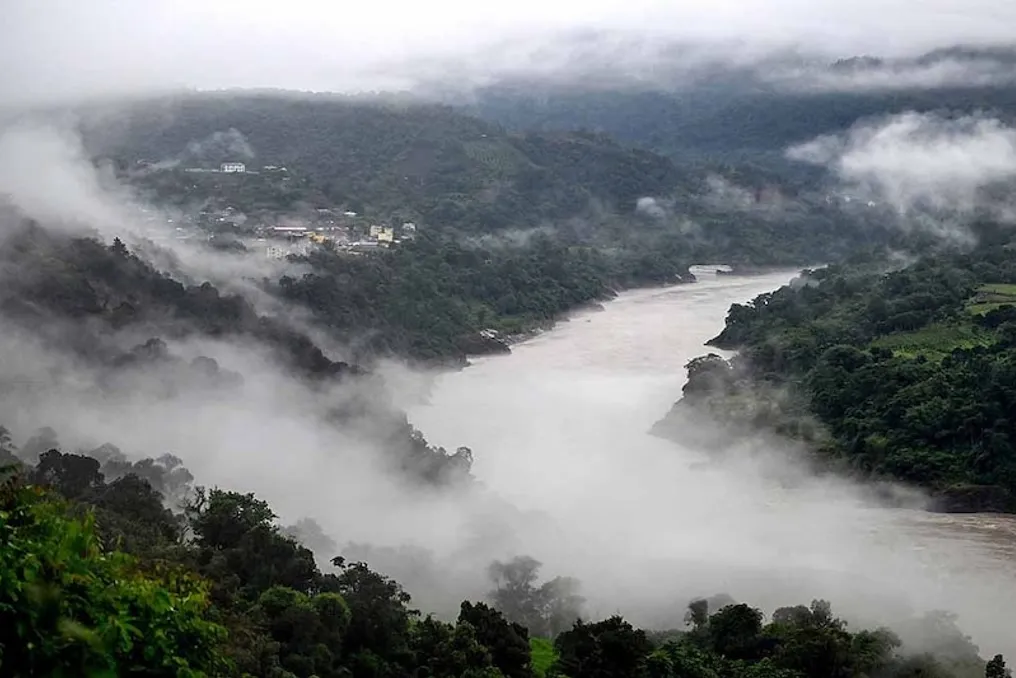
According to meteorological service data, the monsoon has only withdrawn from the northwestern regions of Rajasthan. Currently, strong westerly winds are blowing across the state, leading to a sudden rise in temperature. These winds prevent the influence of a powerful depression system formed in the Bay of Bengal from reaching Rajasthan. It is expected that the influence of this system will remain in the western parts of Madhya Pradesh for now.

The IMD forecasts that similar weather conditions will persist in the state for the next three to four days. High temperatures are expected in both the western and eastern parts of Rajasthan during the daytime.

UN warns of critical decline in groundwater levels in India due to water resource imbalance
Read more
www.aajtak.in

UN warns of critical decline in groundwater levels in India due to water resource imbalance

According to the World Meteorological Organization's (WMO) report on global water resources in 2025, India is experiencing a sustained decline in groundwater levels. This serious concern highlights the disruption of the country's water balance.

In several regions of India, particularly in the northern and northwestern parts, the drop in water levels has persisted for many years. The report indicates a constant deficit of groundwater from 2022 to 2025. This means that the volume of water extracted from the ground exceeds the volume returned to the aquifers, leading to a disruption of water equilibrium.

Although the problem is not limited to India, its consequences could be far more severe in a densely populated nation like India. Agriculture heavily relies on groundwater for irrigation, and urban access to drinking water also depends on it.

The report states that in 2025, groundwater levels were below normal or very low at 34 percent of monitoring stations worldwide, an increase compared to 25 percent in 2024. Meanwhile, the level remained above normal at 31 percent of stations. This data was obtained from regions where a monitoring system operates. A similar trend is observed in India.

In 2025, surface water storage in North India was below average. WMO Secretary-General Celeste Saulo warned that humanity is 'draining its savings account.' Globally, there has been a trend of declining surface water storage from 2014 to 2016, representing a decade-long signal. The situation with groundwater is developing similarly: in 2025, approximately two-thirds of observed wells recorded conditions different from the historical average, with a clear tendency towards decline.

The main reason for the groundwater problem in India is excessive extraction. Pumping equipment, such as tunnel and bore wells, is actively used in agriculture. Crops such as wheat and rice require large amounts of water. The crisis has become particularly acute in states like Punjab and Haryana. The report explicitly states that the primary cause in many areas is over-abstraction.

Water replenishment occurs through the infiltration of rainwater into the ground, but if extraction remains high, the level continues to fall. Furthermore, drought and irregular monsoons in recent years have negatively affected replenishment. Rivers also experienced one of the driest periods in over three decades in 2025, indicating pressure on the entire water cycle.

The WMO report, now in its fifth year, clearly shows long-term trends, including the continuous decline of groundwater and prolonged drought. It also notes that glaciers are losing their snow cover for the fourth consecutive year. All these signs point to a reduction in freshwater on the planet.

In a country like India, where the population is growing and agriculture is the backbone of the economy, the decline in groundwater levels could jeopardize food security. Water shortages will increase in cities, irrigation will become more expensive, and the burden on small farmers will grow. In some areas, wells are already drying up, forcing people to extract water from greater depths, which increases electricity and diesel fuel costs.

To overcome this crisis, simply warning is not enough; active implementation of water conservation methods, such as rainwater harvesting and drip irrigation technologies, is necessary. It is also possible to promote changes in crop rotation in favor of less water-intensive crops. More efficient use of canals and surface water can also help.

The report emphasizes the need to strengthen global water resource monitoring. If regular observation is increased in more areas in India, a more accurate picture can be obtained. If measures are not taken in a timely manner, future water availability may decrease, affecting the economy, healthcare, and environment.

Considering the WMO warning, political figures, farmers, and the general public must work together to restore the water balance. Groundwater is our hidden capital, and its preservation is a guarantee of future well-being.

Popular