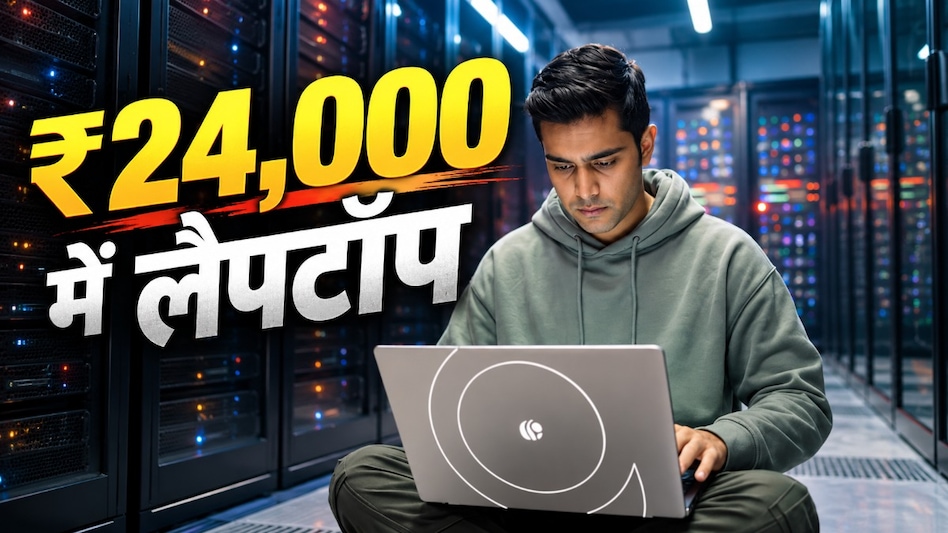
Primebook offers discounts on laptops as part of a holiday sale
Read more
Aaj Tak
www.aajtak.in

Primebook offers discounts on laptops as part of a holiday sale

Due to the rising prices of smartphones and laptops, Primebook has announced special offers on its devices ahead of the holidays. During the Amazon Great Indian Festival and Flipkart Big Billion Days sales, customers can receive discounts of up to 3000 rupees on various Primebook models, as well as benefit from bank discounts and an interest-free EMI option.

These laptops belong to the budget segment and are not intended for intensive work or professional editing. Models Gen 2 and Gen 3 are available at reduced prices during the holiday period.

The most affordable model, Primebook 2 Neo, will be available on Flipkart for 23,990 rupees during the promotion. The company claims this is one of the lowest prices ever offered for this model. Purchasing this model on Flipkart includes a discount of 3000 rupees, plus an additional instant bank discount ranging from 1500 to 2000 rupees.

The Primebook 2 Neo is equipped with a MediaTek Helio G99 processor, 6 GB of RAM, and 128 GB of storage. It runs on PrimeOS 3.0, based on Android 15. The company notes that PrimeOS is designed with large screen and trackpad keyboard usage in mind.

This laptop weighs about 990 grams, features an 11.6-inch HD IPS display, and has a 29.6 Wh battery. The manufacturer states a potential battery life of up to 7.5 hours when playing videos.

The Primebook 2 Pro model is also participating in the holiday promotions. On Flipkart, its price is set at 26,990 rupees, reflecting a 2000 rupee discount from the original price. The Primebook 2 Pro is equipped with a MediaTek Helio G99 processor and 8 GB of RAM.

According to the company, the Pro and Max models feature a full HD display, a 60.3 Wh battery, keyboard backlighting, and a 1440p webcam. This laptop is aimed not only at students but also at users who require a device for online classes, office work, web browsing, and daily tasks.

The Primebook 2 Max variant with a 128 GB drive will be available during the holiday sale for 27,990 rupees. This price is listed on both Flipkart and Amazon. The Primebook 2 Max features a 15.6-inch Full HD IPS display, 8 GB of RAM, and 128 GB of storage. It is also equipped with a 60.3 Wh battery, which the company claims provides up to 12 hours of use.

Primebook has also included its new Gen 3 model, the Primebook 3 Max, in the promotion. Its 128 GB version will cost between 33,490 and 33,990 rupees. This device differs from the older Primebook 2 Max because it operates on a different hardware platform. The Primebook 3 Max is equipped with a MediaTek Genio 720 processor, 8 GB of LPDDR5 RAM, 128 GB of UFS storage, and an 8th generation MediaTek NPU supporting up to 9 TOPS of AI computation.

Additional specifications include a 5 MP camera, Wi-Fi 6 support, and Bluetooth 5.3. The device weighs approximately 1.59 kilograms, and with the 60.3 Wh battery, the company claims up to 12 hours of battery life.

A distinguishing feature of Primebook is its operating system: the new laptops do not run on Windows. The company's operating systems are based on Android, with the Primebook 2 series using PrimeOS 3.0 based on Android 15. This allows many Android applications to run directly on the laptop. Furthermore, Primebook provides access to over 50,000 applications through its app store.

However, if a user requires heavy Windows programs, the company offers a solution via Cloud PC. Through Cloud PC, Windows and Linux environments can be used, although this may incur a separate subscription fee. It is important to understand that Primebook is not a direct replacement for a standard Windows laptop; it is designed for operation within the Android and PrimeOS ecosystem.

Primebook's main focus is on a specific type of user. If your activities are limited to online learning, web browsing, document work, video calls, Android apps, and general office tasks, an affordable Primebook may be a suitable choice. For those needing a larger screen, more RAM, and better battery life, the Primebook 2 Pro and Max models exist. And for prioritizing new AI features and modern hardware, the Primebook 3 Max is suitable.

Nevertheless, if primary work requires heavy Windows software, professional video editing, or applications unavailable on Android, the decision should be carefully weighed. Although Cloud PC offers a way out of this situation, it requires a stable internet connection and additional subscription costs.

Similar stories

Five recommended notebook models up to R$ 2,000 for purchase in 2026
Read more
tecnoblog.net

Five recommended notebook models up to R$ 2,000 for purchase in 2026

Finding a suitable notebook in the R$ 2,000 price range in 2026 presents challenges, as computers in this category have more basic specifications. However, there are models capable of meeting needs such as web browsing, streaming content consumption, and document reading at a more affordable price.

Tecnoblog compiled a list with five options from brands such as Asus, Lenovo, Samsung, and Positivo, detailing the pros and cons of each to aid in choosing the ideal device for daily use.

Lenovo IdeaPad Slim 3i (83L7002FUS)

This model represents the lowest-cost notebook with the best performance listed. It is equipped with the Intel N150 processor (with a maximum clock speed of 3.6 GHz and manufactured on 10 nm), 8 GB of RAM, and 128 GB of storage in UFS 2.2 format. It is recommended for basic productivity tasks, such as text editing, viewing PDFs, browsing, and video playback, without experiencing slowdowns.

The device has a webcam that supports 720p video conferencing and recording. Below the camera, there is a 15.6-inch LCD screen with Full HD resolution and a brightness peak of 250 nits. Additionally, it features a 47W battery, which guarantees up to 12 hours of video playback (in a local environment), and weighs about 1.55 kg.

The ASUS VivoBook Go 15 (E510KA-BR1375WS) is an entry-level notebook designed for daily use, prioritizing portability and operating completely silently thanks to its fanless cooling system. Its 15.6-inch LED screen offers good visibility for spreadsheets and documents, featuring anti-glare technology and HD resolution (1366 x 768 pixels).

Although available in configurations with 8 GB of RAM, in this price range it uses an older and less efficient processor, the Intel Celeron N4500 (2 cores, ranging from 1.1 GHz to 2.8 GHz). Combined with 128 GB of eMMC storage, this processor can create bottlenecks in situations of intense multitasking, complex spreadsheets, or browsing with multiple open tabs. A favorable aspect is the presence of an M.2 slot for SSD expansion. Its weight is approximately 1.57 kg.

Positivo Vision C15M (C4128B-15)

For those seeking an even more economical alternative, especially for studying and reading, the Positivo Vision C15M is an option. This model, also in the R$ 2,000 range, incorporates the Intel Celeron N4500 processor (up to 2.8 GHz on 10 nm) and 128 GB of storage (eMMC), but is limited to only 4 GB of RAM, restricting its performance to basic uses.

The main LCD screen measures 15.6 inches and has Full HD resolution. It includes a simple HD webcam with a light bar adjustment. Additionally, it has a 1.54-inch mini-screen used to display WhatsApp notifications, device status, and photos. Weighing 1.7 kg, the device comes with a 5,000 mAh battery, which takes approximately 2.5 hours to fully charge.

Samsung Galaxy Book Go (NP340XLA-K0ABR)

The Samsung Galaxy Book Go comes factory-equipped with the Snapdragon 7c Gen 2 processor (up to 2.5 GHz on 8 nm), 128 GB of memory (eUFS), and only 4 GB of RAM. It is better suited for running cloud-based services and streaming, as it tends to freeze with more demanding applications or during multitasking. Content visibility under sunlight is hindered by the screen's brightness peak of only 220 nits on the 14-inch LED screen. However, the display features anti-reflective technology and Full HD resolution, in addition to integrating a webcam capable of recording in 720p.

The battery is one of the strengths of this equipment, offering up to 18 hours of video playback autonomy. Its lightweight design (1.3 kg) and 180-degree hinge facilitate transport.

Positivo Duo (C4128E)

The Positivo Duo is a 2-in-1 device, functioning as both a notebook and a tablet. Like the others, it uses the Intel Celeron N4500 chip, 4 GB of RAM, and 128 GB of internal memory (eMMC), directing its use primarily toward simple tasks. Its 11.6-inch LCD screen has a resolution of only 1366 x 768 pixels, but it is touch-sensitive and compatible with the included capacitive pen. There is also a built-in 1 MP webcam that records up to 720p.

This notebook is the lightest on the list, weighing 1.1 kg, and has a 360-degree hinge for tablet mode usage. It is also equipped with a 5,000 mAh battery.

Considering that notebooks up to R$ 2,000 generally share similar specifications, it is recommended to compare equivalent models and choose the device that offers the best overall package. It is important to note that the increase in notebook prices is linked to the global memory chip crisis. Manufacturers are prioritizing the production of HBM components (high-bandwidth memory) for AI data centers, which results in the sacrifice of DRAM and NAND chips used in smartphones and notebooks. This reduced supply raises the cost of memory chips, and brands pass this increase on to the end consumer.

Low-cost notebooks are viable for basic uses, such as browsing and web services, provided they fit the buyer's usage profile. For those seeking a lower price, buying a used device can be considered, but one must be aware of the inherent risks. Refurbishment focuses on repairing faults without guaranteeing the integrity of all components before repair, which can result in a device with a reduced lifespan.

In summary, notebooks in the R$ 2,000 range are ideal for basic use and favor those who need software compatible only with Windows/Linux or for long periods of typing. The best tablets in the same price range usually provide a superior experience for video lessons and reading, in addition to being more portable, although accessories like pens and keyboards can increase the total cost.

Popular