OUTsurance must withdraw advertising in Cape Town due to misleading claims about traffic control
Read more
IOL
iol.co.za

OUTsurance must withdraw advertising in Cape Town due to misleading claims about traffic control

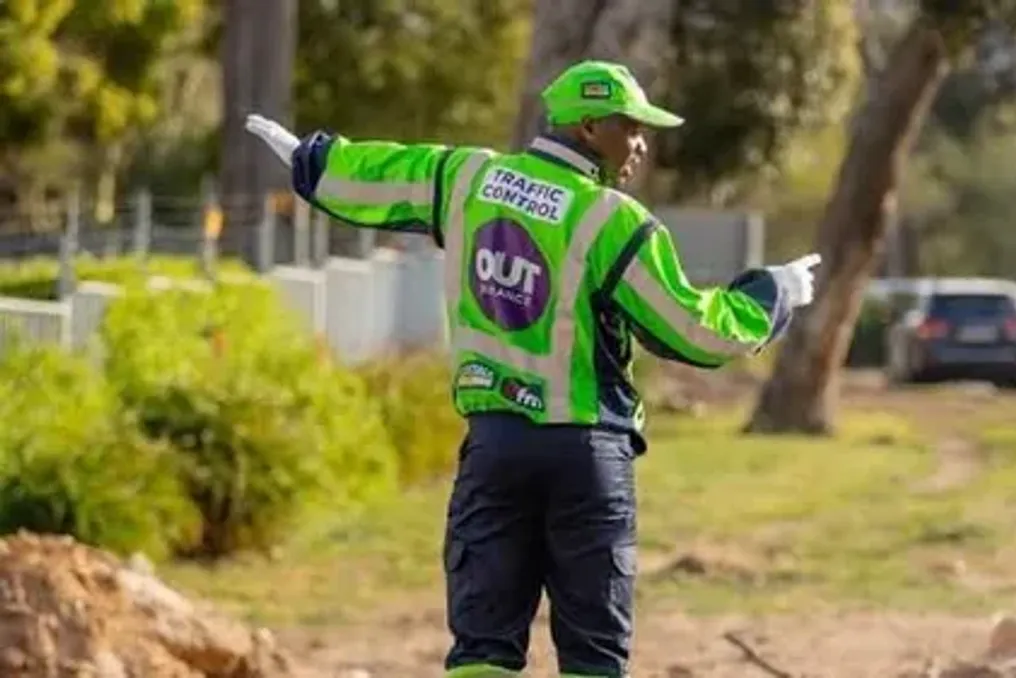
The company OUTsurance has received an order to cease broadcasting its radio advertisements in Cape Town. These commercials claimed that the company's traffic control staff help drivers reach their destination faster and safer and reduce road congestion, even though the service in the city was discontinued nine years ago.

The Advertising Regulatory Council ruled that the advertisement could mislead listeners regarding OUTsurance's continued use of traffic controllers in the metropolitan city.

The decision, made at the beginning of this month, requires OUTsurance to remove the advertisement from CapeTalk and any other radio stations whose primary audience is located in Cape Town.

In its ruling, the council noted: 'Language that invites listeners to feel personal assistance from traffic controllers, without any geographical clarification, can create the impression in the mind of an average listener in the Cape Town metropolis that the service applies to their personal experience of traffic jams.'

Furthermore, the council found that the advertiser should have reasonably foreseen that broadcasting the advertisement in the geographical context of the Cape Town metropolis, which is the main audience of the radio station, would result in actual misrepresentation.

The council acknowledges that it is not expected to list all serviced municipalities in a 30-second ad or live reading, but this does not exempt the advertiser from the need to state that the service does not extend to the metropolis from which the main broadcast audience originates.

OUTsurance refers to its employees as pointsmen and stated in 2023 that they are deployed daily at busy intersections to direct vehicles and go to areas where traffic lights are off during power outages (load shedding).

The insurer reported at that time that its traffic controllers worked in the centre of Cape Town from 2011 to 2017. However, OUTsurance informed the council that its traffic controllers currently only work in Paarl and Stellenbosch in the Western Cape.

The commercials, which were broadcast in 30-second spots and as live readings by CapeTalk hosts, told listeners that the traffic controllers have eased the traffic situation for 20 years. One set of ads listed problems drivers worry about in traffic jams, such as whether they turned off the iron, and stated that thanks to the traffic controllers on the route, traffic jams have become one of the least worrying problems.

Another set of ads presented a long list of excuses for being late and told listeners that they no longer needed excuses because traffic controllers were on the roads.

A listener who complained to the council stated that the advertisement played several times a day, and that the traffic controllers had not been entitled to work in Cape Town for more than 10 years. He also mentioned that he tried to resolve this issue with CapeTalk management but received no response.

OUTsurance argued that the advertisement never claimed that traffic controllers worked in Cape Town, and that the mention of 20 years referred only to the program's existence. The insurer also insisted that a reasonable listener would not believe that traffic controllers work everywhere CapeTalk might be heard, and asked the council to dismiss the complaint. The council rejected this argument and ordered the removal of the advertisement as soon as the station's schedule allowed.


Similar stories

Cape Town launches beach condition alert system to inform the public
Read more
iol.co.za

Cape Town launches beach condition alert system to inform the public

The City of Cape Town has introduced a new system, 'Cape Town Beach Alerts'—a source of information regarding the quality of coastal waters and beaches, which is becoming available ahead of the warm season.

According to City data, this platform provides current and long-term results from water quality analysis for all beaches and tidal pools along the Atlantic and False Bay coasts. The information is presented in a simple and easily digestible format.

The webpage includes environmental and coastal warnings, information on the operation of rescue services, weather forecasts for each beach, and much more. Alderman Eddie Andrews, Deputy Mayor and member of the City Council Committee on Spatial Planning and Environment, noted that this resource will change how local residents and tourists obtain the freshest information about the quality of coastal water in their favorite recreation spots.

The website interface is user-friendly, utilizing color coding and plain language, and also features a map indicating locations. A search function allows users to easily find results for a desired beach or tidal pool, offering a choice between the latest weekly result or a long-term indicator over 365 days.

Results are color-coded: green indicates compliance with recreational guidelines, red signifies two consecutive failures, and amber indicates one failure.

'Cape Town Beach Alerts' information is available 24/7. Residents and visitors can find out the date and result of the last water sample taken at a specific beach and whether this result complies with National Guidelines for Recreational Use. Data on the exact location where marine samples were collected for that beach is also available.

The system provides the number of samples taken over the last 365 days and the number of samples that met National Guidelines for recreational activities. Furthermore, it indicates the date of the last failed result. A table is available showing the dates and results of the last eight samples, as well as the long-term classification of the beach: Summer (October to March), 365-day period, and five-year data.

Information is also provided on the water testing protocol, i.e., the frequency of water checks at a beach or tidal pool, as well as whether there are active alerts for that beach. Users can learn about the daily weather and a three-day forecast, including wind direction and strength. The system informs about the presence and schedule of rescue services during the season, and whether the beach is a 'Blue Flag' beach during the season.

Additionally, information on water quality guidelines, frequently asked questions, educational materials on natural coastal phenomena, and other marine environment details are available. Eddie Andrews added that 'Cape Town Beach Alerts makes complex information about coastal water quality accessible to the public' and expressed hope that the website will become the primary source of information for Cape Town residents and visitors.

He reported that future plans include adding more features, such as dog walking information, coastal improvements, and marine life observations. Another feature users can subscribe to is push notifications via the City's mobile application. These notifications will allow for prompt alerts regarding any incidents or events affecting a beach or tidal pool, such as the discharge of a large pufferfish, the presence of a rabid seal, sewage spills, or whale sightings.

According to Andrews, this useful resource has arrived at an opportune time as summer is approaching. He expressed pride in this step towards increasing transparency, reliability, and simplicity in interpreting coastal water quality data for thousands of coastline visitors annually.

The City announced that it has a specialized team that travels along more than 300 kilometers of coastline weekly to take water samples from over 100 points for subsequent analysis. Coastal water quality is determined by enterococci indicators, which are recognized as the international gold standard indicator for coastal water quality concerning human health risks. All water samples undergo independent analysis in a laboratory accredited by SANAS for microbiological analysis of seawater.

Residents and visitors can access the webpage at https://beachalerts.capetown.gov.za. Additionally, the information is available free of charge on mobile phones through the City of Cape Town's mobile application, where users can register to receive push notifications.

Cape Town warns residents about five common scams
Read more
iol.co.za

Cape Town warns residents about five common scams

The City of Cape Town administration has issued an urgent appeal to residents to remain vigilant due to an increase in fraudulent activities within the metropolis. These schemes include fake service disconnection notices, false job offers, and fictitious housing opportunities.

Alderman Ciske Mbandezi of the Majority Finance Committee reported that the city regularly receives information about various incidents where citizens are contacted by individuals falsely claiming to be City employees, often via the WhatsApp messenger.

Scammers claim that municipal accounts are overdue and demand immediate payment to avoid water or electricity shut-off. Furthermore, they promise jobs or housing in exchange for money, and also impersonate officials responsible for paying traffic fines. Mbandezi emphasized that such offers are untrue, and residents should always pause to verify information. He reminded them: 'If an offer seems too good to be true, it probably is.'

Residents are reminded that any payments must be made exclusively through the City's official payment channels. Mbandezi clarified that the City does not use WhatsApp to notify about arrears or service disconnections, and no City employee has the right to demand payment to a personal bank card, e-wallet, or other unofficial methods.

He thanked residents for their caution when dealing with anyone claiming to be an official City representative and demanding money. According to him, only combined efforts, attentiveness, and verification can put an end to this crime.

Five main types of scams

The City states that notices regarding the termination of utilities are never sent to residents via social media or WhatsApp. No municipal worker or contractor will ask citizens to pay for services through an e-wallet, CashSend, or a personal bank account.

It is also stressed that the City does not request payments from residents for registration in the Housing Needs Register or for obtaining a state-subsidized home.

Regarding traffic fines, the City does not require payment via SMS, email, or WhatsApp. Residents are advised to check information on cityofctviewfines.co.za and make payments through paythat.co.za.

Concerning unpaid fees for street or off-street parking, payment is made directly to official parking marshals at the time of parking. If fees are unpaid, residents are advised to submit a request to resolve the issue.

As for vacancies, the City does not recruit personnel through WhatsApp messages, flyers, or rumors. The City also does not charge fees for employment opportunities, including processing or updating applicant profiles, interviews, contracts, as well as EPWP and internship programs.

Residents across Cape Town are strongly recommended to verify any threats of service disconnection or demands for immediate payment. They are also advised never to make urgent payments without confirming the legitimacy of the request.

Suspicious activity can be reported and checked in the following ways: call the Call Centre at 0860 103 089, contact the Fraud Hotline at 0800 32 31 30, send an email to fraud.hotline@capetown.gov.za, or visit the nearest SAPS police station, which remains the leading body in crime prevention.

Popular