Indian team suffers defeat in Guwahati: Three hundreds for West Indies, poor bowling performance by Indians
Read more
Aaj Tak
www.aajtak.in

Indian team suffers defeat in Guwahati: Three hundreds for West Indies, poor bowling performance by Indians

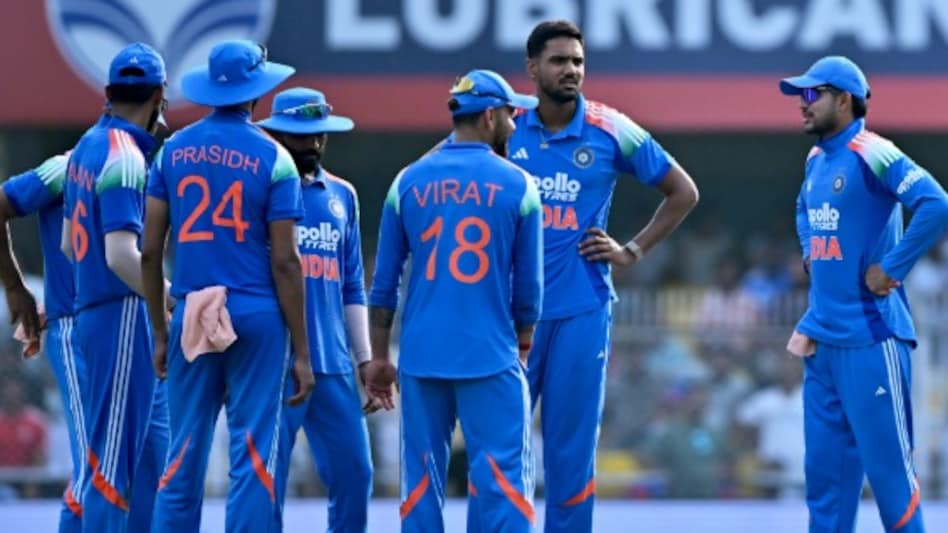
In the ODI match in Guwahati, Indian bowlers faced a powerful onslaught from the West Indies players, leading to an extremely poor performance by the Indian team. In the game held on Wednesday (September 30), West Indies players delivered a one-sided blow to the Indian bowlers. The West Indies team scored three hundreds, and the total score was 405/7, which is the highest score in ODI history for the West Indies.

In the second ODI, the West Indies managed to score an impressive 405/7 in 50 overs, thanks to centuries from John Campbell, Shai Hope, and Amir Jangguh. This result is the first score over 400 in ODI for the West Indies; previously, their best score was 389 against England in 2019.

For Akib Nabi, who debuted in ODI for India, the match turned out to be extremely unsuccessful. He conceded 84 runs in 8.5 overs and failed to take a single wicket. Thus, he became the Indian bowler who conceded the most runs in his debut ODI. His run rate exceeded the record of Carsan Gavaskar, who conceded 83 runs in 11 overs at Lord's against England in 1975. Furthermore, among the bowlers who bowled at least 30 deliveries, Nabi's economy rate in his debut ODI was 9.51.

Gurnoor Barar, used as a second-tier bowler, took 2 wickets, conceding 96 runs in 10 overs, remaining just four runs away from a hundred. Meanwhile, Prasidh Krishna took one wicket, conceding 45 runs in 5 overs. The absence of Jasprit Bumrah, who was serving in the Asian Games, and the non-appearance of Mohammed Siraj significantly affected India. Moreover, experienced bowlers like Bhuvneshwar Kumar and Mohammed Shami did not get a chance. This performance raised many questions for the Indian team, which is looking for young bowling alternatives ahead of the 2027 World Cup.

West Indies started the game with an attack on the Indian bowlers. John Campbell demonstrated his signature style, reaching a century in just 65 balls. He was dismissed after scoring 101 runs off 68 balls, including 9 fours and 5 sixes. Following him, Shai Hope continued the innings, stabilizing the game before increasing the tempo. He avoided being caught on the short left side mid-wicket when the ball flew out of Kohli's hands. Hope capitalized on opportunities, scoring 104 runs off 94 balls, including 8 fours and 3 sixes.

Hope was supported by Amir Jangguh, who also played aggressively with the bat. He scored his second ODI century in just 69 balls, remaining unbeaten on 114 runs, using 13 fours and 3 sixes. Thanks to this, the West Indies achieved a triple century in ODI for the first time.

Only the spinners offered slight support to the Indian bowling. Kuldeep Yadav finished his 200 ODI runs with 2/65. Ravindra Jadeja performed with 2/75. All-rounder Naman Dheer also sustained an injury during his bowling spell, conceding 38 runs in 6.1 overs. After the 36th over, he injured his ankle and was forced to leave the field. Overall, this day proved extremely disappointing for Indian bowling in Guwahati.


Similar stories

Kuldeep Yadav reaches 200 ODI wickets, surpassing Shane Warne in balls bowled
Read more
www.aajtak.in

Kuldeep Yadav reaches 200 ODI wickets, surpassing Shane Warne in balls bowled

In the match between India and West Indies, players from the West Indies demonstrated strong play, dealing a serious blow to the Indian bowlers. John Campbell, Shai Hope, and Amir Jangu each scored a century, bringing the West Indies total to 405 runs. In rainy conditions, Kuldeep Yadav recorded a significant record.

In his 123rd ODI match, Kuldeep Yadav completed his 200th wicket, becoming the second fastest bowler in Indian history to reach this milestone. He is only surpassed by Mohammed Shammi, who took 200 wickets in 104 ODIs. Following him are Ajit Agarkar (133), Zaheer Khan (144), and Anil Kumble/Javagal Srinath (147).

Kuldeep secured his 200th wicket of Kemi Paul, who was caught by Virat Kohli in the long-on region after 45.1 overs. This moment marked Kuldeep's achievement of a double century in ODIs. Furthermore, Kuldeep surpassed Shane Warne in the number of balls required to achieve 200 ODI wickets, completing them in only 6319 deliveries. Among spinners, only Shaklan Mushtaq (5451) and Rashid Khan (5782) achieved this result with fewer balls. Following Kuldeep are Adam Jampa (6385), Adil Rashid (6881), and Shane Warne (6983).

Despite the record attack by the West Indies, Kuldeep remained among the few Indian bowlers who managed to partially contain the pace of the game. In his full quota of 10 overs, he took 2 wickets, conceding 65 runs, resulting in an economy rate of 6.50.

Before the West Indies reached 405 runs, Campbell scored 101 runs off 68 balls, Hope scored 104 runs off 94 balls, and Jangu scored 114 runs off just 77 balls. This was a rare sight in one ODI match where three batsmen score a century.

Second ODI between India and West Indies: Focus on Indian fast bowlers and Virat Kohli's form
Read more
www.aajtak.in

Second ODI between India and West Indies: Focus on Indian fast bowlers and Virat Kohli's form

Despite having a star-studded batting lineup, the main focus in the upcoming second ODI against the West Indies will be on the Indian fast bowlers. In the first match, the performances of Virat Kohli and Shubman Gill, who scored 296 runs, were insignificant, but the absence of Jasprit Bumrah and Hardik Pandya cast doubt on the fast bowling attack.

This match will take place in Guwahati at 14:00. In the first ODI played in Tiruvannamalai, India achieved its goal in less than 42 overs. Gill captained the side, Kohli scored in his characteristic style, and Kuldeep Yadav took four wickets, demonstrating his skill with the ball.

However, the picture regarding the fast bowlers was not entirely clear. Due to preparations for the upcoming World Cup next year, India introduced Nitish Kumar Reddy and rested Mohammed Siraj. This experiment did not meet expectations; Reddy, returning from injury, struggled for rhythm and lost 18 runs in his seven-ball over.

The main question now is whether India will give Reddy another chance with the new ball or bring back Mohammed Siraj. Jasprit Bumrah is in Japan for the Asian Games, and Hardik Pandya awaits fitness clearance. Thus, the squad for the second ODI could be significant in terms of World Cup preparation.

There might be an opening for the Jammu and Kashmir pacer, Akib Nabi. Although Nabi was included in the Indian team for the Test series against Sri Lanka, he has yet to make his international debut. India constantly looks for players who can contribute with both bat and ball. It was with this thought that Naman Dhir was included in the first ODI.

Dhir scored 33 runs in five overs but did not get a chance to bat. If Siraj returns, one of the all-round options will have to be dropped. Furthermore, including Nabi would require a complete reassessment of the team balance with an additional specialist bowler.

Regarding the batting, the most significant news for India is Virat Kohli's form. In the first ODI, Kohli looked completely in control, scoring a hundred runs off just 74 balls, making him the second Indian player after Sachin Tendulkar, who scored 15,000 runs in ODI cricket.

Kohli is now returning to the Baraspara stadium, where he scored his 45th century against Sri Lanka in January 2023. His current form heightens the tension for the second ODI. The only question is whether the West Indies bowlers can stop the Kohli-Gill duo this time.

For the West Indies, this match is a 'fight or die' situation, as they need a win to remain in the series. Their fielding also disappointed in the first ODI. Gill received early assistance and capitalized on it by scoring a hundred.

Coach Darren Sammy's team will attempt to end the long wait against India. The West Indies last won an ODI series against India in 2002. Therefore, the second ODI will feature a combination of Kohli's hot streak and close attention to the composition of the Indian fast bowling attack.

The Indian squad includes: Shubman Gill (captain), Rohit Sharma, Virat Kohli, Rituraj Gaikwad, K.L. Rahul (vice-captain), Dhruv Jurel, Nitish Kumar Reddy, Ravindra Jadeja, Kuldeep Yadav, Prasidh Krishna, Gurnoor Batra, Mohammed Siraj, Akib Nabi, Yashasvi Jaiswal, Naman Dhir.

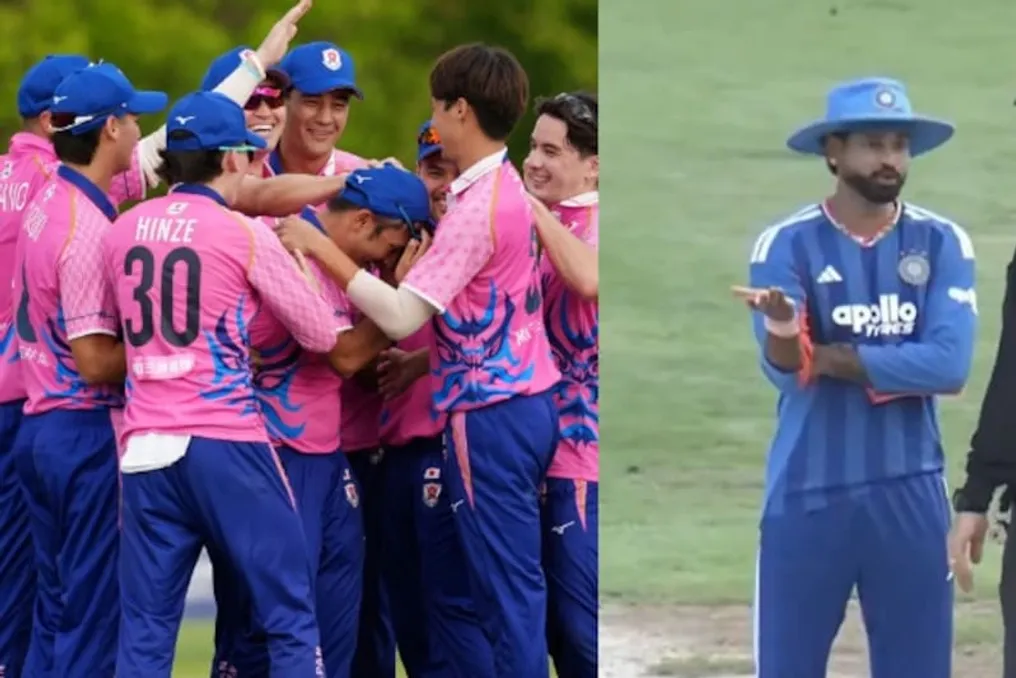
Captain Shreyas Iyer clashed with the umpire during India vs Japan match
Read more
www.aajtak.in

Captain Shreyas Iyer clashed with the umpire during India vs Japan match

The T20 match between India and Japan in Sano turned out to be much more exciting than expected. Due to rain, the game was shortened to five overs, and India, batting first, scored only 32 runs.

After this, the Japanese team managed to create serious problems for the Indians, and the match went down to the final over. It was in this decisive moment that a tense drama unfolded, leaving everyone in attendance holding their breath.

The situation reached its peak tension in the final over. Japan needed only a few runs to win, and the pressure on the field was immense. Akshar Patel was bowling when umpire Chris Thorpe ruled that one of Akshar's balls was a wide.

The series of wides was already causing difficulties for the Indian team, and the umpire's decision caused strong disappointment for bowler Akshar Patel. However, the situation did not end there. Indian captain Shreyas Iyer lost his composure and immediately walked towards the umpire.

It was evident from the broadcast how angry Iyer was about the decision, and he expressed his dissatisfaction in a very aggressive manner. At such a critical moment in the game, awarding an extra run could have been fatal for India, and Iyer's anger was caused by this.

Considering the anger of the Indian team's captain and the pressure from the players, field umpires Chris Thorpe and Chris Brown held a discussion. Following this, a dramatic turn occurred: the umpires changed their initial decision and ruled the ball as valid. This review fundamentally changed the course of the match.

In this thrilling game, the Indian team maintained psychological resilience after the drama and managed to stop the runs scored in the last balls, thereby preventing Japan from winning. Ultimately, India won this intense confrontation by a margin of two runs. In the five-over match, India scored 32/4, while the Japanese team managed only 30/3.

Popular