South Africa is a wonderful destination for ornithology enthusiasts, as its national parks protect diverse ecosystems: from wetlands and estuaries to mountain grasslands, indigenous forests, and Lowveld scrub.
You do not need to be an experienced birdwatcher to enjoy these places. Many parks are equipped with bird hides, water points, rivers, and rest camps where you can spot vibrant species alongside the country's more famous wildlife.
Below are seven national parks that should be included in your birdwatching itinerary. The combination of forests, savannas, rivers, and water sources in these parks creates opportunities to see many species—from colorful sunbirds and rollers to vultures, larks, warblers, and raptors.
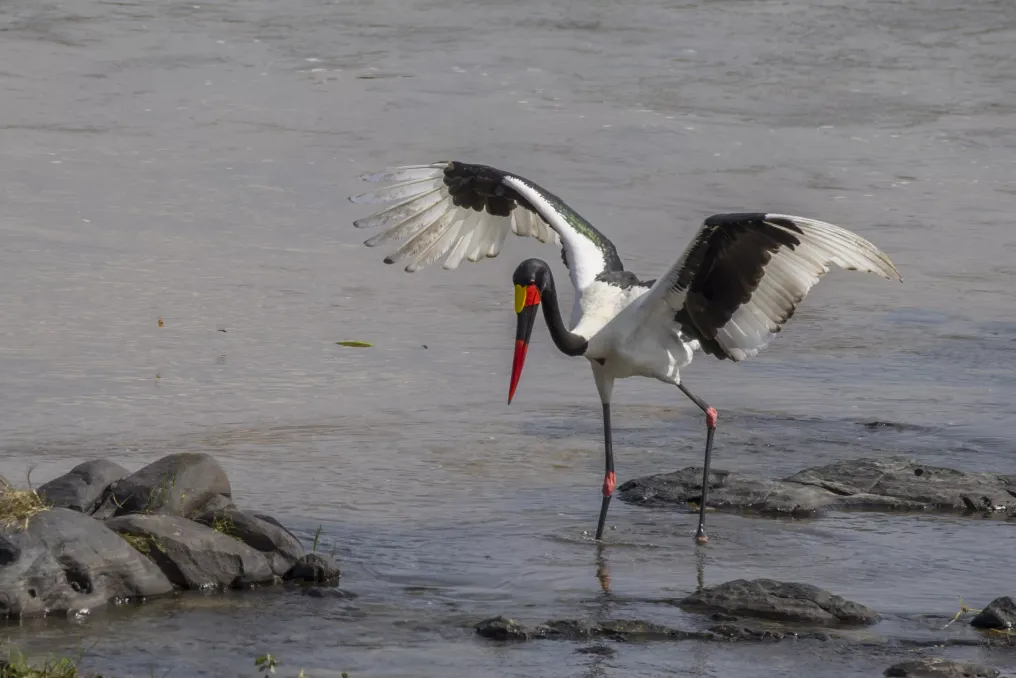
Bird lovers can also look for Kruger's unofficial 'Big Six': the saddle-billed stork, the kori bustard, the marshall's eagle, the booted scavenger, the pel's fish eagle, and the ground lark. SANParks notes that five of these are relatively easy to spot, while the elusive pel's fish eagle is mainly found near large rivers such as the Limpopo, Levuvhu, and Olifants.
The northern areas of Pafuri and Punda Maria are considered among the main birdwatching spots in the country, although excellent viewing is possible throughout the park.
Isimangaliso Wetland Park offers a completely different birdwatching experience due to its vast protected landscape, which encompasses lakes, estuaries, coastal forests, grasslands, and wetlands. It has recorded over 530 bird species, making it one of the most diverse destinations for ornithologists in South Africa. Its ecosystems include three major Ramsar-designated lake systems, as well as the largest estuarine system in Africa.
Pelicans, flamingos, storks, and egrets inhabit the park's waters, while the forests and grasslands offer a different set of species. The diversity of habitats allows one to see birds in a single trip that would usually require visiting several different locations.
In Mpungubwe National Park, which is at the intersection of South Africa, Botswana, and Zimbabwe, an intriguing mix of fauna is formed. SANParks is currently cataloging 447 bird species for this park. Due to its proximity to the Limpopo River, species associated with wetter Lowveld areas are found here, alongside birds typical of the country's drier western regions. Ornithologists can look for the Mewa sparrow, tropical bushbuck, and pel's fish eagle along the Limpopo. Raptors are also noticeable inhabitants of the park's rugged landscape.
Another feature that attracts attention in summer is that SANParks reports up to 11 species of cuckoos may be found in this area, including the less common common cuckoo and the thick-billed cuckoo.
West Coast National Park is an excellent choice for travelers wishing to combine scenic coastal landscapes with serious birdwatching. The park surrounds the Langebaan Lagoon, which is a Ramsar international wetland. SANParks has recorded 281 bird species in this park. The lagoon attracts a large number of migratory waterfowl. Registered species include the plover, sandpiper, little swift, Curlew sandpiper, godwit, grey gull, green heron, and willet. September and March can be particularly favorable periods for observing migratory waterfowl during their arrival or preparation for migration. Four bird hides provide additional opportunities for undisturbed observation of the animals.
The fynbos of this park also supports species such as the southern black kurrawong and the black kite, while flamingos, white pelicans, Cape goshawks, and African penguins add to the diversity.
Although birdwatching might not be the first thought when mentioning Addo Elephant National Park, its wide range of habitats makes it a surprisingly diverse destination. SANParks accounts for 418 bird species in the park. Dense spekboom scrub, open grasslands, forested gorges, Karoo vegetation, coastal plains, forest, and wetlands contribute to this diversity. The Tsaurberg region offers opportunities to observe forest species, including the African crowned eagle, Cape batis, and yellow-breasted warbler. Further towards the Alexandria forest, ornithologists can find the Knysna toucan and the Narina trogon, while the entire park offers species such as the blue crane, Denham's bustard, black kurrawong, marshall's eagle, and secretary bird.
The coastal extension of the park also includes seabirds, such as Cape goshawks and African penguins.
Garden Route National Park replaces Lowveld scrub with montane grasslands, sandy cliffs, and the Maluti Mountains. The park has recorded 256 bird species, and its mountainous environment provides opportunities to observe several impressive raptors and high-altitude specialists. The vulnerable booted scavenger is one of the birds most closely associated with this area. Other large birds sighted around the mountain escarpments include the Cape vulture, black crane, blind ibis, marshall's eagle, and Lanner falcon. The park's bird list also includes the orange-breasted rockjumper, tree cricket, Gerney's honeyeater, and Drakensberg siskin. A special bird hide on the Oribi self-drive route allows visitors to observe Cape and booted scavengers gathering at a feeding station.
Garden Route National Park is ideal for bird lovers who prefer varied landscapes over traditional safari settings. SANParks accounts for 300 bird species in the park, which includes wetlands, lakes, estuaries, indigenous forests, coastal zones, and montane fynbos. The Wilderness section is particularly good for waterfowl, as the lakes and wetlands attract grebes, ducks, herons, spoonbills, teal, and other aquatic species. Bird hides in Rondewelle, Langwelle, and along the Tuu River facilitate the study of these habitats. In the forests, attention should be paid to the Knysna toucan, Narina trogon, Knysna woodpecker, emerald cuckoo, and Cape batis. The park's rivers can also offer encounters with the half-necked kingfisher and the African finch. The Knysna Lagoon is another excellent birdwatching area, especially for migratory waterfowl and the endangered African black oyster catcher.
From Kruger's famous 'Big Six' and Mpungubwe's northern rarities to the West Coast's migratory waterfowl and Garden Route's mountain raptors, South Africa's national parks showcase an immense diversity of local avifauna. The best part is that birdwatching does not always require specialized equipment or an organized expedition. A pair of binoculars, a field guide, and enough time to slow down and look around can turn an ordinary safari trip, a forest walk, or a stop at a wetland into an unforgettable wildlife encounter.