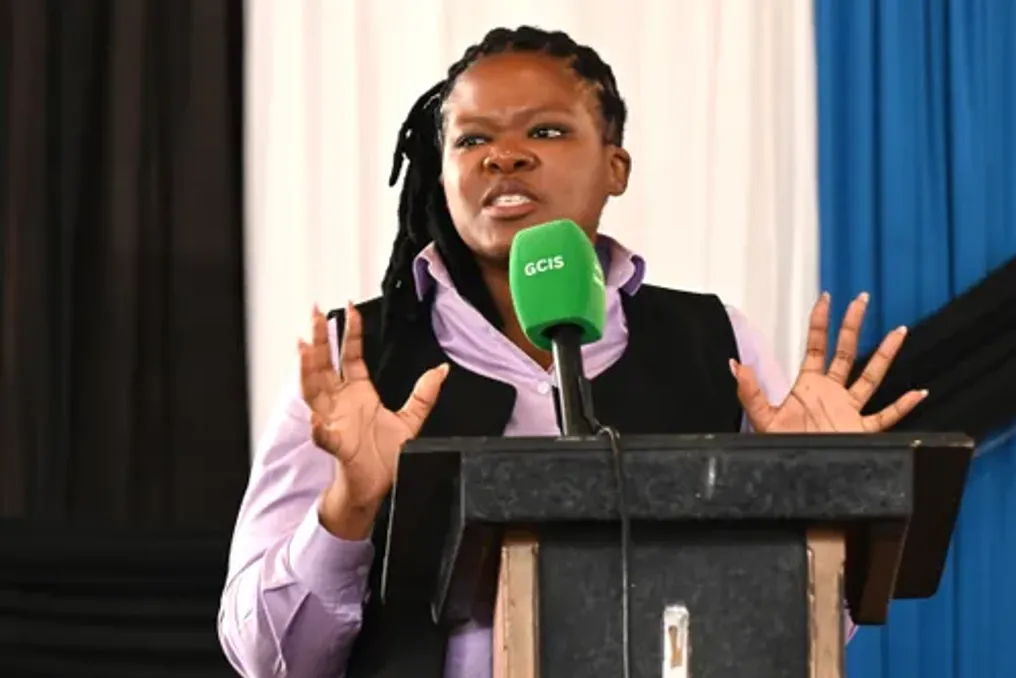
Nonseba Mkhlawuli, the Minister's Assistant in the Presidency, reported that in the first quarter of the 2026/27 financial year, young South Africans gained nearly 140,000 earning opportunities through the President's Youth Employment Intervention Program (PYEI).
These government efforts are aimed at combating the persistent youth unemployment crisis in the country. Nonseba Mkhlawuli specified that between April and June, 139,693 earning opportunities were provided via the National Pathways Management Network.
Of the total, 106,093 opportunities were secured through SA Youth, while another 33,600 earning and training opportunities were registered through the South African Employment Services (ESSA).
Speaking at a presentation on the PYEI first-quarter progress report, Mkhlawuli emphasized that the program's figures should not be interpreted as the number of permanent jobs. She explained that reporting access to over 2.6 million temporary earning opportunities since the launch of PYEI does not mean the creation of 2.6 million permanent jobs.
According to her, the report reflects support for youth in economic participation, experience acquisition, and moving towards sustainable earnings. The government defines the term 'earning opportunities' broadly, including work placements, practical training, and paid services. However, Mkhlawuli acknowledged that such measures alone are insufficient to solve the unemployment problem.
Registrations in SA Youth Exceed Six Million
The report states that more than six million young people are registered on the SA Youth platform. Since the launch of PYEI in 2020, over 2.6 million earning opportunities have been provided through SA Youth, with young women making up almost 70% of them. Concurrently, by the end of June, approximately 5.7 million young people were registered on ESSA, and the system recorded 386,733 opportunities since the intervention began.
Over 5,200 Participants Gained Work Experience
In the first quarter, the Youth Employment Service (YES) placed an additional 5,244 young people in work placements. Since the start of PYEI, 233,393 work experience opportunities have been provided, of which 72% was facilitated by YES, and 28% by Higher Education and Training Institutions through vocational education and training bodies.
Mkhlawuli noted the importance of work experience, as qualifications alone do not always provide youth with the necessary practical experience to enter the job market. Furthermore, the government is recruiting 100,000 young people in the fifth phase of the Renewed National Youth Service, which is currently the largest phase of the program. An additional 2,866 young people were recruited during the quarter.
Since its inception, the National Youth Service has provided 140,922 paid service opportunities across five phases, with young women accounting for 68% of them. The National Youth Development Agency also provided 5,214 enterprise support opportunities during the quarter, including 4,795 non-financial and 419 financial opportunities. Total enterprise support within the PYEI ecosystem reached 277,349 opportunities since the beginning.
The government allocated 95 million rand to the fourth call for proposals in the National Pathways Management Network Innovation Fund. These funds are intended to strengthen economic opportunities in rural and marginalized communities, support sustainable earnings, and expand economic participation for youth with disabilities. As of June 30, the fund's portfolio supported access to over 32,000 earning opportunities and the registration of more than 52,000 unemployed young people.
The focus is shifting to whether these opportunities lead to sustainable income. Although PYEI exceeded its targets for engaging five million young people in the National Pathways Management Network and providing 1.5 million temporary earning opportunities, the government still needs to determine if the goal of transitioning 500,000 young people into sustainable employment has been met. Mkhlawuli stated that evaluations and tracking studies are underway to ascertain what happens to participants after completing the programs.
She stressed: 'The impact of PYEI cannot be measured solely by the number of young people who gain access to an opportunity.' She added further: 'We must also understand what happens afterward: whether young people move on to further opportunities, secure a sustainable income, advance into employment or entrepreneurship, and whether the pathways we create help young people build livelihoods.'
Mkhlawuli concluded that the government will spend the remainder of the financial year scaling up initiatives that show progress while placing greater emphasis on the quality and sustainability of available opportunities for youth. She reiterated that PYEI cannot solve the youth unemployment problem alone, and solving this complex challenge requires continuous collaboration among the government, business, civil society, educational institutions, and other partners.