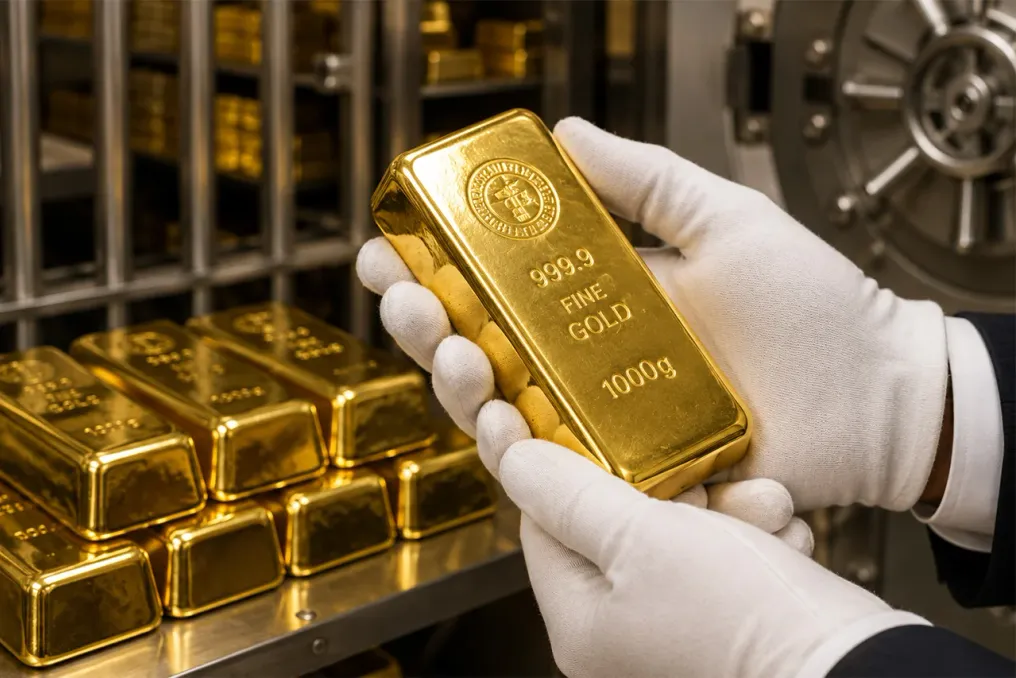
The metals market in September was closely tied to the dollar exchange rate, bond yields, and Federal Reserve expectations. Global bonds ended the month with sharp sell-offs, while yields in the US and Europe remain at multi-year highs, and the dollar is strengthening and appreciating. This situation creates a complex backdrop for precious metals: investors are not completely abandoning safe-haven assets, but high interest rates are reducing the attractiveness of gold and silver.
Gold is trading at approximately $4170 per ounce after falling below the seven-week low. Silver holds slightly above $61 per ounce and is also under pressure. At the beginning of the week, metal prices dropped sharply due to rising oil prices and new inflation concerns, but later stabilized after oil price declines and moderately toned-down comments from Federal Reserve representatives.
The market has become less certain that a rate hike will occur immediately in October, although this issue has not entirely disappeared: inflation remains high, and the Federal Reserve continues to signal its readiness to adopt a tougher stance if necessary. The situation with gold is particularly contradictory. On one hand, geopolitical and debt risks support demand for safe assets. On the other hand, geopolitics affects oil prices and inflation, thereby increasing expectations for higher interest rates. As a result, gold has been unable to quickly return to growth. Buyers are appearing around $4000–$4150 per ounce, but every new yield increase again limits recovery.
Silver appears even more volatile in this environment, as it is more sensitive to both interest rates and industrial demand. Platinum and palladium remain weaker than gold. Platinum trades around $1700 per ounce, and palladium is priced at approximately $1210–$1220 per ounce. Both metals are under pressure from a strong dollar and overall investor caution. Nevertheless, platinum seems fundamentally more resilient, as the market still accounts for supply shortages and demand from hybrid vehicles. Palladium faces greater pressure due to the long-term increase in the share of electric vehicles and the substitution of palladium with platinum in automotive catalysts, which limits consumption expectations.
The main trend in the industrial metals segment is related to copper. Prices are holding around $6.60 per pound, close to the September record level of $6.85. Copper has changed little over the month, but over the year, it has still risen by more than 35%. The market is supported not only by long-term demand from the energy sector, power grids, data centers, and artificial intelligence. Trade flows also play an important role: US tariff expectations continue to attract metal into the United States, while China simultaneously increases stockpiles. This creates the impression that the less accessible metal remains outside the largest buyers.
Zinc remains one of the strongest metals this autumn. Its price is holding at about $3860 per ton after a recent rise above $4000, which is the highest level in several years. The market is reacting to actual supply disruptions: production in China has decreased, some facilities are undergoing maintenance, and exchange inventories remain low. As a result, even after pulling back from peak values, zinc does not look weak. Buyers understand that physical metal is not as freely available as they would like.
Aluminum is trading at about $3250 per ton and is moving more calmly than copper and zinc. On one hand, some concerns about supplies from the Persian Gulf have eased, and the market expects a gradual production recovery. On the other hand, inventories remain extremely low, preventing prices from entering a deep correction. A key issue for aluminum is the balance between supply and demand: if supplies truly recover faster, the market may cool down, but a new logistical problem could quickly bring the shortage back into focus.
Overall, as of September 30th, the metals market is defined by two main themes. Precious metals are under pressure due to the strong dollar, high rates, and Federal Reserve expectations. Industrial metals are more dependent on the actual availability of raw materials, trade flows, and long-term demand from the energy and technology sectors. Consequently, gold and silver are still seeking support, while copper, zinc, and aluminum are being held up by physical supply constraints and structural demand.