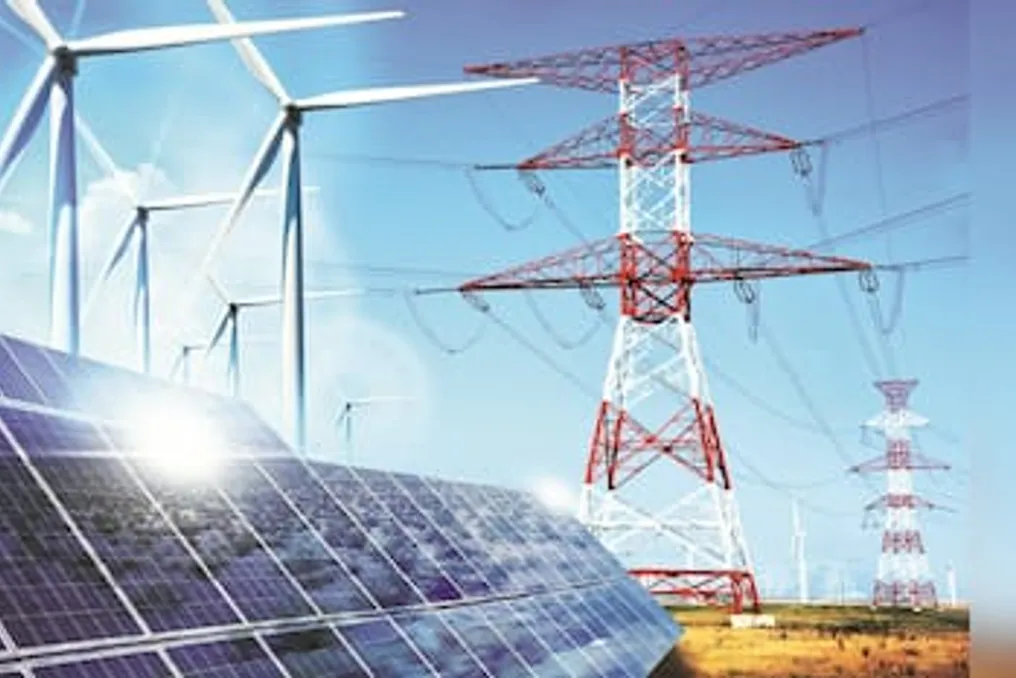
The Federal Cabinet of Ministers, led by Prime Minister Narendra Modi, has approved the Green Energy Corridor Phase III (GEC-III) scheme valued at 1.86 trillion rupees. The objective of this scheme is to strengthen the internal state transmission system (InSTS) to enable the transfer of 135 gigawatts (GW) of renewable energy between different states.
Furthermore, the scheme includes the implementation of Battery Energy Storage Systems (BESS) with a capacity of 50 gigawatt-hours (GWh). These systems can be located at renewable energy developers and generators, as well as in other locations critical for grid flexibility. This is necessary to address issues of intermittency, overload, peak hour power limitations, and meeting demand outside of solar hours.
According to the Cabinet's statement, the project, with a total budget of 1.86405 trillion rupees, is planned to launch by 2032–2033. This amount comprises 1.36378 trillion rupees for the development of Internal State Transmission Systems (InSTS) under GEC-III and 50 billion rupees for 50 GWh BESS.
Central financial support under the scheme will amount to 54.082 trillion rupees. This aid will help offset intra-state transmission costs, thereby reducing electricity prices. Within the scheme, all new projects in the InSTS component will be implemented through a Tariff-Based Competitive Bidding (TBCB), while the modernization of existing facilities and network strengthening will be carried out on a Cost Plus Basis (CPB).
Overall implementation will be overseen by state power transmission companies, and Transmission Service Providers (TSPs) will participate under a Build-Own-Operate-Maintain (BOOM) model within TBCB. This initiative is expected to help achieve the target of 900 GW of installed non-fossil capacity by 2035, contributing to the country's long-term energy security and environmentally sustainable growth by reducing the carbon footprint.