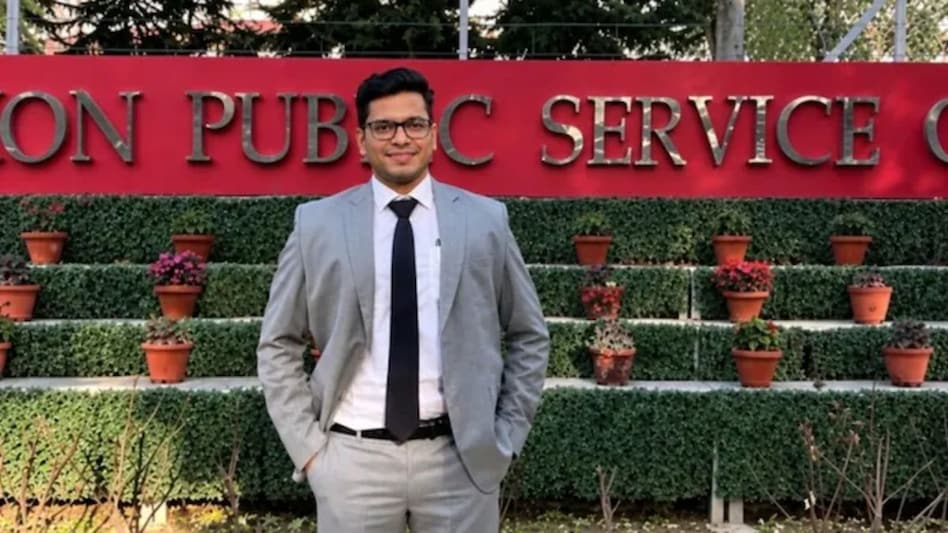
Grandson whose family is linked to crime graduates from IIT and then succeeds in the UPSC exam
Read more
Aaj Tak
www.aajtak.in

Grandson whose family is linked to crime graduates from IIT and then succeeds in the UPSC exam

Stories from Chambal, where the sound of rifles, deep pits, and scattered settlements once echoed, now have different chapters. In a village in the Muraina district of Madhya Pradesh, Deva Prabhakar Singh Tomar wrote a completely different story. Despite his family having ties to banditry and violence, Deva Prabhakar Singh decided to dedicate himself to studies.

He successfully graduated from IIT and subsequently secured the 629th rank in the UPSC examination. His journey is a narrative of years of struggle, persistent hard work, and overcoming a difficult family past that was hard to leave behind. Nevertheless, Singh did not give up and found a way forward. After this, he got a job abroad but decided to return to India to serve in the administrative sector.

In an interview, Deva Prabhakar Singh recounted that his path did not begin with the UPSC or IIT Ropar exams, but back in his grandfather's time. In an interview for Josh Talks, Tomar stated that his grandfather became a 'baghi' (outlaw/bandit) about 75 years ago due to family problems and disputes with officials of that time. Although police records might have registered him as a robber, the family subsequently faced numerous hardships. During the conversation, Tomar recalled that his family had to fight even for food after that.

The situation did not end there. After his grandfather, his uncle also became a 'baghi'. However, Singh's father chose a different path. Tomar explained that his father wanted to study and find a job that could provide the family with a salary. Moreover, he wished to live far from his native village. He decided to move to Gwalior without informing anyone and continued his education there. Through hard work, he became a teacher, marking a new turning point for the family.

Singh Tomar followed this example. He completed his primary education according to the Madhya Pradesh state curriculum for five years. Then, in sixth grade, he transferred to a school with the CBSE curriculum to continue his studies. The school change was not easy for him, as it took some time for him to adapt to the new language and environment.

Over time, things started to stabilize, but when he reached 11th grade, he first considered applying to IIT. His classmates were preparing for the engineering entrance exam, and he decided to do the same. However, traveling to Kota for preparation was impossible for him because his family's financial situation could not cover such expenses. Therefore, he began preparing for the engineering exam at home. He enrolled in IIT Ropar and studied electrical engineering.

After graduating from IIT, Tomar sought employment through the campus placement process. His search led him to Philips, a company located in the Netherlands, where he worked near Amsterdam and later received a preliminary job offer. This position provided him with a unique opportunity to build a career abroad. Nevertheless, as he recalled later, he began to feel that the lifestyle he was leading did not match his desires at all. But as soon as he learned about civil service, he became even more interested in this field.

After long deliberation, he decided to resign to prepare for the civil service. He felt that preparing for UPSC while fully employed was extremely difficult. Therefore, he returned to India, leaving his job. In his first attempt, he failed to clear the preliminary selection, falling short of the qualifying score by 12.5 marks. In the second round, he improved his results but again failed, missing the qualifying score by only 2.5 marks.

After two failures, he revised his approach to preparation. He realized that simply studying material and collecting many textbooks was not enough; understanding the exam structure and requirements was crucial. Following this, he changed his preparation methodology.

Tomar did not give up and made another attempt. This time, he passed both the preliminary and main stages of the exam, reaching the interview stage. However, ultimately, he was not selected. Even after this, he did not lose hope and started preparing for UPSC again. During this time, he worked as a teacher in Delhi. His family also supported his aspiration to continue preparing for the exam. Working a full-time job, he took the exam again. This time, he also cleared the preliminary selection and reached the interview.

After this, he waited for the results. On the day the results were expected to be announced, Tomar was at home with his wife. According to him, the results were published around 13:30. He opened the UPSC list and began searching for his name. At first, he several times...
Similar stories

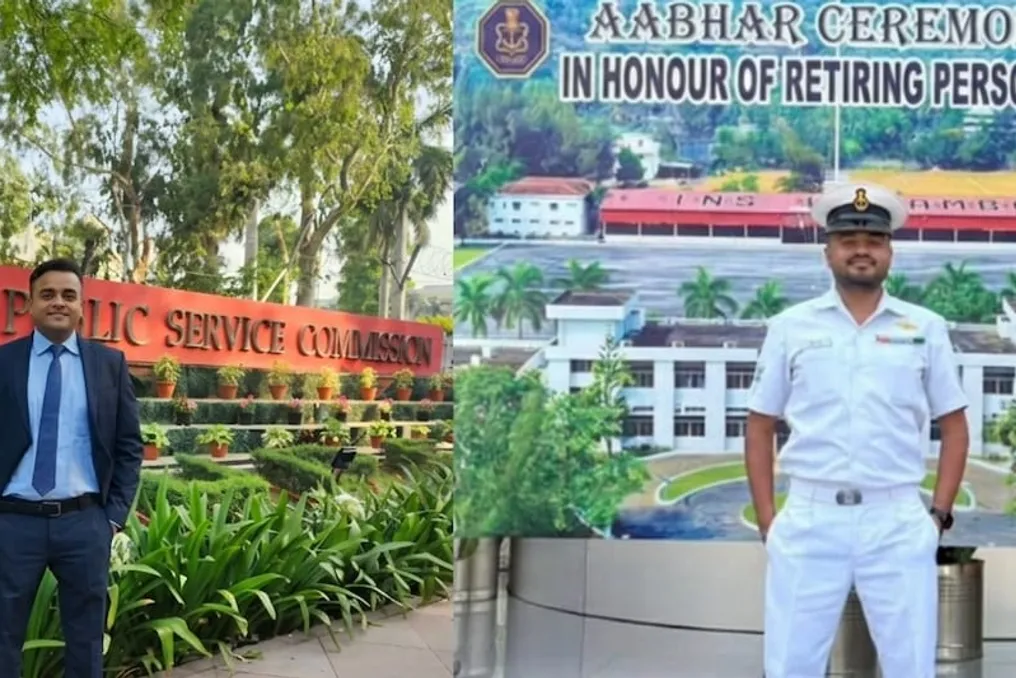
Former Sailor Myank Sachan Clears UPSC CAPF Exam After 15 Years of Service and Numerous Failures
Read more
www.aajtak.in

Former Sailor Myank Sachan Clears UPSC CAPF Exam After 15 Years of Service and Numerous Failures

It is said that if the will is strong, a series of failures cannot block the path to a goal. The success story of Myank Sachan, a former sailor from Kanpur, is a vivid proof of this. Despite more than 15 failures in various competitive exams, two rejections from SSB, and two failures in CAPF, Myank did not give up.

In his third attempt, he set an example by achieving an All India Rank (AIR) of 343 in the UPSC CAPF 2025 exam. Myank himself shared details of his challenging journey.

Myank's childhood was spent in a very modest family. His father worked as an electrician at a private factory. Due to limited financial resources and having two brothers and sisters in the family, it was difficult for Myank to pursue an engineering education. To support his family financially, he chose a different path and joined the Indian Navy (Navy).

During his 15 years of service as a sailor in the Indian Navy, Myank's dream of achieving high positions in education and public service never faded. While performing duties in the Navy, he obtained Bachelor's and Master's degrees in Public Administration through IGNOU.

Myank appeared for the SSB interview twice for a position under the Combined Defence Services (CDS) and the commission, but was rejected both times. After this, he took the UPSC civil services exam but could not pass the preliminary stage (Prelims). He also failed the written CAPF exam the first two times. Despite constant failures in more than 15 competitive exams, he maintained his determination and cleared the UPSC CAPF 2025 on his third try.

Myank attributes his historic success to the 15 years spent in the Indian Navy. He believes that the rigorous training in the navy taught him to remain calm in difficult situations, maintain discipline, and exercise patience. It is thanks to this maturity that he was able to stay focused on his goal despite constant rejections.

Myank's journey teaches millions of young people preparing for public service one lesson: failures can be part of your preparation, but they cannot define your future.

Mother and son reunite in Lucknow after relatives from Gujarat learn of her whereabouts following a nine-year separation
Read more
www.aajtak.in

Mother and son reunite in Lucknow after relatives from Gujarat learn of her whereabouts following a nine-year separation

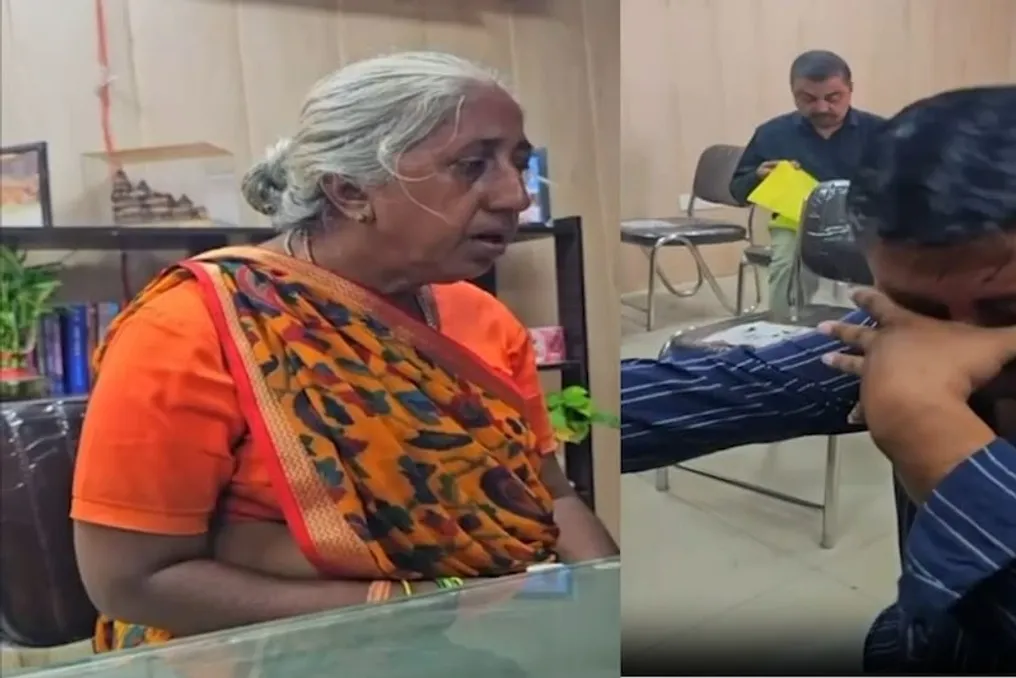
A reunion took place in the Hazratganj area of Lucknow, which the mother and her son had been waiting for for about nine years. Rantan Ben, a 55-year-old resident of Gujarat, had been missing from her family for approximately nine years. She got lost and reached Lucknow, where she was noticed by Hazratganj police officers.

The police began the process of identifying the woman and searching for her family. It was established that she was from Gujarat, and the police contacted the Gujarat police, sending a photograph of Rantan Ben. When the photograph reached her family, her son was able to recognize his mother. This event became the realization of a long-awaited dream after such a long wait.

After the woman reported her origin, the Hazratganj police contacted the Gujarat police. A photograph of Rantan Ben was sent to Gujarat, from where she was delivered to her family. The moment arrived that the family may have waited years for: the son recognized his mother from the photograph. The family learned that their mother was alive and in Lucknow. Accepting this news after nine years was not easy.

After receiving this information, the son arrived in Lucknow with the Gujarat police. When the son met Rantan Ben, the atmosphere was charged with emotion. Seeing his mother after nine years, the son burst into tears. They looked at each other for a long time, and then the son hugged his mother and cried. Even the attending police officers were moved to tears by this meeting of a mother and son separated by a long time.

In this case, the Hazratganj police did not limit themselves to formal actions after safely placing the woman at the station. The police contacted the Gujarat police to identify her and find her family. After the woman's photograph reached the family, her son was able to recognize her. This story is not just about a mother and son meeting; it is also a story of hope for families whose loved ones are far away for some reason, and whose searches continue for years.

In Rantan Ben's case, thanks to one photograph, coordination between the police of two states, and efforts to deliver her to her family, the nine-year separation was overcome. It is hard to imagine how many years the family might have spent searching for a loved one after her disappearance. When Rantan Ben was found in Lucknow after almost nine years of absence, one photograph helped deliver her to her relatives.

There were no major operations or sensational events in this story. Simply, a woman was found, the police tried to establish her identity, contacted the police of another state, and conveyed the information to the family. However, the result was huge: the mother met her son, and the family, which had been waiting for news of their loved one for almost nine years, could finally emerge from this wait.

Popular