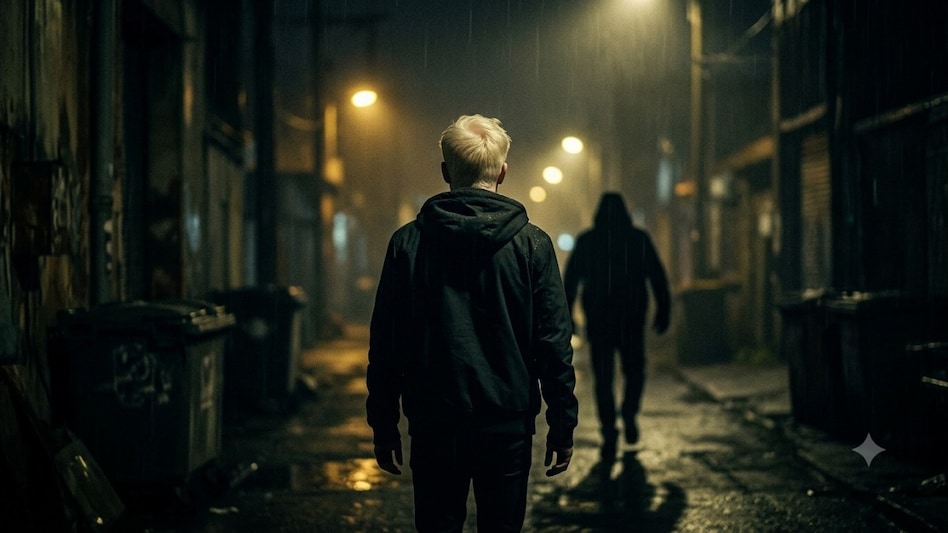
People with albinism are being murdered in Madagascar due to superstitions related to body parts
Read more
Aaj Tak
www.aajtak.in

People with albinism are being murdered in Madagascar due to superstitions related to body parts

An incident occurred in Madagascar where a mother who was caring for her eighteen-month-old daughter was attacked. Around midnight, three men broke into the house, attacked the child's father, and then tried to forcibly pull the girl from the mother's arms. The mother made every effort to protect the child despite the attackers' threats, who demanded she release the girl under threat of murder. Eventually, the attackers took the child and fled. The mother followed them, crying for help, but soon lost consciousness.

Several days later, the body of the girl with a severed head was found in the home of a mysterious healer. The head was located in a suitcase, wrapped in plastic bags, at another residence.

According to The Guardian, the victims are 32-year-old Nicole Soalala and her 18-month-old daughter Landrisse. The girl suffered from albinism, which is commonly associated with white spots or congenital pigmentation. In India, such children are called sunflowers.

In Africa, in Madagascar, the eyes of some people have become the cause of death. Children with white spots and light skin are kidnapped and brutally murdered due to superstitions. There is a belief that wealth, luck, and success can be obtained from their eyes and body parts. Only this year, 13 murders have been recorded, most of whom are children.

It is important to note that this is not a common white spot on the skin, but a genetic condition where there is an insufficient amount of melanin pigment in the body, which is responsible for color. This affects the skin, hair, and eyes. Many people suffer from deteriorating vision, and the risk of skin damage from the sun increases.

Many myths circulate in Madagascar regarding people affected by albinism. Some are convinced that objects made from their organs can bring wealth, a happy destiny, and political success. There is a particular demand for their eyes.

Children become targets because, according to superstitions, items made from their parts will have a stronger impact due to their innocence. Furthermore, it is relatively easier to kidnap young children.

The information about the 13 murders this year confirms that all victims had severed heads. Among them are children aged between nine months and 14 years old. According to the organization Albinoes Madagascar, this is the most dangerous year in the history of the organization, founded in 2022.

The organization's chairperson, Fulgence Soaza, also suffers from albinism. He stated that the situation is extremely difficult, and people do not feel safe.

Madagascar is among the poorest countries in the world. About 80 percent of the population lives on less than $2.15 per day. The country has long faced political instability, poverty, and natural disasters such as droughts, floods, and cyclones, which affect people's lives and employment.

Sabina Lober, a UN human rights consultant, believes that the worsening situation and life difficulties push people towards such dangerous beliefs. These murders are linked not only to superstitions but also to a large financial scheme.

According to reports, people are paid large sums for murdering children and obtaining their organs. In some cases, an entire network operates. Some human rights experts also note that such attacks occur near precious stone and gold deposits.

According to UN representative Tohoveri Rajakamana, these incidents were previously limited to the southern regions of the country, but now they are appearing in the north and other regions.

Odet, 20 years old, living in the northern part of Madagascar, also suffers from albinism. She has poor vision, and her skin burns in the sun. Her 14-year-old cousin, Marcelin, was killed in February. His head was severed, and his body was left in front of the house under a mango tree; his head has not yet been found.

Odet has a three-year-old son. She earns about 3000 ariary daily working in fields and running small errands. Due to fear of attacks, she left her home and now lives in a small hut with about a dozen people. She fears that someone might come at night and kill her.

In another village, nine-year-old Veroline and her younger brother live in similar fear. Both suffer from albinism. Their 14-year-old brother, Rakotombelo, was killed in May. The attackers took him from his home and severed his head. Now both children are under the protection of the village mayor, and three guards, one of whom is armed, are deployed to monitor them.

The village mayor admits that taking responsibility for the safety of the children is becoming difficult for him.

Following a series of murders, the Malagasy government has increased security measures to catch criminals. The President has also dispatched his personal bodyguard unit to search for suspects. The country's First Lady has provided protection for people with albinism in the southern regions.
Similar stories

Murders of mothers leave long-term trauma in families and communities
Read more
iol.co.za

Murders of mothers leave long-term trauma in families and communities

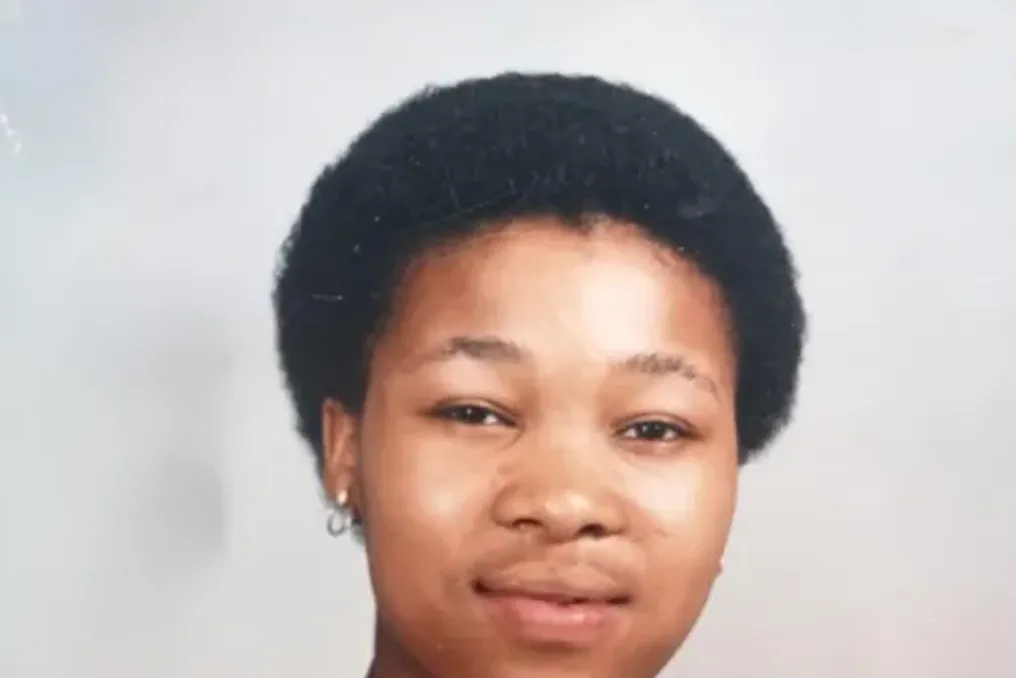
The death of Elizabeth 'Tsontho' Moselakgomo has once again exposed an old wound in the family of journalist Mkhume, whose sister Pearl 'Kokosi' Mkhuma was murdered in 2008. Their stories demonstrate the lasting damage that violence inflicts on children, families, and communities.

The murder of 38-year-old Elizabeth 'Tsontho' Moselakgomo reopened wounds that seemed to have long healed. Her story is similar to that of the author's sister, Pearl 'Kokosi' Mkhuma, who was also killed at the age of 38 in 2008 and found abandoned near the railway tracks of New Canada. Both women were young, vibrant, and energetic mothers, but both were reduced to lifeless bodies left in places where no person should be.

These similarities are striking: their energy, smiles, love for life. It gives the impression that history is repeating itself, mocking our grief and reminding us that the violence gripping society spares no one. When Kokosi was killed, she had left with a man she knew. Several hours later, she was found dead from a gunshot. The disbelief was overwhelming. The author imagines that the Tsontho family is experiencing the same nightmare, unable to reconcile the image of a loved one with the brutality of her death.

These women were not statistics; they were mothers, daughters, sisters, and friends—people whose lives mattered. Yet, their killers treated them like disposable commodities, stripping them of dignity even in death.

The pain of such loss is compounded by the children left widowed. Tsontho's daughter, who was eight years old, will grow up without a mother's embrace. The author's sister's children were only four and ten years old when she was killed, and they had to grow up in the shadow of her absence.

This is the cruel legacy of violence: it does not end with the victim, but echoes through families, communities, and generations. It leaves children traumatized, parents broken, and siblings devastated by grief.

We live in a society where safety is never guaranteed, and the fear of violence haunts us daily. However, this was not a dream we held when apartheid ended. We believed we were building a better South Africa, where our daughters could walk freely, cycle to school, and live without fear of being stopped, harassed, or killed. This dream seems shattered.

Yes, we should be shocked, but not surprised, as South Africa is one of the most violent societies in the world, with an average of 58 murders per day. Although men constitute the majority of murder victims, women are disproportionately killed by intimate partners. The statistics are staggering, but they are not abstract; they are embodied in the real lives reflected on the faces of Tsontho, Kokosi, and countless others killed by men.

A rebellion arises, and it is justified when women are killed because women are inherently more vulnerable and need protection from men. However, it seems we have normalized violence against men, and this normalization is our greatest failure. We have accepted male killings as routine and do not cry out about it, thereby creating a culture where violence against women is inevitable.

If men are unsafe, how can women be safe? We must confront the roots of this violence and the fact that men kill men at an alarming rate. Estimates suggest that over 90% of male murderers are themselves men. This cycle of brutality cannot be ignored, as it extends to the vulnerable members of our society. If our communities are saturated with men dangerous to other men, then women and children will always be vulnerable. We cannot separate gender-based violence from the broader epidemic of violence. To end femicide, we must first dismantle the culture of violence that has enveloped our society.

Solutions must be decisive and uncompromising. We need to rebuild communities where life is valued and murder is unthinkable. This means strengthening police work and demanding accountability from a system that too often fails its victims. And yes, it means discussing justice—is our society ready to reintroduce the death penalty for those who kill with impunity, like the murderers of the six women in Ekurhuleni? If we can shoot bank robbers on the spot, why do we hesitate to punish murderers with equal severity?

But solutions cannot be limited to punishment. We must also invest in prevention. This means tackling poverty, unemployment, and inequality, which fuel despair and violence. It implies visible policing—not just a police car rushing somewhere, but slowly moving vehicles observing and caring for citizens. It means providing mental health services to communities affected by trauma. It means supporting families so that children grow up in an atmosphere of love, not violence. It means building a culture where every life—male or female—is sacred.

I refuse to view violence only through the lens of gender. Violence is a national crisis, a plague that consumes men, women, and children. Focusing only on the deaths of women while ignoring the normalization of male killings means missing the bigger picture.

Every lost life is a tragedy. Every murder is a failure of our society. We must fight for a South Africa where no one—no man, no woman, no child—is a disposable commodity.

The deaths of Tsontho and Kokosi remind us that violence is not just statistics; it is personal. It is an empty chair at the dinner table, a crying child missing a mother who will never return, and a brother haunted by memories of laughter now silenced. It is grief that never subsides, anger that never fades, and pain that never heals. But it must also become a catalyst for change. We cannot let their deaths pass in vain. We must demand a society where life is valued, where killers are held accountable, and where children can grow up without fear.

The question is whether we will continue to normalize bloodshed or rise up to stop it. The answer lies in our collective will to resist violence in all its forms, to refuse to accept murder as inevitable, and to fight for a future where every life matters. Only then do we truly honor the memory of Tsontho, Kokosi—the six women whose bodies were found in Ekurhuleni—and countless other South Africans whose lives were stolen, by uniting and working together as communities, men, and women to protect and support one another.

Popular