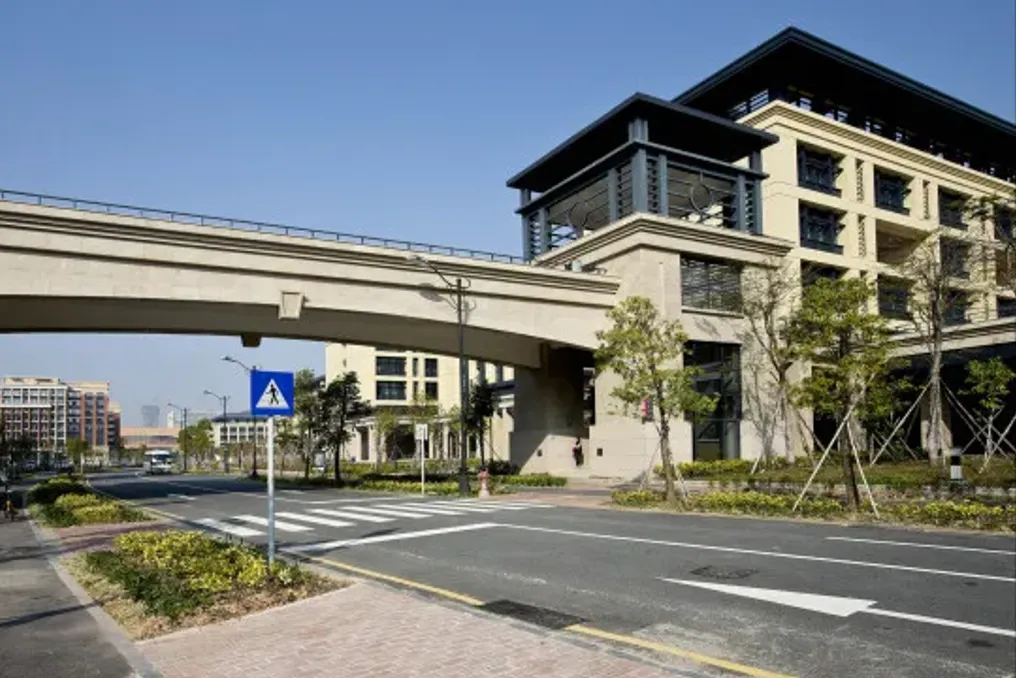
Three Macau universities maintain or improve positions in global rankings
Read more
Noticias ao Minuto
noticiasaominuto.com

Three Macau universities maintain or improve positions in global rankings

Three higher education institutions in Macau presented positive results in recent rankings, either maintaining their previous positions or achieving significant improvements.

The University of Macau managed to maintain a similar placement to the last edition, ranking 154th globally. Meanwhile, the Macau University of Science and Technology preserved its 2026 ranking, holding the 269th position.

The greatest evolution was observed at the University of Macau City, which advanced from a group between 601st and 800th places to the range between 451st and 500th places.

Following the release of the ranking, the Education and Youth Development Bureau (DSEDJ) attributed these results to the investment made by the Government of the Macau Special Administrative Region in advancing higher education.

This body reported that local authorities are actively promoting the creation of the International Education University City and fostering collaborative training programs with foreign universities, all aligned with national strategies aimed at developing qualified professionals.

In 2025, Macau authorities announced the development of this University City, a campus that will be jointly administered by the University of Macau, the Macau Polytechnic University, and the Macau Tourism University. The first classes at this new location began this August.

With a financial contribution of 18 billion yuan (equivalent to 2.3 billion euros), this University City is strategically located in Hengqin, a special economic zone adjacent to the territory. This area was established by the central Chinese government as part of efforts to help Macau diversify its economy beyond the gaming industry.

A recent report by the Macau Government highlighted that Chinese authorities aim for this project to meet the growing demand for university spots in China, providing young Chinese people with an educational experience comparable to studying abroad, but without needing to leave the country.

In this context, the project plans to establish partnerships with universities in Singapore, Australia, the United Kingdom, Portugal, and Switzerland, anticipating the implementation of joint courses and dual degrees, such as clinical medicine courses in partnership with the University of Lisbon or tourism programs with institutions from Australia and Europe.

Additionally, the DSEDJ declared that it will continue to boost the internationalization of higher education in Macau, encouraging the holding of conferences and other international academic activities in the territory and seeking to strengthen the connection of local universities with the global academic community.
Similar stories

UAE Universities Shift Focus from Diplomas to Practical Training and Industry Experience
Read more
www.khaleejtimes.com

UAE Universities Shift Focus from Diplomas to Practical Training and Industry Experience

When choosing a higher education institution, students from the United Arab Emirates are increasingly considering not only the qualification obtained but also what happens after graduation. Universities note a growing interest in aspects such as employment, internships, industry interaction, development of communication skills, and overall student experience.

At the Canadian University in Dubai (CUD), this shift required a revision of the approach to engaging with prospective students and their parents. Aya Sharif, CUD's Marketing Manager, reported that despite an increase in the total number of students compared to previous years, experience has shown an important lesson about what families now expect from higher education.

Sharif emphasized the need for a complete overhaul of the communication strategy to demonstrate the value and return on investment (ROI) in education, focusing on program employment outcomes. She noted that communication with families has moved beyond solely academic achievements; parents now want to know how the institution will help their children develop confidence and skills for future employment.

According to her, the more attention is paid to student life, the more significant it becomes. Today, students and their parents are looking not just for a diploma, but for a supportive environment where the child feels part of something bigger, where they are valued and heard. These values form a holistic, student-centric ecosystem.

Furthermore, students strive to develop outside the scope of their main academic discipline. CUD facilitates this by providing an individualized approach to each learner, helping them improve communication skills, confidence, and abilities.

The university actively integrates industry into the learning process. Sharif specified that a significant number of classes at CUD are conducted by industry professionals, and the faculty includes practicing specialists from relevant sectors. Students have daily opportunities to participate in new events, build contacts, or gain new opportunities.

This industry connection extends to partnerships and practical opportunities. CUD collaborates with organizations such as Dubai Media Academy, FinTech TV, and Dubai Municipality. Students also have access to AWS Academy, Cisco Networking Academy, and RedTeam Hacker Academy programs.

Students engage with the industry through case studies, guest speakers, site visits, seminars, and networking, as well as through specialized career and internship support. Sharif concluded that they 'live within the industry, not isolated,' which aligns with the concept of an urban campus or city university center.

The broader higher education sector is also being forced to adapt to changing expectations. Professor Dr. Amitabh Upadhyay, Director of Academic Affairs at Global Business Studies (GBS Dubai), stated that institutions must rethink methods for preparing students for an uncertain future.

He noted that higher education is at a crossroads, and the current structure and purpose of institutions may not meet the needs of society and the future industry. Therefore, educational institutions must implement a flexible model that instills ethically sound knowledge, necessary skills, and futuristic competencies for successful adaptation to uncertainty.

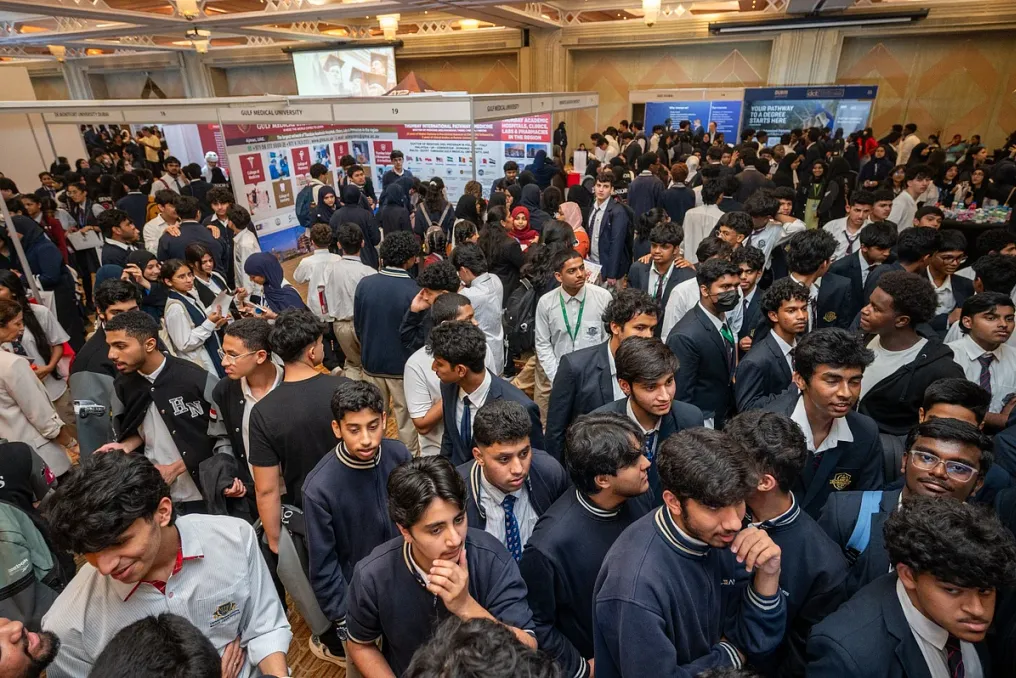
Meanwhile, universities use events like the Khaleej Times Uni Expo to gauge the demands of students and parents. Bhakti Rin, Head of Recruitment at De Montfort University, said the expo provided an excellent opportunity to communicate directly with families and education specialists. She called the event 'exciting and well-organized,' which helped showcase the university and establish meaningful connections.

Survey shows nearly 90% view ASEAN's participation in CAEXPO as a sign of China's confidence
Read more
cgtn.com

Survey shows nearly 90% view ASEAN's participation in CAEXPO as a sign of China's confidence

During the 23rd China-ASEAN Expo and the Business and Investment Summit between China and ASEAN, a survey conducted by CGTN among global respondents revealed that 90.9% believe that the continuous holding of CAEXPO demonstrates China's firm commitment to promoting high-level openness.

This year marks the fifth anniversary of the Comprehensive Strategic Partnership between China and ASEAN, and respondents are generally optimistic that mutually beneficial cooperation between China and ASEAN countries will continue to reach new heights.

This year's expo attracted about 3,300 companies and is expected to host around 33,000 buyers. According to the survey, 89.5% of respondents noted that the expo is not only an important window for showcasing the achievements of China-ASEAN cooperation but also a key platform for facilitating business exchange, developing industrial matching, and sharing regional development opportunities.

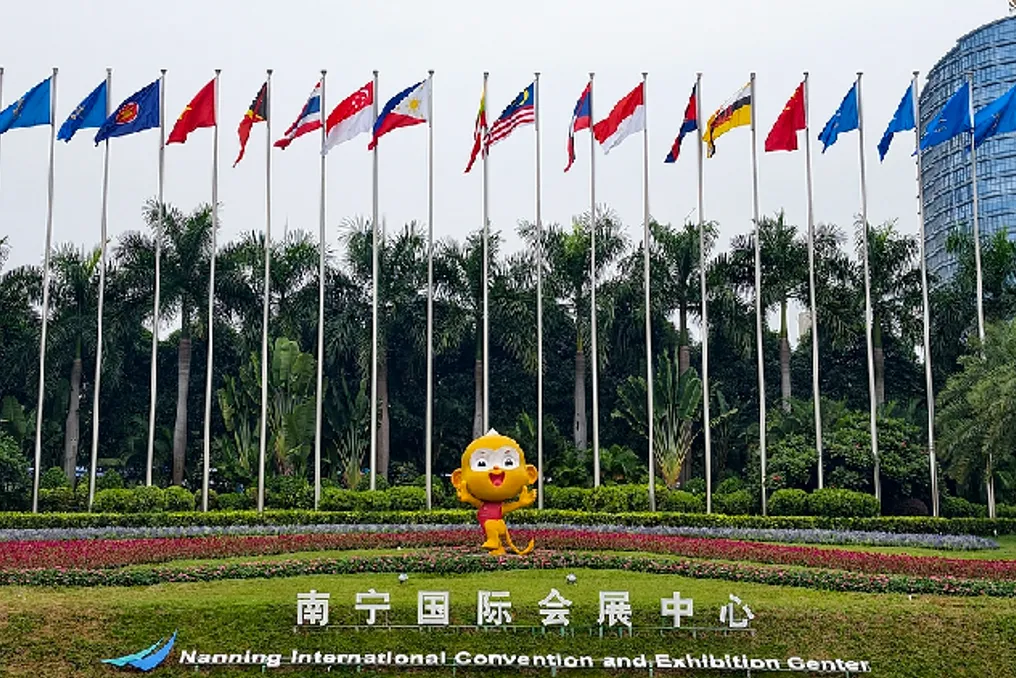
Notably, Timor-Leste participated in the event for the first time as a full member of ASEAN and co-organizer of the expo. The presence of all 11 ASEAN members at the event, for the first time since ASEAN's expansion, led 89.6% of respondents to consider it an expression of confidence in the potential of China's vast market.

The 'AI Marketplace' was presented for the first time at the expo, bringing together over 500 products from more than 70 companies, including rehabilitation and care robots, smartwatches, fitness trackers, and domestic robots. About 84.8% of respondents believe that the accelerated adoption of artificial intelligence could become a new driver of growth for trade and economic cooperation between China and ASEAN, as well as for industrial modernization.

In recent years, mutually beneficial cooperation between China and ASEAN has continued to deepen, with economic and trade ties reaching new heights. In 2025, bilateral trade between China and ASEAN exceeded $1 trillion for the first time. China has been ASEAN's largest trading partner for 17 consecutive years, while ASEAN has been China's largest trading partner for six consecutive years.

In the survey, 90.2% of respondents stated that China's unwavering commitment to expanding high-level openness and its constant utilization of the advantages of a vast market create more opportunities for the development of ASEAN countries; 87.4% noted that increasingly close economic and trade ties have become the cornerstone of stable relations between China and ASEAN.

Following the official signing of the China-ASEAN Free Trade Zone Update Protocol 3.0, cooperation between the parties has expanded into new areas, including digital and green development, standards, and industrial supply chains. About 87.7% of respondents believe that strengthening coordination in industry and supply chains will help enhance regional economic stability and resilience.

The long-awaited Pinlu channel was completed and opened for navigation before the expo, creating a major waterway connecting China's southwestern hinterland with ASEAN countries. This allowed for a reduction in transport distances by 560 kilometers and a decrease in logistics costs by 18% down to 30%. In the survey, 87.6% of respondents stated that multimodal transport, including river-sea and rail-water modes, when effectively integrated with cross-border industrial cooperation and supply chains, will contribute to the further development of regional trade and investment.

Furthermore, 84.5% of respondents noted that deeper free trade cooperation between China and ASEAN will give a greater impetus to openness, cooperation, and stable growth in the global economy; 88.5% stated the importance of building a more cohesive China-ASEAN community with a common future to promote regional peace, stability, and common prosperity.

The survey was published on CGTN platforms in English, Spanish, French, Arabic, and Russian, with 3,950 users voting and sharing their opinions within 24 hours.

Popular