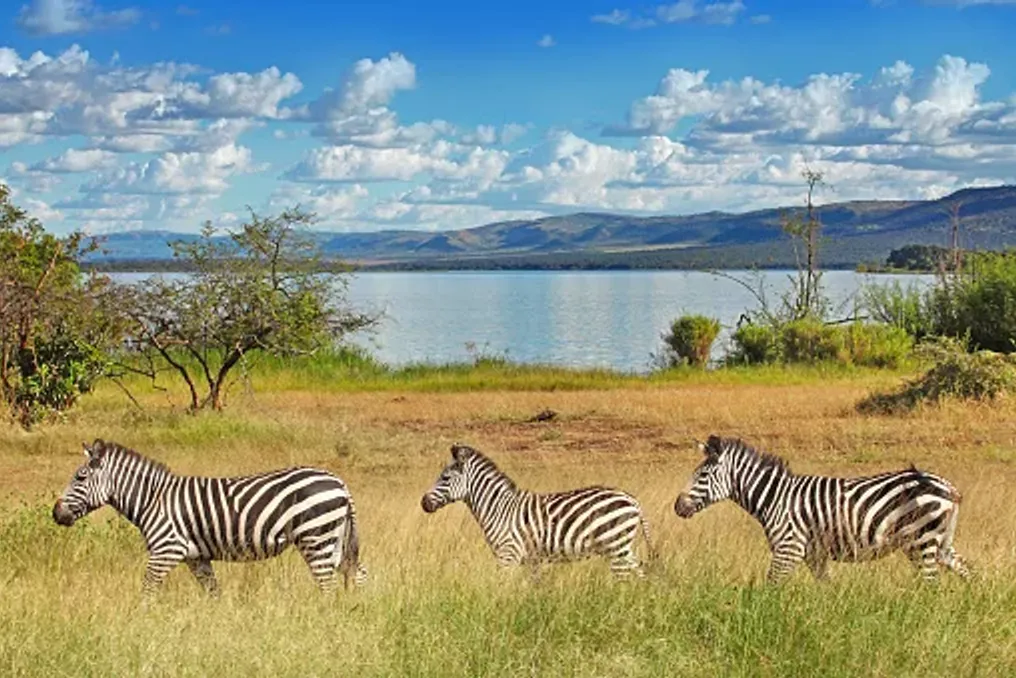
Although famous African reserves are often associated with dry savanna, dusty roads, and impressive encounters with predators, in some protected areas, the main story is centered on water. In these parks, water serves not just as a source of drinking water for animals; it shapes the landscape, influences wildlife movement, and defines how tourists perceive the wilderness.
Among these places are the vast wetlands of Zambia, the Rufiji River in Tanzania, and the Kazinga Channel in Uganda. Eight African national parks where water takes center stage demonstrate the diversity of the continent's natural systems.
The Rufiji River is a defining feature of Nyerere National Park, flowing through an extensive landscape composed of floodplains, channels, and oxbow lakes. This river system creates a constantly changing mosaic of forests and water bodies, where animals gather along the banks and around the lakes. Boat tours offer a different perspective than traditional safari tours: travelers can glide past hippos and crocodiles, observe elephants and other animals coming to drink, and look for fish eagles and kingfishers.
Water is also critical to the park's ecology. Seasonal fluctuations in rainfall and water levels affect the migration of wild animals between floodplains, wetlands, and surrounding forests.
The Zambezi River forms the northern boundary of Lower Zambezi National Park, creating a rich wildlife corridor of channels, riverine forest, and floodplain. A significant portion of the park's fauna is concentrated along this valley, where elephants, buffalo, hippos, and other animals gather at the water. The river also changes the visitor experience: canoe excursions follow the channels and islands, allowing tourists to approach animals from the water rather than from a safari vehicle. Fishing and boat trips are popular here.
The combination of these factors makes Lower Zambezi particularly attractive to those who want the river to be part of the safari itself, rather than just a scenic backdrop. The park's name emphasizes the importance of water. The famous Mana Pools are former channels of the Zambezi River, and the park's floodplains are shaped by seasonal movement of water and sediment. The Zambezi River and its floodplains support large concentrations of wildlife, especially during the dry winter months, where elephants, buffalo, zebras, hippos, and other herbivores, as well as predators like lions and hyenas, converge. Hippos and Nile crocodiles are closely linked to the river and water bodies. Over 450 bird species have been recorded in the wider World Heritage site, making the river and floodplain important not only for large mammals but also for birds.
Mana Pools demonstrates how a river can do more than just provide drinking water; over millennia, the Zambezi has helped create the very landscape that tourists visit.
Kafue National Park is vast, and its waterways explain the exceptional diversity of habitats. The Kafue River crosses the landscape, and its tributaries, wetlands, floodplains, and Lake Itezi-Tezi add additional layers of water-dependent habitats. In the northern part, on the Busanga plains, one of the most striking examples is presented: during the rainy season, the plains turn into vast, water-covered seasonal wetlands. When the water recedes, rich grasslands appear, attracting large numbers of herbivores and their predators. Around the Kafue wetlands, red lechwe, sitatunga, and other water-related species are found, while hippos and crocodiles inhabit its waterways. The park also offers boat trips, providing visitors with another way to explore the water-rich habitats. Thus, Kafue serves as an excellent example of how the same landscape can look completely different depending on the season.
In the compact Lake Manyara National Park in Tanzania, the lake is central, creating a sharp contrast with the surrounding Rift Valley landscape. The park combines a alkaline lake with wetlands, groundwater-fed forest patches, and other habitats. The lake is particularly important for birds: small flamingos can gather in large groups to feed in its waters, and the entire park supports hundreds of bird species. Hippos are also tied to the lake shores. However, the attractions here are not only water; Lake Manyara is also known for its tree-climbing lions, elephants, and groundwater-fed forest, allowing visitors to experience several different ecosystems in a relatively small area. For travelers interested in the relationship between lakes, forests, and wildlife, Lake Manyara offers a completely different experience compared to the vast river systems of Southern Africa.
Akagera is one of the most water-rich destinations for wildlife viewing in Rwanda, combining savanna, forest, wetlands, and a network of lakes. The Akagera River flows along the eastern border of the park and empties into a chain of lakes, including Lake Ihema. Lake Ihema is ideal for wildlife viewing from the water. Boat trips bring visitors close to hippos and Nile crocodiles, while waterfowl gather around the lake and its islands. Wetlands are also an important habitat for birds, including the rare hornbill, and papyrus swamps form another distinctive part of the Akagera landscape. A boat trip gives traditional safaris a new dimension, as the landscape and wildlife unfold from the lake, not from a safari vehicle.
Bwabwata is an unusual Namibian national park because water defines both its western and eastern boundaries. The Okavango River flows from the west, and the Kwando River forms the eastern boundary. Between them lie forests, floodplains, and old drainage lines. These rivers support a different set of wildlife than in the drier landscapes typically associated with Namibia. Hippos, red lechwe, sitatunga, and common redbuck are found along the waterways, while elephants and buffalo can gather in large herds. The park is also an important refuge for African wild dogs. Its floodplains are bordered by reeds and papyrus, creating habitat for species such as crested cranes and Pallas's owls. Tourist sites on or near the Kwando and Okavango rivers allow visitors to experience these waterways during their stay.
Bwabwata reminds us that even in one of Africa's driest countries, there are landscapes where rivers completely transform the impression of wildlife. Kazinga Channel is one of the defining features of Queen Elizabeth National Park. This natural waterway connects Lake George with Lake Edward, creating a major wildlife corridor through the park. Its banks attract hippos, elephants, buffalo, and crocodiles, and the surrounding wetlands support a remarkable diversity of waterfowl. A boat trip allows viewing these animals directly from the channel, often when wildlife is concentrated along the shoreline. This channel is part of a much larger, water-rich landscape that includes two lakes, wetlands, and other aquatic habitats. These conditions are adjacent to the savannas and forests of Queen Elizabeth, creating the ecosystem diversity for which the park is famous. For visitors, the water route transforms the waterway into something more than just a scenery; it becomes a path of exploration through the park.
These parks prove that wildlife experiences in Africa do not always have to revolve around dusty safari tracks.
In Nyerere, the Rufiji River forms a network of channels and floodplains. In Mana Pools and Lower Zambezi, the Zambezi River shapes both the landscape and the safari experience. Kafue undergoes dramatic changes as seasonal wetlands fill and dry out, while Lake Manyara and Akagera demonstrate how lakes can become magnets for wildlife. Further south, the Bwabwata River brings water-dependent species into the arid landscape of Namibia, and the Kazinga Channel in Uganda offers one of the most unique wildlife cruises in Africa.