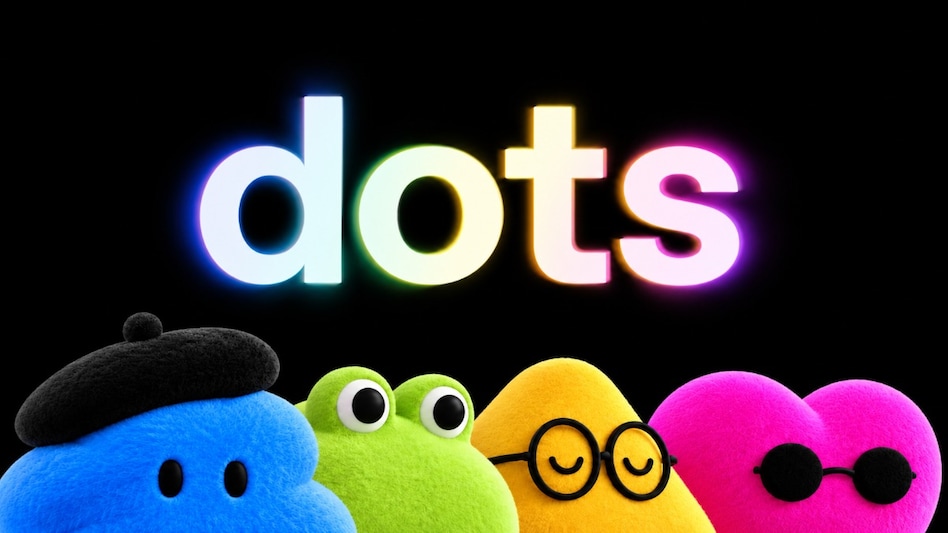
Traditionally, users had to give repeated instructions to get any task done by Artificial Intelligence (AI); they would ask questions, receive answers, and the conversation would end. However, OpenAI is trying to change this process. The company has introduced AI agents called 'dots', which, after understanding a task once, can automatically command every step without the user to continuously advance that task.
In simple terms, it is not just an AI that answers questions; a user can assign it a responsibility, and it will continue the task by determining its next steps. When necessary, it will ask the user for opinion or approval and then continue working. This feature distinguishes 'dots' from general chatbots. Recently, Meta launched Muse, whose Muse Charm device also functions like an always-active AI agent.
According to OpenAI, 'dots' are specifically designed for tasks that do not end with an answer to a message. Each 'dot' gets its own cloud computer and browser. It can work on a project using connected applications and continue the task even after the user leaves ChatGPT.
For example, if a person is working on a project, the 'dot' will not just find and provide information. Instead, it can evaluate the available information, determine the next step of the task, draft the necessary material, and then return to the user for review.
Thus, this new model of AI is something like this: state the task and let it move forward instead of telling it every small thing. The most interesting thing is that the task will continue even if you close ChatGPT.
'Dots's biggest feature is its 'always-on' nature. According to OpenAI, it can keep working in the background on a task. It only returns to the user when a critical decision needs to be made or user approval is required.
For instance, if a person is working on a report based on constantly changing statistics, the 'dot' can see new information when it arrives, update its analysis, and inform when its opinion is needed. Similarly, if a task is assigned, it can contact multiple sources itself.
This can also be interesting for content creators. In an OpenAI example, a 'dot' can find relevant excerpts from a creator's interview transcript and draft show notes and social media posts. After changes made by the user, it can use those preferences in subsequent tasks.
OpenAI has not limited 'dots' only to ChatGPT. According to the company, these can work with connected apps and support connections to over 4,000 apps. They can also be used from platforms like Slack and Microsoft Teams besides ChatGPT. Text messaging is mentioned as a future possibility.
This implies that AI can play the role of consolidating and advancing scattered tasks across various apps for the user. This is where the impact of 'dots' is not limited to AI chat; it can reach many aspects such as email, meetings, research, documentation, coding, and teamwork.
Here is an important point: 'dots' are not given complete freedom. The user determines which apps the 'dot' can use and how much permission it will have. User approval can be kept necessary for certain tasks. According to OpenAI, sensitive tasks like changing passwords remain under user control.
OpenAI has also provided the 'Custom Rules' option. Through this, the user can decide which tasks the 'dot' can perform autonomously, for which tasks it must seek approval, and which tasks it must not perform at all. This is important because giving an AI access to your emails, files, and other apps is not just a matter of convenience; it also involves issues of security and privacy.
'Dots' was launched at a time when Meta is also advancing its AI agent Muse. Meta presented Muse in September, which can act on behalf of the user, continue working on a goal for a long time, and ask for approval when necessary.
Thus, the competition between OpenAI and Meta is no longer just about which company's AI gives better answers; the next battle is about whose AI can perform more tasks on behalf of the user.
