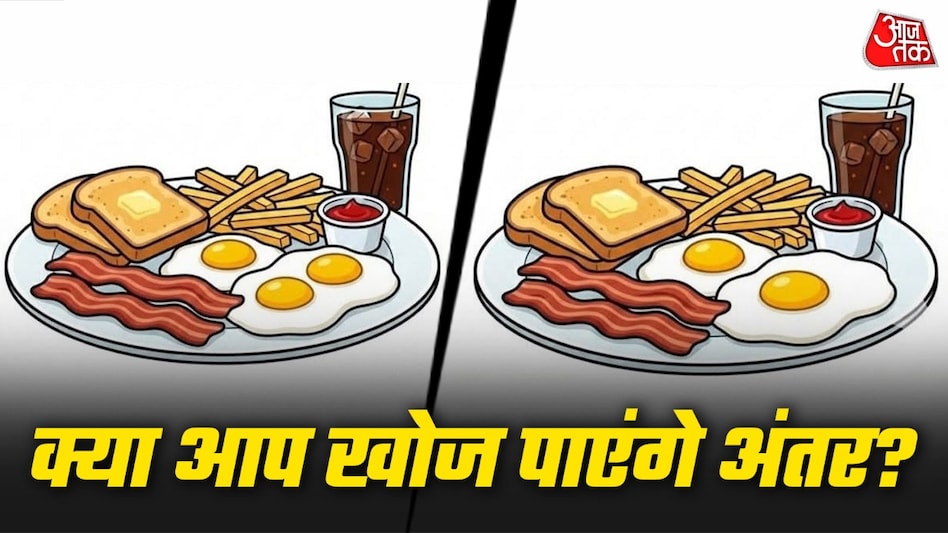
Attention Test: Find Three Mistakes in the Image in 10 Seconds
Read more
Aaj Tak
www.aajtak.in

Attention Test: Find Three Mistakes in the Image in 10 Seconds

Images that appear completely ordinary are often shared on social networks, yet they may conceal details unnoticed at first glance. Such photos are used to test people's perception speed and visual acuity. An interesting intelligence test is presented, requiring careful examination of the attached image.

The task is to find three inaccuracies in the picture in just ten seconds. Successful completion requires thoroughly examining every part of the image, as even the smallest detail might be the answer to this challenge. At the same time, haste should be avoided, as a rushed viewing might cause some errors to go unnoticed.

Next, the observation test begins. The image contains elements that do not conform to the norm. Although the first mistake might be noticed instantly, finding the others requires closer attention. If you manage to find all five mistakes within ten seconds, it indicates good observational skills. However, if only two or three mistakes are found, there is no need to worry.

Some inaccuracies are hidden so subtly that finding them may take a significant amount of time. In such puzzles, it is critically important to look at the image carefully. Often, our gaze passes over something, while a small error might be hidden right in that spot.

If all the mistakes have not been found after ten seconds, you can pay attention to the circle presented in the image. It is inside these circles that the three mistakes that needed to be found in this intelligence test are located.

In conclusion, you are invited to share your result: how many mistakes were found within the allotted time out of the possible three.

Similar stories

Optical Illusion: The Difficulty of Counting Objects in an Image
Read more
www.aajtak.in

Optical Illusion: The Difficulty of Counting Objects in an Image

Optical illusions often shared on social media are images designed to mislead the viewer. In such pictures, what appears obvious at first glance may not be true. Often, the image composition is structured in a way that causes our brain to make errors when trying to recognize or count objects.

The image under consideration shows a girl standing near a wall, in front of which there is a tray surface containing numerous white round balls or balls. The caption on the photo itself reads: 'Even if you count 100 times, you won't be able to count correctly.'

The task is to carefully examine the picture and determine the total number of white balls in the pink tray. Although some balls may be clearly visible at first glance, the process of counting them causes confusion. The reason for this lies in the fact that the balls are not arranged in a single straight line; some are higher, some are lower, and many appear to be placed very close to each other, which creates the effect of a funny optical illusion.

The main difficulty in such images is that our eyes try to perceive the entire picture simultaneously. When a large number of similar items is placed in one area, the brain tends to perceive them as a single group rather than as individual elements. In this case, since all the white balls are approximately the same size, and behind them is a pink tray with a slight shadow under the balls, the outline of each ball is not always clearly visible at first sight. You can start counting from top to bottom or left to right; however, recounting may lead to a different result, which is part of the interest of this picture.

Our eye receives information from the image, but our brain interprets it. When many similar objects are placed next to each other, the brain tries to quickly identify and count them. However, if the objects are placed too closely, are the same size, and there is some depth or shadow in the image, counting becomes difficult. This is the kind of effect used in photos with optical illusions. The brain processes the information received by the eyes, and during this processing, even the slightest error can completely change the final sum.

Try looking at the image again, avoiding haste. Start with the topmost ball and move slowly downwards. If you try to count the entire tray at once, the probability of error will increase. Instead, try to identify and count the balls one by one. To avoid recounting the same ball, keep in mind the sequence you have already counted. You can also take a screenshot of the image and mark each ball to reduce confusion during recounting.

This picture is not just a game of sight, but a test of perception. The appeal of this image lies in its simplicity: we only have a tray and white balls. Nevertheless, counting them turns out to be not easy. In fact, this is the charm of optical illusions: the simpler the image looks, the more mental effort it can require to understand. Now it's your turn: look closely at the picture, count the balls, and determine the total number you see. If your first answer is different, try counting again, as your assessment may change the second time.

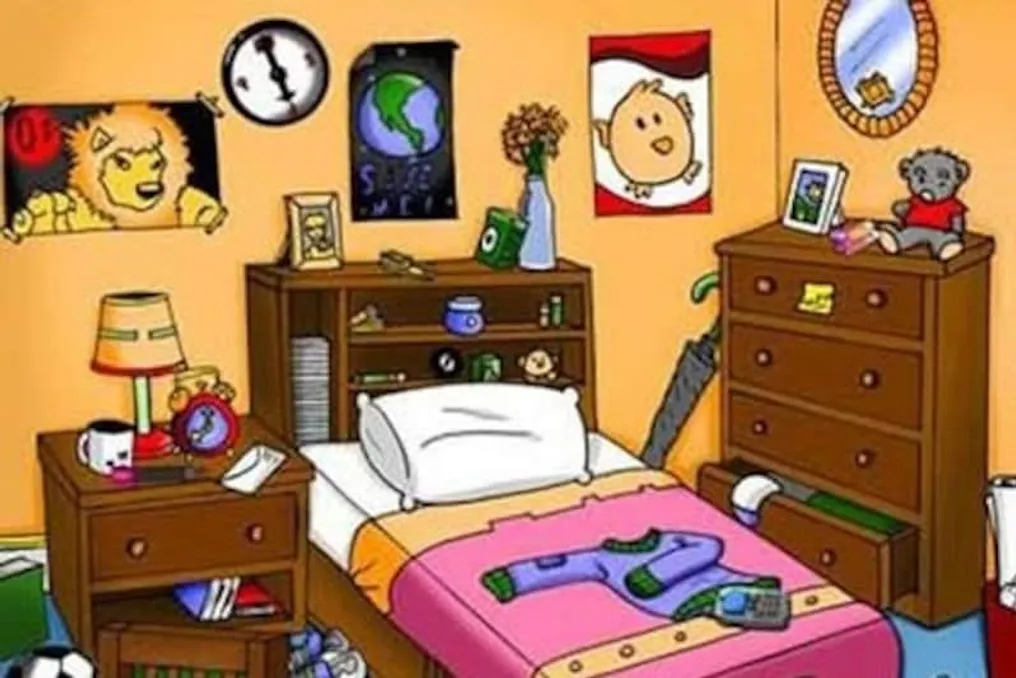
Attention Test: Find 5 Mistakes in the Image in 10 Seconds
Read more
www.aajtak.in

Attention Test: Find 5 Mistakes in the Image in 10 Seconds

Images that appear completely ordinary are often shared on social networks, yet they may conceal details invisible at first glance. Such photos are used to test people's perception speed and visual acuity. An interesting intelligence test is presented, requiring careful examination of the attached image.

Your task is to find five inaccuracies in the picture in just ten seconds. To do this, you must carefully examine every part of the image, as even the smallest detail can be the answer to this challenge. However, remember that rushing might cause some errors to go unnoticed. Therefore, as soon as the timer starts, focus on the image and study it piece by piece.

The question arises: were you able to find all five mistakes within the allotted time? Now your observational skills will be tested. The image contains elements that do not conform to the norm. Perhaps the first mistake will be noticed instantly, but finding the others will require closer attention.

If you managed to find all five inaccuracies within ten seconds, your ability for detailed observation can be considered high. If you only found two or three mistakes, there is no need to worry. Some flaws are hidden so subtly that finding them might take more time. In such puzzles, the most important thing is to carefully study the picture itself. Often, our gaze overlooks something, while a small error might be hidden in the same spot.

If you haven't found all the mistakes after ten seconds, pay attention to the circles placed on the image. These circles contain the five inaccuracies that needed to be found in this intelligence test.

Therefore, determine how many mistakes you found within the set time, and be sure to report your result out of five possible ones.

Popular