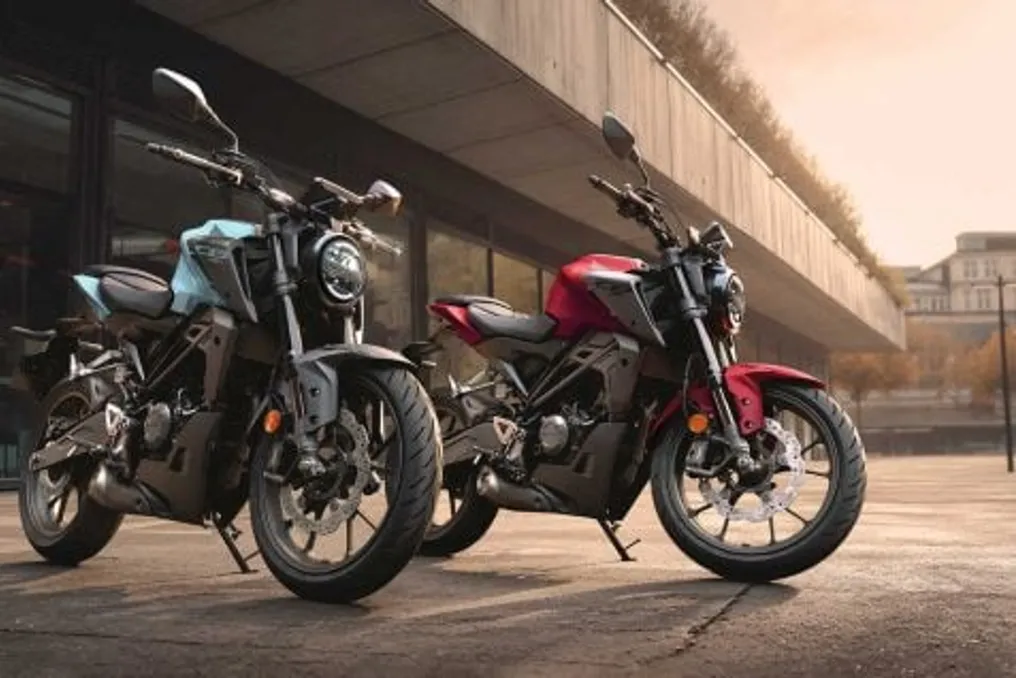
In Brazil, small motorcycles with engine capacities of 150 and 160 cc are the most common on the roads; they are simple and designed for the middle working class. More sophisticated models require a higher price and a larger engine capacity.
However, those familiar with the global market note the presence of technologically advanced low-displacement models, such as the Japanese Honda CB125R and Yamaha MT-15. This raises the question: why aren't all high-quality low-displacement motorcycles entering Brazil?
To find out these motives, an interview was conducted with a motorcycle market specialist and representatives from the Honda team.
Manufacturers' Strategic Decisions
According to Luiz Vicente F. de Mello from Bright Consulting, a motorcycle segment expert, all decisions boil down to a strategy aimed at protecting the manufacturer's operational activities or profits. He emphasized that each brand behaves differently based on what is profitable for it. Even the two largest players in the Brazilian market use different strategies.
The expert noted that the Yamaha R15 occupies a 'blue ocean,' meaning it has no direct competitors in its price segment. Luiz explained that if the MT-15 started being sold in the country, it could lead to some of the audience preferring the R15 switching to the MT-15, which is 'eating' customers from the same brand. The specialist believes that such model 'cannibalization' will not be profitable, as the manufacturer would have to spend significant funds on the development, production, and advertising campaigns for a product that mathematically will not attract new customers but only divide already interested buyers between two models.
This strategic problem is so specific that it cannot be applied to similar models like the Yamaha R3 and MT-03. The consultant reminded that historically, the MT-03 sells five times better than the R3, which is due to local market characteristics. For 300 cc models, investments are justified, whereas for 150 cc models, they may not pay off.
In the case of Honda, Luiz pointed out that this involves a completely new engine unit. He believes that for Honda to release a premium low-displacement model like the CB125R, it must use an engine not produced in Brazil, as the company is currently transitioning from 110 to 160 cc.
The consultant also believes that even with investment in launching a new model, sales will not be high enough to justify such costs. Although he admits that having more motorcycles would be beneficial for riders, it is not commercially viable for the factories themselves.
Honda's Position
In a sense, Honda agrees with the expert's opinion. When asked about the reasons for withdrawing such a new model, a company representative took a certain stance. Luiz Gustavo, who is responsible for the brand's PR department, stated that Honda always studies which models should be imported into Brazil, and this depends entirely on the demand for the product in the country. The company constantly monitors customer needs and desires by analyzing economic and geographical scenarios, as well as buyer intentions, before developing a strategy to determine the feasibility of importing the model.
The Honda representative particularly emphasized that market characteristics outside of Brazil play a key role. Luiz Gustavo noted that some Asian countries use motorcycles differently—they might be oriented towards performance, touring, or other types of use. Therefore, in his words, the motorcycle that needs to be imported from other markets will not be identical to what is required for the Brazilian market. A serious adaptation process is required, which often increases the final cost for the consumer.
Luiz de Mello agreed with Luiz Gustavo and Honda. The market expert reminded that there are countries in Europe where the minimum age to obtain a driver's license is 16 years old. An important aspect is the conditions for obtaining these licenses. In Germany and several other countries, individuals over 16 years old can drive models up to 125 cc with a power of up to 15 hp, which is the category the Honda CB125R falls into. These conditions contribute to increased sales of premium smaller-engine models. In markets like Brazil, where only age matters and the engine is available to everyone with a Category A driver's license, the strategy focuses on investing in larger engines.
In Luiz de Mello's opinion, the main problem lies in the necessary investment to import the model. Manufacturers like Kawasaki, which offer premium low-displacement motorcycles, face difficulties in ensuring a wide range due to the high costs required just to import a new model. Suzuki, for example, is imported through Grupo J. Toledo in Brazil, which further complicates the mass influx of models due to bureaucracy and higher expenses.
As both the consultant and Honda assert, the answer depends less on the interest of motorcyclists and more on the financial condition of the manufacturers. In the case of the MT-15, the obstacle is the risk that this 'naked' bike will split customers with the R15, which currently has no direct competitors in its segment. Regarding the CB125R, the need for an engine that Honda does not produce in the country plays a role, combined with expected sales that are considered too low to justify the investment. Until this formula changes, those looking for a more sophisticated low-displacement motorcycle will be forced to increase the engine class and price to find similar sophistication.
}, {