
Karnataka approves global technology centers in Belagavi and Hubballi
Read more
YourStory [india, en]
yourstory.com

Karnataka approves global technology centers in Belagavi and Hubballi

The Government of Karnataka is expanding its technological base beyond Bangalore by approving the establishment of Global Technology Centers (GTCs) in Belagavi and Hubballi. This move comes as the state prepares to showcase its developing ecosystem in artificial intelligence and deep technologies at the Bengaluru Tech Summit 2026.

Announced on September 29, the two GTCs will operate under the Local Economic Acceleration Program (LEAP). The government's goal is to provide local talent, startups, and tech enterprises with access to infrastructure located closer to their residences.

The center in Belagavi will be situated on an area of approximately 10,000 square feet at the Vishvesvaraya Technological University (VTU) and will be equipped with ready-to-use facilities. The total cost of this project will be 82.80 lakh rupees over three years, with implementation entrusted to the Karnataka Digital Economy Mission (KDEM).

The center in Hubballi will also occupy an area of about 10,000 square feet in the Hubballi IT Park on a complimentary basis. Its expenditure for three years will amount to 5.80 crore rupees, including 4.90 crore rupees in capital expenditure and 90 lakh rupees in operational costs. The Hubballi project will be implemented by KDEM, while infrastructure development will be handled by Karnataka Rural Infrastructure Development Limited (KRIDL).

Both centers will be funded from LEAP allocations designated for creating incubators and accelerators. The total fund volume of the program is 1,000 crore rupees over five years, with 200 crore rupees allocated for the first year, and 110 crore rupees reserved for incubators and accelerators.

Previously, under the State Budget for 2025–26, GTCs were already announced through the Karnataka Electronics Development Corporation (KEONICS) in Mangaluru, Hubballi, and Belagavi, providing ready-to-use spaces.

The government emphasizes that these centers will strengthen the links between educational institutions, startups, technology companies, and industry, while simultaneously creating opportunities for local enterprises and talents in the technology sector. These steps come amid Karnataka's preparations for the 29th Bengaluru Tech Summit, scheduled for November 17–19 at the Bangalore International Exhibition Centre under the theme 'AI and Beyond.'

The summit will feature a dedicated AI and Robotics Pavilion spanning over 50,000 square feet, which is expected to host around 101 robotics and drone startups. The pavilion will showcase humanoid robots, quadruped races, autonomous systems, warehouse drones, AI-powered industrial robots, and the AI Digital Twin of Bangalore. The venue will also include live demonstration zones, startup exhibitions, a robot racing arena, research displays, and a pitchfest stage. The main focus will be on technologies that take AI beyond software and integrate it into physical systems capable of perceiving, processing information, navigating, and acting.

BTS 2026 is anticipated to attract over 1,800 exhibitors, 1,000 technology startups, and 25,000 delegates from India and abroad. Collectively, the GTCs and the summit reflect two directions of Karnataka's technological advancement: building infrastructure and startup ecosystems outside Bangalore, and maintaining the status of the state capital as a hub for new technologies and global investment.

Similar stories

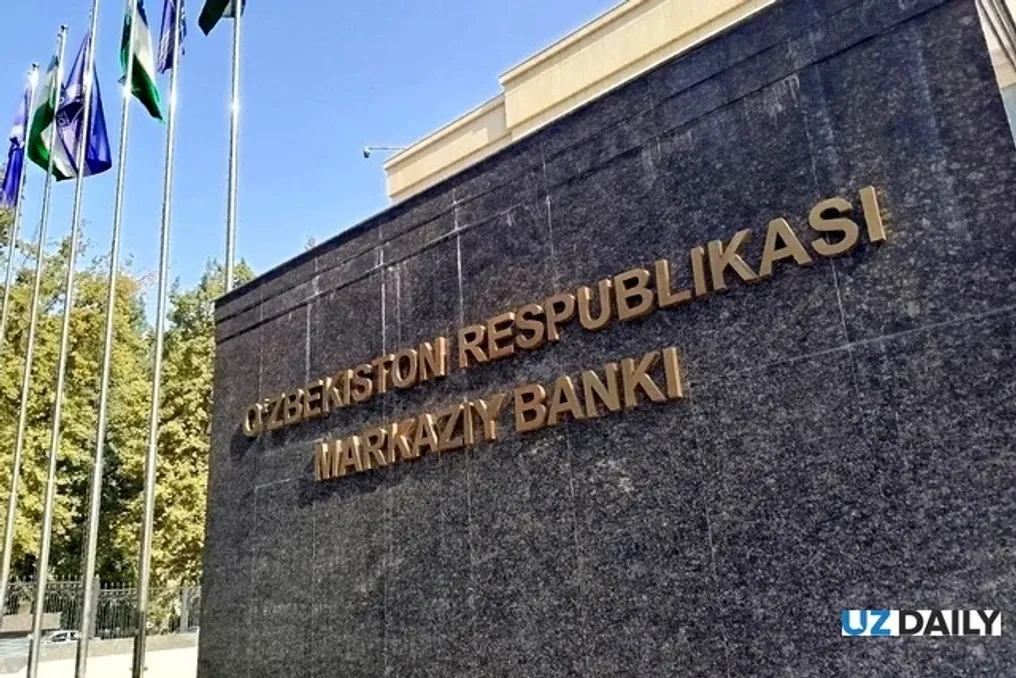
Central Bank of Uzbekistan Approves FinTech Development Strategy Until 2030
Read more
uzdaily.uz

Central Bank of Uzbekistan Approves FinTech Development Strategy Until 2030

The Central Bank of Uzbekistan has approved the National Strategy for the Development of Financial Technologies for the period 2026–2030. This strategy envisions the creation of a comprehensive fintech ecosystem, the expansion of digital financial services, and the establishment of conditions for transforming Uzbekistan into a regional fintech hub.

The strategy is divided into three sequential phases. During 2026–2027, the main focus will be on creating the necessary infrastructure and launching basic market support mechanisms. Subsequently, in 2028–2029, the implementation of Open Banking concepts, further development of digital identification, and integration of payment systems are planned. By 2030, Uzbekistan aims to achieve the status of a regional fintech center.

A key component of the new system will be an Innovation Hub, which will provide support to startups at all stages of their development. Companies will be able to receive assistance from the initial idea to entering international markets. The ecosystem will also include a regulatory sandbox, specialized training programs, financing tools, and mechanisms for cooperation between banks and fintech companies.

The regulatory sandbox will allow market participants to test new financial products and technologies in a controlled environment before full-scale launch. Following this, startups can pass through sequential stages of incubation, testing, licensing, and scaling.

The strategy presentation also includes plans to establish a Fintech Office and an Innovation Hub at the Central Bank with the involvement of specialists from Singapore.

By 2030, the strategy targets attracting up to $1 billion in investments into the fintech sector. Furthermore, it provides for the annual preparation of 20–30 fintech startups for entry into foreign markets.

Open Banking is a separate priority of the strategy. It is expected that Open Banking and open APIs will enable controlled exchange of financial data between banks, fintech companies, and other market participants with customer consent. According to the regulator, such infrastructure will create prerequisites for the emergence of new business models and financial products. Central Bank Governor Timur Ishmetov previously noted that Open Banking will give fintech companies the opportunity to compete with traditional banks by offering personalized banking products and stimulating innovation.

Digital customer identification will also be developed. Pilot projects using digital credentials are planned for 2026–2027, followed by the expansion of the relevant infrastructure across the entire financial sector in 2028–2029. This technology will be used for remote identification, which will reduce fraud risks and simplify access to financial services.

In the area of digital assets, the strategy provides for experiments related to the tokenization of real assets, including securities. Such projects must be implemented under controlled conditions.

The strategy also considers ways for different financial services to interact with each other. Artificial intelligence is another area of technological development in the financial sector. The Central Bank intends to define priority areas for AI application and launch pilot projects. AI is expected to be used for supervising the financial sector and detecting financial crimes.

As part of SupTech development, the strategy provides for the automation of information collection via APIs, monitoring of operational incidents, and strengthening the cybersecurity of financial institutions.

The strategy also includes the development of cross-border financial infrastructure. Among the initiatives under consideration is the creation of a wholesale centralized digital currency (wCBDC). Its development is being considered in parallel with the creation of interconnected regional payment systems. The goal of these measures is to simplify international transactions and reduce the cost of money transfers.

Concurrently, the strategy proposes increasing the transparency of commissions and exchange rates for cross-border transfers, as well as implementing digital solutions for trade finance.

Pilot cross-border projects and initiatives to connect regional payment systems are planned for 2028–2029. To attract foreign market participants, the strategy suggests utilizing the Innovation Hub, Enterprise Uzbekistan, and the Tashkent International Financial Centre. It is also planned to hold the Silk Road Finance and Technology Forum and establish partnerships with foreign fintech hubs.

By 2030, an increase in the number of international fintech companies operating in Uzbekistan and growth in investment activity in the sector are expected. In the long term, these measures are intended to support deeper financial integration in Central Asia.

The strategy also ensures more reliable protection for users of digital financial services. Plans include creating a unified system for combating financial crime in the financial sector, increasing the transparency of credit products, improving credit information infrastructure, and expanding financial literacy programs.

The regulatory approach will be based on risk levels, with requirements for market participants taking into account the scale and nature of their activities. At the same time, there is an expectation of strengthening consumer rights protection and the quality of disclosure of financial product terms.

The Central Bank stated that the strategy aims to solve several existing market problems, including limited coverage of international money transfers, difficulties for small and medium-sized businesses in obtaining financing, disparities in the availability of financial services among population groups, new risks for users of digital services, and a lack of long-term financing.

According to the presentation, 94% of the population of Uzbekistan has internet access, and digital payments account for about 72% of total payments. The number of users of remote banking services has increased by almost 70%.

Among the main expected outcomes of the strategy, the Central Bank highlights the expansion of the fintech market, increased foreign investment, improved access for SMEs to financing, enhanced security and accessibility of digital financial services, development of cross-border payments, and deepening of regional financial integration.

PhysicsWallah focuses on South India as part of two-year expansion plan
Read more
yourstory.com

PhysicsWallah focuses on South India as part of two-year expansion plan

The educational technology company PhysicsWallah (PW) is commencing a two-year phase of expansion, concentrating its efforts on South India. The founder and CEO, Alakh Pandey, is personally leading this initiative.

This move is significant as the company aims to adapt its model—based on affordable digital learning, physical centers, and a hybrid format—to markets where linguistic nuances, local academic preferences, and existing tutoring networks may differ.

During an event in Tirupati, Pandey stated that for the next twenty-four months, he would dedicate himself to the students of South India and be based there. He specified that the focus will cover states such as Andhra Pradesh, Telangana, Tamil Nadu, Karnataka, and Kerala.

The first step in this strategy was a five-year partnership with Mohan Babu University in Tirupati. According to the company, this collaboration will enable the provision of career-oriented, upskilling, and AI-focused courses online to approximately eighteen thousand students. Thus, PW's strategy in South India extends beyond entrance exam preparation to include university education and employability enhancement.

Pandey emphasized his goal: 'Through our platform, I want to provide them with the tools necessary to realize their potential. Since the founding of PW until today, I feel we need to create a more measurable impact in the southern part of our country.'

This ambition comes against the backdrop of the company's rapid growth. PW initially launched as a YouTube educational channel in 2014, and in 2020, it was officially established by Pandey and Pratik Maheshwari. Today, the company operates in online, offline, and hybrid formats, covering numerous segments of education.

The company reported that since its inception, it has served over forty million students, and in the financial year 2026, it had over one and a half million paid students. By the financial year 2026, the total downloads of its application reached nearly ninety million. PW was listed on the NSE and BSE in November 2025.

In the testing sector across India, service providers are gradually expanding their presence beyond traditional coaching centers, reaching second and third-tier cities. Online-focused companies are also establishing physical clusters.

In its Q2 FY26 letter to shareholders, PW indicated that it has over twenty centers in Chennai, Hyderabad, and Bangalore, and plans to open another thirteen centers in five southern states.

The broader political landscape also supports multilingual and digital delivery of educational services, although this does not guarantee commercial success. National education policy mandates the integration of educational technologies and digital content in major Indian languages, and the government's DIKSHA platform supports educational content in eighteen languages, including Tamil, Telugu, and Kannada.

Popular