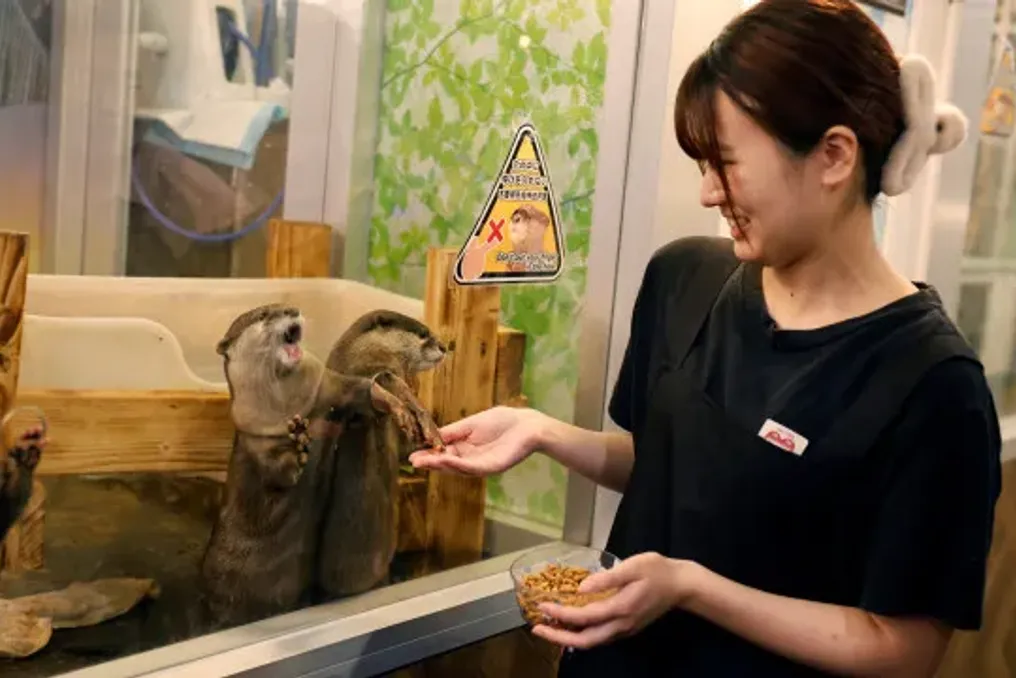
The concept of establishments combining cafes with animal interaction is widely known in Japan, but it is undergoing a significant transformation. This change is driven by the start of the first national survey of these cafes, motivated by growing concerns about animal welfare, hygiene, and public health.
This data collection, which began this month, aims not only to count the number of locations but also to understand what types of animals are kept, the conditions of their maintenance, and how visitors interact with them.
As reported by Reuters on Wednesday, September 30, cafes offering interaction with exotic species, such as otters, owls, and marmots, have become popular attractions for both Japanese and foreign tourists.
However, researchers warn that some of these places keep endangered species, raising serious concerns about the treatment of the animals and wildlife trade.
Syaina Nozaki, manager of the Owl Otter Cafe in Kamakura, near Tokyo, which functions as a refuge for rescued animals, shares this apprehension. She told Reuters that 'Japan is clearly behind in terms of animal welfare regulation.'
Syaina expresses hope that this investigation, followed by legislation, will be able to differentiate establishments like hers from those less ethical, focused solely on profit, thereby correcting existing legal shortcomings in Japan regarding this type of cafe.
The success and model of the Owl Otter Cafe
The Owl Otter Cafe opened in December 2025 and represents an innovative space. Unlike traditional industry models, whose main focus is profit, this establishment was conceived with a distinct mission: to serve as a sanctuary for rescued animals, always prioritizing their well-being and species preservation.
Recently, the location gained significant visibility in the international media after the Japanese Ministry of the Environment announced the tightening of safety and animal protection standards in these environments. While many cafes refused access to journalists due to allegations of animal stress or hygiene issues, the Owl Otter Cafe hosted the Reuters agency and the television broadcaster TBS in its facilities.
What differentiates this cafe from others like it—and what has earned praise from experts—is the deep respect for the freedom of the animals. The owls, for example, roam freely, breaking with the common pattern of birds confined to short perches in other enclosures.
In addition to owls, the space houses otters (which have appropriate pools), guinea pigs, and other rescued exotic species. All animals receive continuous veterinary monitoring and have resting areas isolated from the public for when they need or wish to withdraw.
For visitors exploring the historic region of Kamakura, the experience is also unique. Entry offers unlimited time and free drinks via self-service, allowing customers to interact with the animals calmly, without the pressure of a timer.
The economic aspect also receives positive recognition, as it operates circularly: all generated profits are entirely dedicated to the protection, feeding, and medical care activities of the association managing the location.
In a scenario where residents and tourists increasingly demand social responsibility in their leisure activities, the Owl Otter Cafe demonstrates that the future of animal cafes in Japan must necessarily incorporate sustainability and animal welfare.