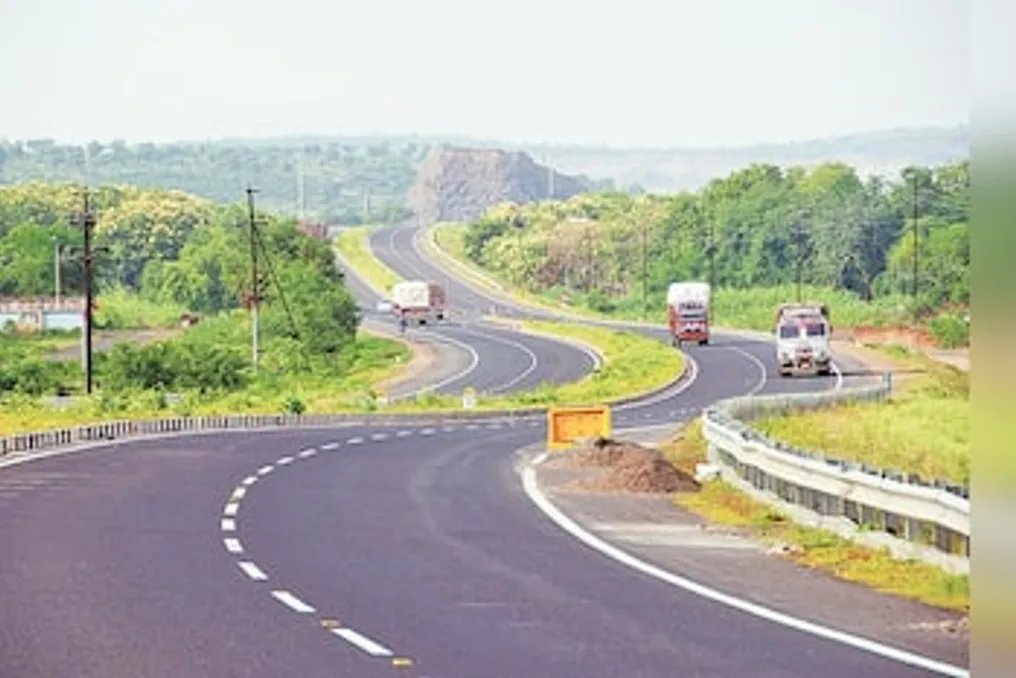
Here Technologies notes that the scattered nature of road and location data in India poses a significant obstacle to the widespread adoption of Advanced Driver Assistance Systems (ADAS) and autonomous driving technologies. Broader access to information held by government agencies is necessary to scale such applications.
Abhijit Sengupta, Head of Here Technologies in India, stated that data held by government bodies and various agencies, including information on speed limits, road prohibitions, and other traffic details, remains fragmented.
Sengupta emphasized that it would be beneficial if solution providers could access this data or if it were made available, as this significantly contributes to scaling specific use cases. He suggested that creating a single centralized repository for such information would help technology companies develop and expand location-based applications.
He cited an example where information regarding speed limits and truck restrictions in certain urban areas is distributed among different agencies.
Challenges grow as India moves towards higher levels of vehicle automation
The problem becomes more acute as India advances toward higher levels of transport automation. Sengupta noted that the transition from Level 2 (L2) and L2+—which remain driver-support systems that require decision-making by the driver—to Level 3 (L3) will require significantly more localized information about the state of Indian roads.
Meanwhile, L1 relates to assistance with steering or braking, while L2 can control both processes, but the driver must still monitor the road. At Level 3, the system is capable of taking over control under specified conditions, requiring driver intervention upon receiving a corresponding signal.
Lane markings, road signs, and road-level information are particularly critical; it is expected that the development of such systems will begin on highways and expressways before spreading to urban areas.
India's rapidly changing road infrastructure and inconsistent road conditions exacerbate this issue. Here has found that besides city data problems, such as incorrect lane usage, there are issues with information latency on city roads that need to be resolved for advanced use cases.
Sengupta also stated that every ADAS application does not require centimeter-accurate high-resolution mapping. Currently, Here believes that 'standard definition plus' mapping is sufficient for navigation and autopilot scenarios, while more complex systems will require greater availability of lane and sign information.
The company noted that such road information is available at a scale on India's highways and expressways, but coverage is uneven on city streets.
The wider adoption of connected and electric vehicles is also increasing the demand for location analytics. Sengupta added that safety, real-time traffic information, and route optimization are becoming increasingly important for vehicle users.
For electric vehicle users, location analytics can help determine if the range is sufficient for a trip, whether a detour is needed, and if a charging station is available along the route.
Beyond the automotive sector, the company observes growing demand from logistics, e-commerce, quick commerce, taxi services, and food delivery, especially for first, middle, and last-mile operations.
Sengupta concluded that artificial intelligence can further expand the role of location analytics, allowing users to make more contextual queries, such as finding parking near a destination, checking if a store will be open upon arrival, or determining the presence of objects on the correct side of the road.