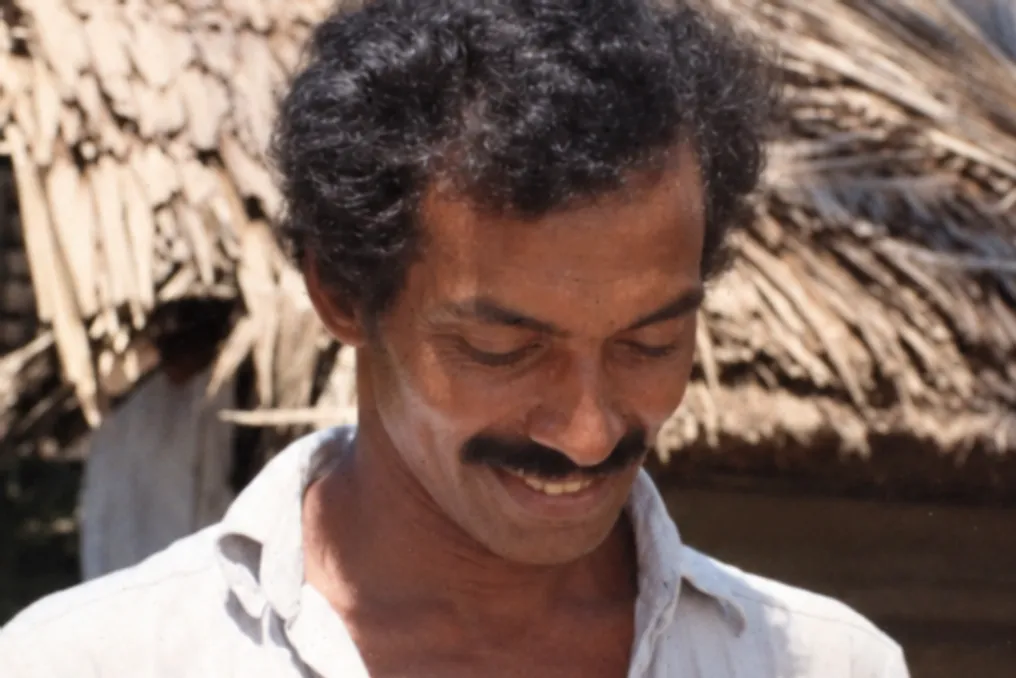
In the 1970s, Satish Bhaskar began studying turtle nesting sites along the extensive coastline of India. His deep interest in sea turtles arose in childhood and became the central theme of his life's work, as he sought to understand their behavior and nesting patterns.
During the 1970s, Bhaskar covered a distance of about 4000 kilometers along India's 7516-kilometer coastline. Instead of relying on existing records, he personally traversed the beaches and documented the turtle nesting sites.
For these long journeys, he required only a notebook, a hammock, basic supplies, and a small transistor radio. He collected observations that contributed to mapping the habitats of sea turtles in India. His research spanned remote islands and beaches where long periods of isolation were an integral part of the work.
In 1982, he decided to spend five months on Suheli, an uninhabited island in the Lakshadweep. Bhaskar was on Suheli from May to September, coinciding with the main nesting season for green turtles in that area. He wanted to observe the animals as closely as possible, rather than being limited to short seasonal visits.
On Little Andaman, Bhaskar once faced a shortage of provisions and survived four days on biscuits and vitamins. Nevertheless, such difficulties had little impact on his surveys of remote turtle habitats.
The importance of his documentation lay in the fact that sea turtles were threatened by both humans and the fishing industry. Poaching for eggs, meat, skin, and shells, as well as accidental capture in fishing nets, put pressure on populations.
In 1979, he presented a scientific paper which Romulus Whitaker later called the first comprehensive description of sea turtle nesting across India. His research became a benchmark for scientists. Bhaskar also assisted researcher Edu Moll in studying the endangered northern river turtle, which shares coastal habitats with olive ridleys.
Even decades later, Bhaskar continued to go into the field, including a trip to South Reef Island in the Andamans. This island was destroyed by the 2004 tsunami, and it previously served as a site where he began monitoring leatherback turtles.
Throughout his career, Bhaskar wrote about 50 reports and scientific articles on sea turtles and their conservation. In 2010, the International Society of Sea Turtles awarded him the Sea Turtle Champion Award for his research and surveys. Satish Bhaskar passed away in March 2023, leaving behind decades of field observations, studies, and turtle counts. For those who came after him, his work became like footprints in the sand—a path to follow.