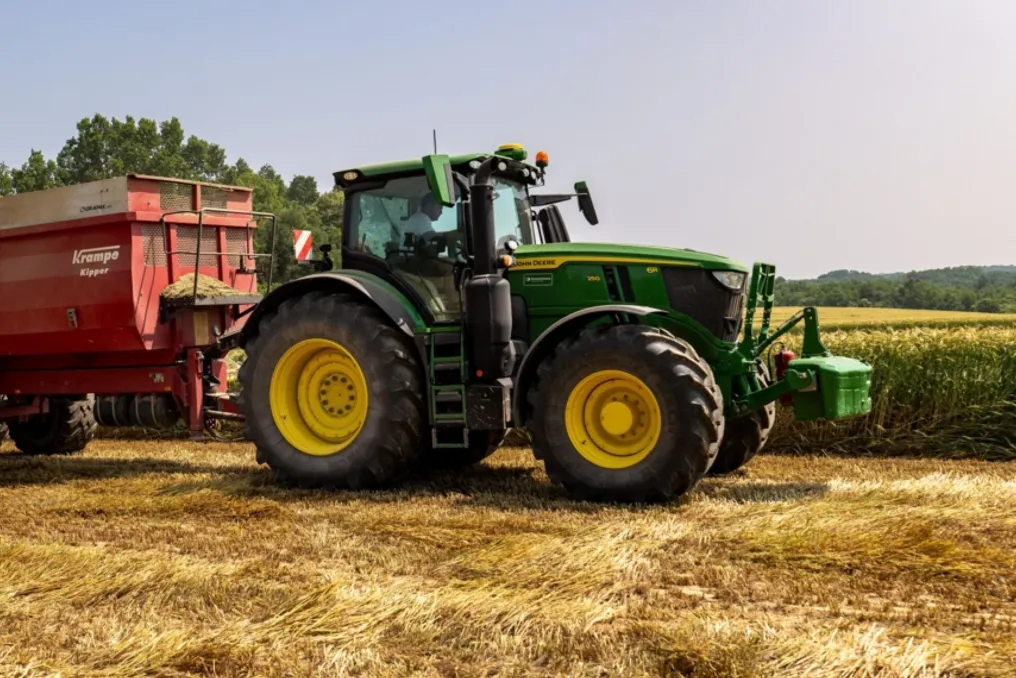
Rising resource costs force South African farmers to reconsider crop choices
Read more
Food For Mzansi
foodformzansi.co.za

Rising resource costs force South African farmers to reconsider crop choices

Grain producers in South Africa are beginning a new planting season amid rising resource prices, significant domestic grain stocks, and uncertainty in export markets.

A recent webinar on cereal and oilseed crops, organized by the National Agricultural Marketing Council (NAMC) and the Ministry of Agriculture, detailed the numerous challenges facing the industry.

Helen Viljoen, an economist from Grain SA, noted that farmers are forced to consider multiple factors when deciding what to plant, especially concerning staple crops such as maize, soy, and sunflower.

South Africa produces a wide range of cereals and oilseeds, with maize remaining the largest crop in the country, reaching over 17 million tons in a good season. Soy production has expanded significantly over the last decade, and sunflower maintains its importance as an alternative to maize in summer grain-producing areas.

However, for maize producers, large volumes create uncertainty before the start of a new season. Viljoen suggested that farmers are considering whether the current maize surplus can be exported quickly enough, especially if the El Niño event leads to lower yields in the upcoming season.

She explained that 'if we leave a massive local surplus, even with lower production, there will still be enough stock in the market.' This could limit the price reaction that farmers usually expect when production declines during an El Niño season, as substantial carryover stocks may continue to meet domestic demand.

High resource costs are another major concern. Viljoen reported that fertilizer prices have increased by approximately 140% since 2019, while herbicide prices rose by about 15%, and diesel fuel by 83%.

Commodity prices have not risen at the same rate, putting pressure on producer margins. Viljoen emphasized that 'this raises significant concerns regarding local production trends, as it definitely affects what producers are considering for planting, both white and yellow maize.'

The current price environment may prompt some producers to revise their cropping patterns. According to Viljoen, soy production may benefit from relatively low fertilizer requirements, while sunflower is currently showing higher profitability compared to maize and soy.

Grain SA financial reports indicate that several crops are struggling to cover fixed costs, with some operating at variable cost levels. This raises concerns about producers' ability to meet financial obligations, such as equipment and other fixed expenses.

Pressure on domestic markets also increases the importance of exports. Jean-Pierre Kotze from the South African Cereal and Oilseed Traders Association (Sacota) stated: 'For maize and soy, we generally trade closer to export parity, and for wheat, we generally trade closer to import parity.'

The soy industry illustrates the problem caused by growing production. According to Kotze, local soy supply has increased by an average of about 20% over the last nine to ten years, while domestic demand has grown by about 10%. This difference must either be stored or exported, making access to export markets increasingly vital for sustaining production growth.

Maize faces similar dynamics: long-term supply growth is around 6% compared to demand growth of about 2%. Kotze noted that efficient infrastructure is critical for moving grain surpluses to domestic and international markets. Rail transport, in particular, remains important as it can be significantly cheaper than road transport. Many grain silos were originally designed with rail logistics in mind. He added: 'Having effective and cost-effective infrastructure is very important.'

Thus, the upcoming planting season for farmers will involve more than just comparing crop prices. Planting decisions and risk management in the coming season will depend on resource costs, expected production, existing stocks, export opportunities, exchange rates, and grain transportation costs.

Lita Kutta, Head of Partnership and Ecosystem Coordination at Land Bank, stated that farmers also need to address issues such as water rights, compliance, and market access before they can receive financing. Kutta said: 'Financing is not the first problem you face. You see that you need much more before you get financing.'

He reported that the Land Bank partnership team supports farmers on market readiness, business planning, access to finance, and post-investment support, utilizing partnerships with private buyers and provincial governments to help connect farmers to markets and finance. Kutta also mentioned that the bank approved approximately 83 million rand for black farmers in the current financial year as of the presentation, with approximately 70 million rand linked to the cereal and oilseed sector.
Similar stories

Cost of living inflation in South Africa: prices are rising fast, but slowing down slowly
Read more
iol.co.za

Cost of living inflation in South Africa: prices are rising fast, but slowing down slowly

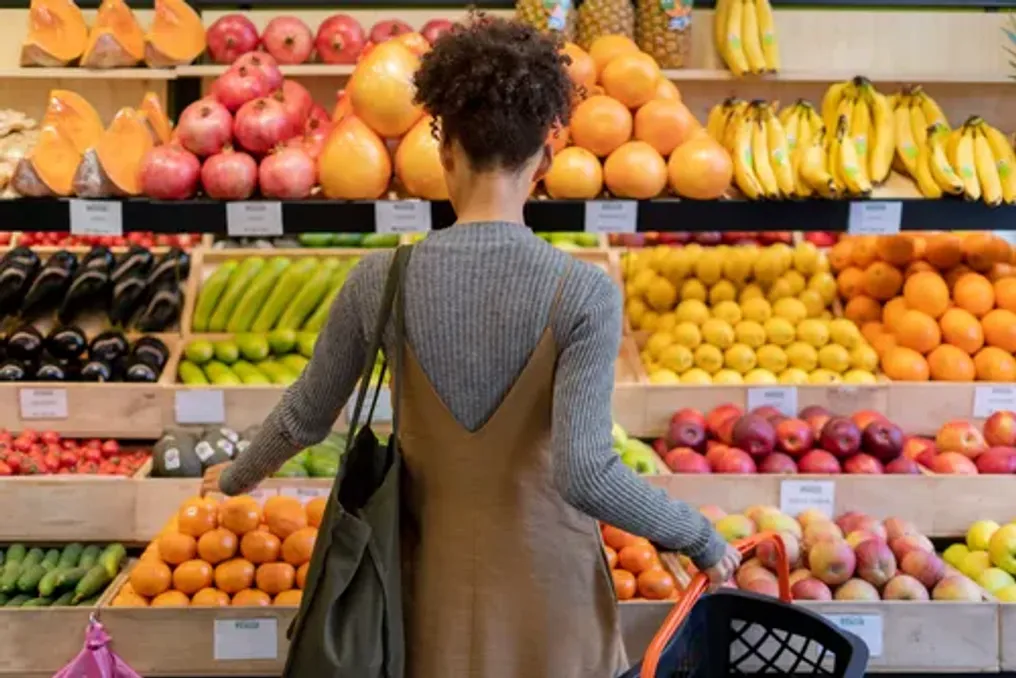
In most South African households, the situation with commodity prices demonstrates the state of the economy more clearly than any news headline. When visiting a grocery store with an amount of 100 rand, a shopper often leaves with fewer goods than they could have bought for the same amount a year earlier.

Issues related to oil have become relevant again. The price of Brent crude has exceeded 100 US dollars per barrel, causing the usual media reaction—a surge, a warning, and an upward graph. However, for a person holding 100 rand, this means not so much drama as the stability of a situation that is more complex than headlines suggest.

The pricing mechanism is relatively simple: since South Africa imports most of its fuel and purchases it in dollars, the price at the pump depends on two factors: the international cost of refined fuel and the rand's exchange rate against the dollar. To this are added taxes and levies, which account for about a third of the final price, as well as regulated markups.

From the gas stations, the price spreads further. Approximately seven out of ten public transport users rely on minibus taxis, and between May and June of this year, the fare in such taxis increased by 11.5 percent in just one month. Since every loaf of bread and bag of maize meal is delivered by trucks running on diesel fuel, fuel is a fundamental component of many expenses.

Much of the confusion arises from the variety of economic indicators: the inflation index in headlines, core inflation, CPI, food inflation, medical inflation, and school fee inflation. These indicators are measured differently and presented as if each one speaks to something separate, although in reality, they all merely reflect price increases, not decreases.

In July, the headline inflation figure was 4.3 percent, lower than the previous 5.0 percent, and food inflation fell below one percent—the lowest figure in sixteen years. While this may seem like a relief, a lower number actually only means a slowdown in the rate of price growth, not a decrease in prices.

There is a simpler way to analyze this: Statistics South Africa publishes a constant price index that tracks the cost of a standard basket of goods over time. Comparing the cost of this basket in 2015 with the current cost shows that it has become approximately seventy percent more expensive, and this happened almost monthly, rather than in most months.

During the same period, oil prices fluctuated: falling from 99 dollars per barrel to 44 dollars, then rising above 100 dollars again, and subsequently dropping to 69 dollars. The rand-to-dollar exchange rate also changed aggressively: it fell from less than 11 rand per dollar to more than 18 rand and back again. Both these indicators moved in both directions, whereas the price level moved only in one direction.

Despite the pressure from high oil prices (above 100 dollars), a strong rand, which reached its highest level since 2022 (trading around 16 rand to the dollar and recently falling below this level), plays to the economy's advantage.

In July, when oil prices dropped, petrol fell by 7.1 percent in a month, and diesel by 11.7 percent, which is a real and significant decrease. Nevertheless, both types of fuel remain significantly more expensive than a year ago. Taxi fares, which rose in June, have not returned to previous levels, and the widely tracked basket of basic foodstuffs, which decreased by about 50 rand in August, is still 100 rand more expensive than a year ago.

Rapid downward steps are accompanied by large upward steps. When oil prices sharply rose in March, the government reduced the general fuel levy by 3 rand per liter starting April 1st, extending this support as the conflict continued, and then gradually reducing it by June. This measure provided real protection and cost about 17 billion rand in lost revenue over three months. However, the full levy was reinstated on July 1st.

The honest answer contradicts the headlines. The situation is not serious because oil is above 100 dollars, as it was above this mark in April. The seriousness lies in the fact that in April there was a barrier of 3 rand per liter between world prices and fuel in the tank, and now that barrier is gone. The sum of 17 billion rand over three months is not something the country can afford to do twice.

The Competition Commission has a term to describe this behavior in its Cost of Living Report: 'rocket and feather behaviour'. Prices rise quickly when raw material costs increase, and then slow down or do not decrease at all when these costs decrease. The Commission warns of legitimate concerns that prices may not begin to fall after fuel prices stabilize. It should be noted that not all studies agree, and the analysis of the maize production chain did not reveal such a pattern, instead pointing to drought and global turmoil.

Furthermore, there is a factor unrelated to oil. Food inflation is at a sixteen-year low, and maize meal and bread have actually become cheaper in July. This is not an act of generosity, but the result of two consecutive good rainy seasons, which ensured a maize harvest of about 16.5 million tons against an annual consumption of about 12 million tons. However, this favorable period is coming to an end.

The meteorological service has warned that El Niño will begin in October, coinciding with planting time. Approximately four out of five hectares of summer grain depend on rain rather than irrigation. The last severe El Niño in 2015 and 2016 reduced the national maize harvest by about a third. If this happens again, the cheapest part of the consumer basket will become the most expensive, and the culprit will not be the price of oil.

Therefore, one should not watch the price of oil, as it will change again. One must observe the same basket of goods: track the cost of buying similar items over three months, monitor whether the fare that increased in June will ever return to its former level, and see how the shelf reacts to the strongest rand in four years. The question was never how high oil would rise; it was whether anything we buy would become cheaper again. Based on data from the last decade, this is not happening. It is getting more expensive, but slower, and that is already considered good news.

The problem with poultry feed in Africa could stimulate youth entrepreneurship development
Read more
foodformzansi.co.za

The problem with poultry feed in Africa could stimulate youth entrepreneurship development

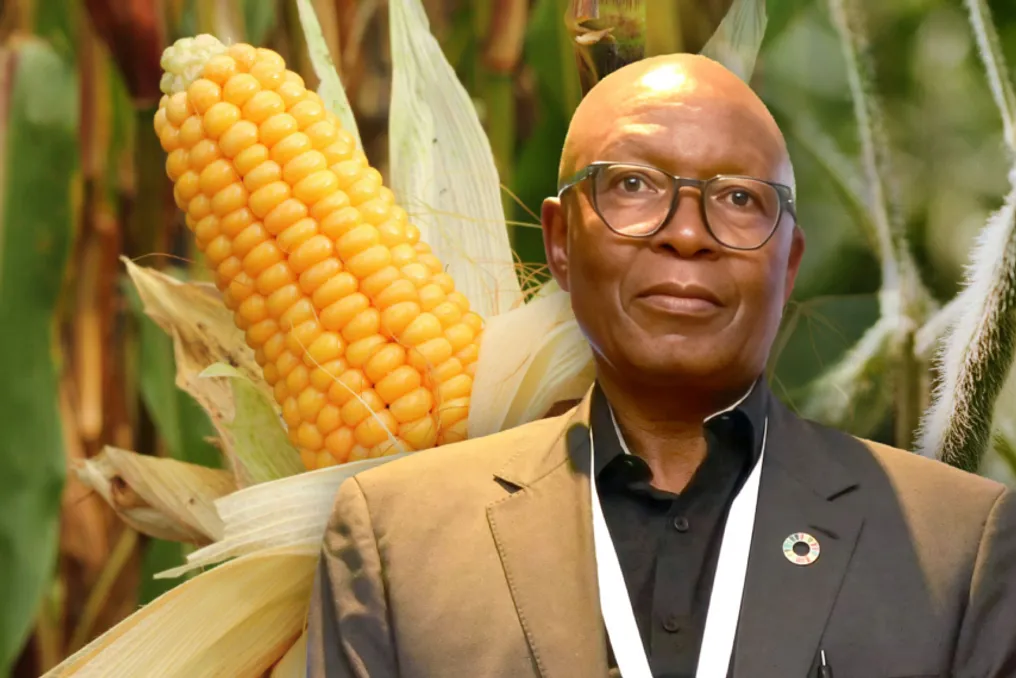
High costs for feed threaten poultry producers, but according to Ishmael Sungi, CEO of the South African Confederation of Agricultural Unions (Sacau), this situation could serve as a catalyst for creating a new generation of youth-led enterprises in the production of maize, soy, and feed.

Every increase in poultry feed prices is quickly reflected from the farm to the consumer's table. Producers are forced to reduce volumes, small businesses lose profit, and buyers have to pay more for eggs and chicken.

In many African markets, the problem boils down to a simple fact: feed constitutes the largest expense in poultry farming, often reaching 60–70% of total production costs. When yellow maize and soy become expensive or scarce, it inevitably leads to higher poultry prices.

However, perhaps the real problem is not the high cost of feed, but that Africa has long allowed this obvious market opportunity to remain underdeveloped. Every price jump in feed sends a clear signal: there is a need to increase the production of yellow maize, expand soy cultivation, improve aggregation, build more storage facilities, expand feed production capacity, refine formulation skills, strengthen quality control, establish logistics, and professionalize the entire feed system.

In other words, the poultry feed crisis is not just a cost problem; it is an entrepreneurial gap that a bold young generation of agri-entrepreneurs can fill.

Poultry farming is one of the most accessible ways to enter agribusiness in Africa. It can rapidly create jobs, support women and young entrepreneurs, strengthen rural and suburban economies, and provide affordable protein to millions of households. Nevertheless, poultry farming cannot develop with a weak feed system.

The opportunity lies not in endlessly condemning feed prices, but in creating businesses capable of lowering those prices. Africa must initiate a targeted, large-scale campaign to support youth-led enterprises in the production of yellow maize and soy, feed ingredient aggregation, small-scale feed production, oilseed processing, quality control, sourcing alternative feed ingredients, and last-mile distribution.

However, reliance solely on youth is insufficient. Many youth agricultural programs fail because they romanticize entrepreneurship while ignoring the harsh realities of access to land, finance, mechanization, irrigation, raw materials, storage, quality standards, and markets. If young producers are left to struggle in isolation, most of them will remain at the subsistence level.

A more sensible model involves linking youth enterprises with existing commercial farmers and basic infrastructure. Commercial farmers can provide support through mentorship, mechanization, irrigation, production planning, raw material procurement, drying, storage, quality control, and structured market access.

Young producers bring the ambition, energy, innovation, and urgency of a generation striving to find viable economic paths. Together, they can transform the bottleneck in the feed sector into a full stream of new enterprises.

This is not charity, but sound economics: commercial farmers benefit from expanded production areas, better utilization of equipment and infrastructure, strengthening local supply chains, and more reliable raw material supply; youth enterprises gain access to potential that would otherwise take years to build; poultry producers benefit from improved feed availability; consumers benefit from stabilized prices; and governments benefit from job creation, food security, and strengthening domestic value chains.

For this to work, policy must become much more practical. Governments and development partners must lower the entry barrier for youth enterprises in the feed sector through targeted tax incentives, VAT exemptions, or discounts on critical equipment and raw materials, accelerated depreciation for irrigation and storage assets, grants for feed production aggregation centers and infrastructure, and exemption from tariffs on specialized equipment unavailable locally.

These incentives should not become unlimited handouts. They must be conditional, time-bound, and results-dependent. Support should be provided to youth-owned and managed enterprises that possess credible business plans, real production or sales agreements, participate in approved producer clusters, adhere to quality standards, and demonstrate measurable contribution to local feed ingredient supply. Public funds should attract private investment, not replace it.

The financial system also needs changes. Standard credit products rarely suit agriculture. A young maize or soy producer cannot repay an agricultural loan as if they were working a monthly salary.

Financial instruments for youth agribusiness must incorporate seasonal repayment schedules, preferential rates, deferrals aligned with harvest cycles, and provide working capital, equipment leasing, and credit guarantees. With verifiable sales agreements in place, banks should finance the entire value chain, not just collateral.

Financing through commodity notes can radically change the situation. Instead of forcing young producers to sell grain immediately after harvest at low prices, certified storage and electronic commodity notes allow them to use stored maize or soy as collateral for short-term loans. This improves cash flow, reduces forced sales, strengthens negotiating power over prices, and makes the grain system more formalized and attractive to banks.

Large commercial farmers can also act as wholesale financial intermediaries. Since they often have stronger balance sheets, credit histories, and banking relationships, they can secure larger lines of credit and channel raw materials, mechanization, and working capital to young contractors on a transparent basis.

Debt repayment can be tied to product deliveries, which reduces risks for creditors and increases discipline across the entire value chain.

Digital tools must support the entire system: farmer registration, raw material vouchers, mobile payments, harvest verification, production monitoring dashboards, electronic commodity notes, as well as loan applications and alternative credit scoring systems based on supply data and repayment behavior.

This is how youth agribusiness moves from declarations to real scale.

The stakes are high. If Africa does not solve its feed system problems, poultry producers will remain vulnerable to fluctuations in grain prices, climate shocks, import dependency, and weak local processing capacity. The result will be rising food prices, reduced corporate profits, and missed employment opportunities.

But if action is taken boldly, the same pressure can unleash a wave of youth business in production, processing, aggregation, logistics, consulting services, and digital coordination.

The message is simple: high feed costs should not be viewed only as a poultry industry problem. They should be seen as a challenge for entrepreneurship, a challenge for industrialization, a challenge for youth employment, and a challenge for food security. Then, policies, financing, and partnerships must be created to meet these challenges.

The youth of Africa do not need new slogans about agriculture being the future. They need structured opportunities in real markets. The poultry feed market is one such market. It is large, urgent, and commercially significant.

With proper support, youth enterprises in maize, soy, and feed production can reduce costs, strengthen poultry value chains, create jobs, and make protein more accessible.

The feed crisis has already arrived. The question is whether we will continue to experience it as a constraint or use it as a trigger for a new generation of youth agribusinesses that will feed the poultry sector, feed the economy, and help feed the continent.

}} , 3.
How South African farmers can protect profits amid rising resource costs
Read more
foodformzansi.co.za

How South African farmers can protect profits amid rising resource costs

While farm success was previously determined by weather and yield, in 2026, rising production resource costs are becoming a priority. Daniel Rossouw, Head of Agricultural Sales at Nedbank, analyzes the economic factors shaping South Africa's agricultural sector and offers producers strategic ways to protect their profits.

Successful farming operations rely on a careful balance of energy, labor, and raw material expenses, which is critical for business survival. Rossouw, with nearly 35 years of experience in agricultural finance, notes that the 2025–2026 period represents one of the most challenging economic landscapes for this sector.

Agricultural enterprises face not a single isolated factor, but cumulative cost pressure across several key areas. Rossouw explains that in 2026, the greatest pressure comes from combined resource prices, including energy, labor, logistics, and finance, rather than any single type of expense. He emphasizes that the severity of these issues varies greatly depending on the specific commodity.

Among the main resources, fertilizers stand out as a significant source of pressure, especially for grains, oilseeds, sugar, and horticulture. In standard grain systems, fertilizers account for 20% to 35% of resource costs, and significantly more in high-intensity operations. According to the latest estimates, fertilizer prices have risen by up to 50% compared to the same period last year.

Since South Africa imports over 80% of its fertilizer needs, local prices are closely linked to global trends in crude oil prices and exchange rate fluctuations.

Fuel presents similar difficulties. Diesel accounts for up to 15% of resource costs in grain production, and because about 70% of diesel fuel in the country is imported, farm expenses are directly dependent on global oil markets.

In addition to energy and fertilizers, other necessary operating costs are steadily increasing:

  • Electricity and utilities: Although power outages have ended for an extended period, electricity tariffs continue to rise. This heavily impacts irrigated agriculture and high-value crops. While more farmers are investing in solar and alternative energy sources, such solutions require significant initial capital investment.
  • Labor dynamics: This is particularly important in labor-intensive, high value-added sectors such as horticulture, viticulture, and sugarcane. Labor costs include not only rising base wages. Increases in the minimum wage, persistent shortage of skilled personnel, and variable productivity make these sectors especially vulnerable to margin compression.
  • Crop protection: Active chemical ingredients are strongly tied to international commodity prices and the US dollar. Unlike optional farm expenses, reducing chemical use directly increases production risks, leaving little room for cost adjustments.

To cope with this pressure, Rossouw insists that producers must expand their financial monitoring beyond traditional metrics such as current commodity prices and local rainfall. Over the next twelve months, farm profitability will be determined by the dynamic interaction of macroeconomic forces.

He points to several critically important variables requiring close attention:

  • Interest rates and inflation: Although potential rate easing offers hope for relief, persistent inflationary spikes could delay further rate cuts, sustaining high financing costs.
  • Exchange rate stability: The Rand has recently shown strong resilience, but currency markets remain inherently volatile and require constant risk management.
  • Geopolitical turmoil: Fuel, oil, and fertilizer markets remain highly sensitive to international conflicts and global supply disruptions.
  • Climate change: Early signs and warnings of the El Niño cycle indicate increased production risks in the 2026 and 2027 seasons.
  • Municipal and infrastructure overheads: Rising municipal tariffs, water costs, and localized power restrictions continue to limit expansion in high-growth and export-oriented regions.

Essentially, managing modern agricultural risks requires looking at the big picture and preparing for economic instability even before purchasing resources or sowing seeds. As market conditions change, it is crucial to collaborate with a financial partner who understands these macroeconomic shifts to maintain liquidity and structural stability.

To learn how Nedbank can become a partner to your agricultural business and support your strategic planning for the 2026–2027 seasons, contact business@nedbank.co.za or reach out directly to your regional Nedbank business manager.

Popular