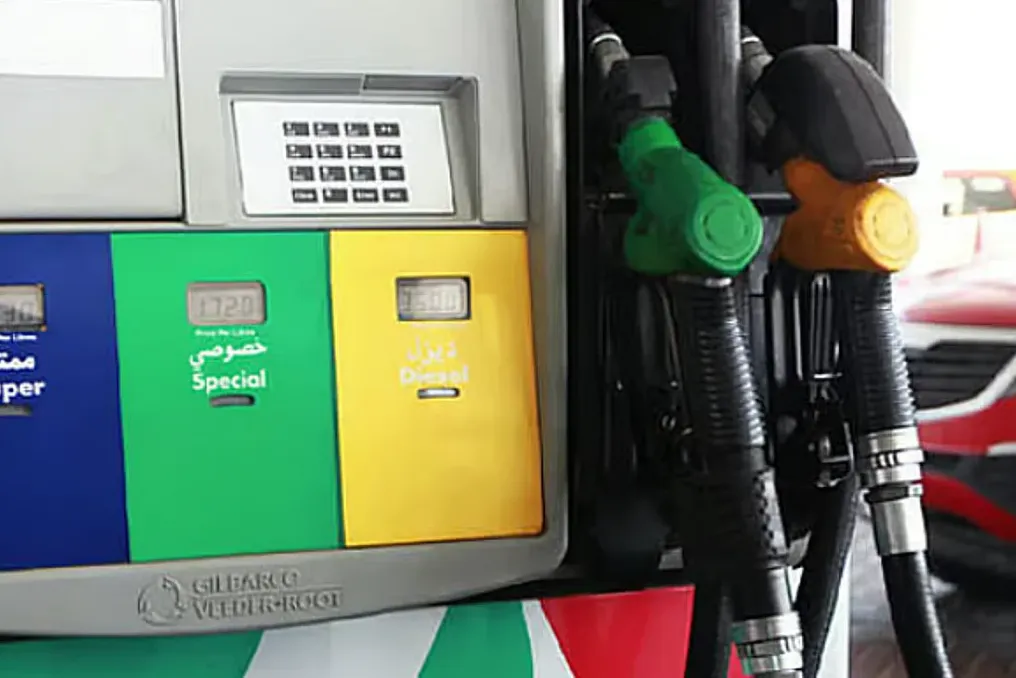
Fuel prices in the UAE exceeded 4 dirhams per liter, reaching a four-year high in October 2026
Read more
Khaleej Times
www.khaleejtimes.com

Fuel prices in the UAE exceeded 4 dirhams per liter, reaching a four-year high in October 2026

In October 2026, fuel prices in the United Arab Emirates (UAE) were increased by 60 fils per liter, which amounted to over 16 percent. This caused prices to reach their highest level in more than four years amid rising global oil prices driven by the war in the Middle East.

On Wednesday, the UAE Fuel Price Committee increased the cost of Super 98 gasoline from 3.80 dirhams to 4.40 dirhams per liter, Special 95 from 3.69 to 4.28 dirhams, and E-Plus 91 from 3.61 to 4.21 dirhams for October 2026.

Fuel prices surpassed the 4 dirham per liter mark for the first time in over four years after gasoline prices rose above this mark following the start of the war between Russia and Ukraine in February 2022.

In July 2022, gasoline prices reached record highs: Super 98 cost 4.63 dirhams per liter, and Special 95 cost 4.52 dirhams per liter.

Ongoing tensions between the US and Iran, as well as the closure of the Strait of Hormuz, supported high crude oil prices, as oil prices rose compared to the previous month in September 2026. Due to regional tensions, Brent crude in September traded at or above $100 per barrel.

The rise in oil prices occurred on Wednesday after US President Donald Trump refused to ease sanctions against Iran, while Qatar advocated for peace talks. This followed a drop in prices in the previous session, which was linked to the resumption of crude oil supplies from the Middle East.

On Wednesday morning, Brent and WTI crude traded at $102.80 and $89.28 per barrel, respectively. On Tuesday, Brent reached $107 per barrel amid escalating rhetoric between the US and Iran.

Vijay Valecha, Investment Director at Century Financial, noted that the deadlock between the US and Iran regarding the Strait of Hormuz pushed oil prices up and maintained pressure on the US Federal Reserve to raise interest rates again. He added that oil remains a key market driver, as increased energy costs intensify inflationary pressure and expectations of further rate hikes. 'After Trump rejected Iran's proposal to resume operations in the Strait of Hormuz, the yield on two-year interest rate sensitive Treasury bonds also rose by six basis points to 4.91 percent,' he stated.
Similar stories

Oil prices reached $107 a barrel ahead of UAE fuel price review announcement
Read more
www.khaleejtimes.com

Oil prices reached $107 a barrel ahead of UAE fuel price review announcement

Oil prices rose to approximately $107 per barrel on Tuesday, continuing their upward trend for the second consecutive session, just one day before the United Arab Emirates announced a review of monthly fuel tariffs.

Brent crude futures for November increased by 1.6 percent, reaching $107 per barrel, while WTI rose by 1.41 percent to $93.81 per barrel on Tuesday morning. This rise occurred amid persistent concerns about supply disruptions in the Middle East, caused by the war between the US and Israel against Iran, which outweighed signs of raw oil export recovery from the region.

In the UAE, fuel prices are typically reviewed monthly in line with fluctuations in global benchmark oil prices. The announcement of fuel prices in the UAE for October will take place on Wednesday, September 30, synchronized with global oil prices.

In September, the UAE Fuel Price Committee raised retail prices by approximately 0.20 dirhams, setting prices for Super 98, Special 95, and E-Plus 91 at 3.80, 3.69, and 3.61 dirhams per liter, respectively.

Fuel prices reached an all-time high in 2024 when they exceeded 4 dirhams per liter in the UAE following the start of the war between Russia and Ukraine.

Ongoing tensions between the US and Iran, as well as the closure of the Strait of Hormuz, are supporting high oil prices, with crude oil prices rising in September 2026 compared to the previous month.

Naim Aslam, Director of Investments at Zaye Capital Markets, noted that the Brent oil price has returned to the $106–$107 per barrel level because the uncertainty surrounding negotiations between the US and Iran and the supply situation in the Middle East remain unresolved. He stated: 'Higher oil prices create a complex combination for both sides of the Atlantic: they support energy stocks, but also increase inflationary expectations, corporate transport and production costs, and put pressure on household expenses.'

Norbert Rücker, Head of Economy and Next Generation Research at Julius Baer, expressed concern among consumers and politicians regarding the sharp rise in fuel prices since the summer. He noted: 'The US government is openly considering imposing export restrictions on diesel fuel as a measure to lower prices. It remains unclear whether this will be the next episode of the American trade saga, but the oil market will likely find a way out of this with less difficulty than feared. The bigger issue is finding the reason for the surge in fuel prices since the summer, given that US diesel inventories have not decreased since then, and fuel supplies to Europe and Asia appear sufficient, while refined product exports from the Middle East and Asia are growing. Nevertheless, the narrative of supply shortages is exceptionally strong and dominates everything else in the markets. Currently, oil is trading in a fear and risk premium phase. We maintain our cautious view.'

Furthermore, a new factor of concern has emerged in the oil markets. Rücker added: 'The sharp jump in fuel prices since the summer has led to open debates in the US government about trade restrictions. The growth in US crude oil and refined product exports was one part of a larger mosaic of oil market resilience. However, since the beginning of summer, US oil exports have fallen almost to pre-crisis levels. This aligns with a broader problem: the surge in refined products since the summer is difficult to explain when looking at fundamental indicators. Although US gasoline reserves, especially diesel, are indeed constrained, their shortage has not increased since the summer.'

Popular