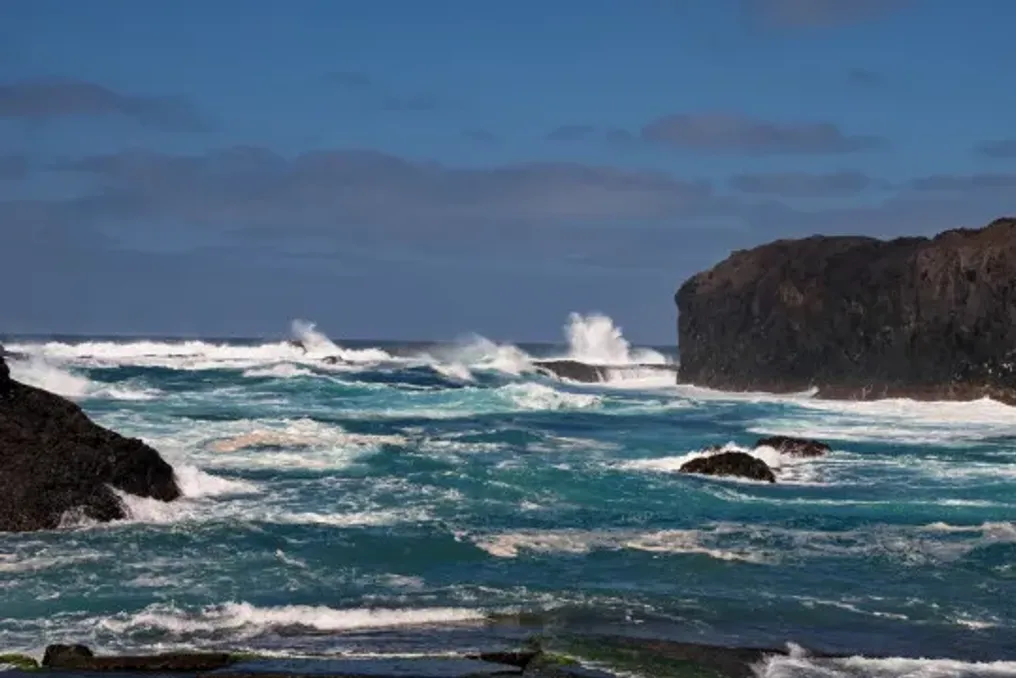
The ocean is undergoing visible transformations, including warming, sea-level rise, and ecosystem deterioration, which are interconnected signs of long-term changes. Pierre Bahurel, Director-General of Mercator Ocean International, pointed out that it is essential to develop the capacity to predict this metamorphosis, as indicated in the report produced by the organization and cited by Copernicus – the European Union's Earth Observation Programme.
This 10th Ocean State Report (OSR), compiled with the contribution of 125 global scientists, uses recent satellite data, in situ measurements, and modeling to detail the scale and speed of ongoing oceanic changes.
According to the report, ocean warming has intensified since 1960. In 2025, the ocean absorbed a record volume of 23 zettajoules, equivalent to approximately 40 times the energy consumed globally that year. Between 1999 and 2025, the global average sea level rose annually between 3.5 and 4.1 millimeters (mm), although the increase between 2012 and 2025 varied between 3.9 and 4.5 mm/year. Additionally, between 1985 and 2025, the ocean became about 17% more acidic.
The Copernicus Marine Service explains that by absorbing more heat, the ocean propagates effects throughout the marine system. Warmer waters foster marine heatwaves and can exacerbate storms, destabilize ecosystems, and raise sea levels due to thermal expansion and terrestrial melting.
In Europe, regional seas face significant pressure, with distinct rates of change in different areas. Federica Borile, a physical oceanographer from the University of Bologna, Italy, mentioned that sea-level rise in the Mediterranean does not follow a uniform or linear pattern; the Western Mediterranean has shown acceleration since the early 2000s, while the Eastern basin accelerated significantly starting in 2018.
The researcher emphasized the importance of considering this data for the adaptation of coastal communities, stressing that knowledge of local sea-level dynamics is crucial for future risk planning.
Small Island Developing States (SIDS) are on the front lines of this crisis, as are polar regions. The report highlights that the link between oceanic changes and human vulnerability is most evident in these States, whose economies, infrastructure, and ways of life are intrinsically dependent on the sea.
The study points out that all SIDS Exclusive Economic Zones (EEZs) have been affected by warming since 1960, and 65% of the combined area of these zones has been subject to accelerating sea-level rise since 1999. Nearly 28% of this area hosts vulnerable, threatened, or critically endangered coral reefs, vital ecosystems for fishing, tourism, and coastal defense, representing over 20% of GDP in some SIDS.
In polar regions, the OSR documents profound modifications in sea ice, ocean physics, and ecosystems. In the Arctic, sea ice is decreasing parallel to increasing coastal erosion, and the Barents Sea Marine Ecosystem lost 70% of its ice cover since 1982. In Antarctica, in 2022, an unusual scarcity of sea ice coincided with an unprecedented reproductive failure among emperor penguins.
Karina von Schuckmann, the report's director, concluded that beyond serving as a scientific record, the study demonstrates how continuous observation, modeling, and forecasting, along with scientific collaboration, help societies understand what is changing, where, and why, allowing them to anticipate risks and prepare for consequences.