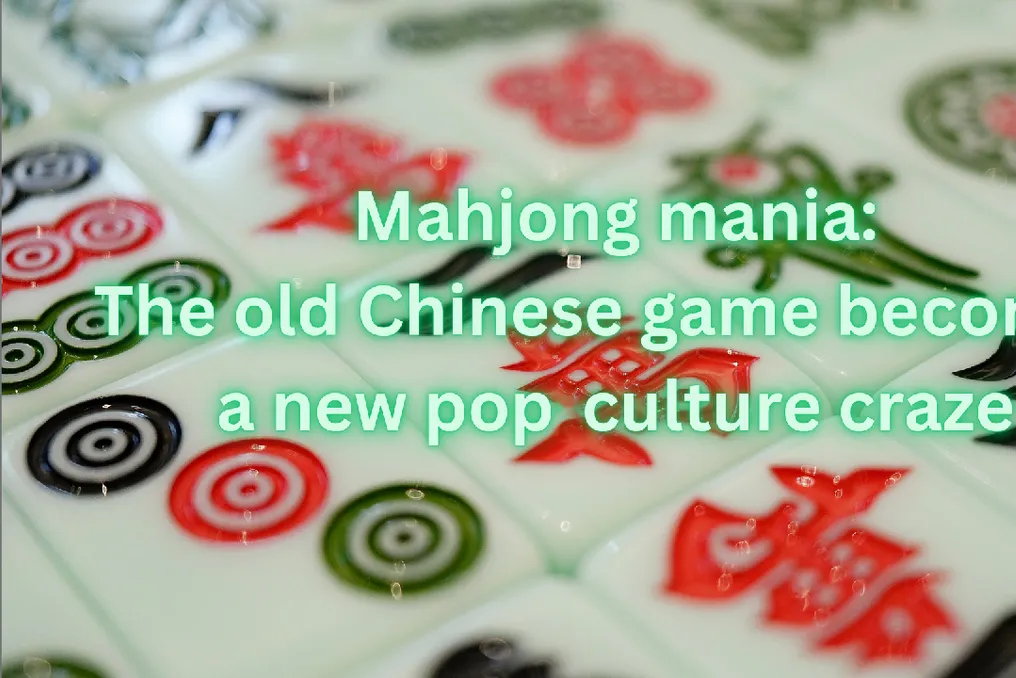
Mahjong, a traditional Chinese game requiring four players, 144 tiles, and attention to detail, has always been a game based on strategy, patience, and intuition. Initially appearing in China during the Qing Dynasty (1644–1911), it was conceived as a means of teaching discipline, calculation, and understanding people. For many generations, it was popular in tea houses, living rooms, and various social gatherings.
Today, Mahjong has gained the status of a fashionable accessory, a topic of discussion in Hollywood, and a social symbol for the new generation. Some social media users joke about the need for a marketing campaign for the game, as it has become the latest trend in pop culture, alongside pickleball, matcha, and sleek ponytails.
The game spread worldwide in the early 20th century due to waves of migration from East Asia, becoming particularly popular in American families, especially among Jewish women. It was they who formalized American Mahjong by founding the National Mah Jongg League in 1937. What was once called a 'grandmother's game' is experiencing a revival, becoming more appealing, glamorous, and aesthetically oriented.
Hollywood elites regularly host weekly game nights, turning this 19th-century pastime into a stylish collective ritual. Part of the game's appeal lies in its structure: four players draw and discard tiles, forming combinations and analyzing the situation on the table in real time. The game is tactical, but also social. Even Julia Roberts publicly shared her impressions during an interview on Stephen Colbert's show, noting that Mahjong helps her 'bring order out of chaos.'
Mahjong's popularity in pop culture reached a new level with the 2018 film 'Crazy Rich Asians,' where the game is featured in one of the most memorable scenes. In this film, Mahjong serves as a metaphor for identity, power, and emotional strategy, introducing millions of viewers to the elegance and symbolism of the game.
However, the changes have not stopped there. High fashion houses have entered the process, turning Mahjong into a luxury item. Among the luxury brands producing designer Mahjong sets are Hermès and Louis Vuitton. These sets are made with lacquered finishes, sculptural cases, and come at a high price, ranging from $13,000 to over $80,000.
Other independent brands, such as So Bam Fun, The Mahjong Line, and Oh My Mahjong, have also reinterpreted the game, using bright colors, acrylic tiles, and rich palettes that have become popular on platforms like TikTok and Instagram. This has resulted in new generations of Mahjong sets, created not only for playing but also for creating lifestyle content. However, this commercial frenzy comes at a cost.
Oh My Mahjong, founded four years ago, produces tiles for any theme. A basic set with all accessories costs between $660 and $925. Mahjong enthusiasts can purchase cabinets full of mats and tiles, with some sellers offering custom sets upon request.
According to a study by the International Council of Shopping Centers (ICSC), the global market for physical Mahjong equipment and clubs is experiencing a powerful surge in the social experience and retail sectors. Sales of physical tiles and equipment are projected to reach between $3 billion and $4.5 billion by 2033–2035.
In addition to the physical game, online Mahjong is also gaining popularity, allowing players to access their fashionable chips anytime and anywhere.
The modern update of Mahjong is not just related to expensive sets or celebrity endorsements. It seems to be popularizing a lifestyle based on personal participation and a sense of tranquility in an often hectic world. The 19th-century Chinese tile game has become a pop culture sensation, offering the eternal gift of connection, strategy, and a moment of shared concentration, especially in a rapidly changing world. Mahjong encourages people to slow down.