Study shows that sea level rise will allow invasive marine species to capture new territories
Read more
Aaj Tak
www.aajtak.in

Study shows that sea level rise will allow invasive marine species to capture new territories

Due to climate change, the ocean's water level is constantly rising. The consequences of this phenomenon are not limited to the flooding of coastal lands. According to a study published on September 28, sea level rise may provide an opportunity for many non-native marine organisms to spread into new areas.

Scientists studied 122 invasive marine species to determine where the risk of their spread might increase with rising sea levels. According to the study, by 2050, rising waters could flood about 360,000 square kilometers of coastal land, and by 2100, this figure could reach 550,000 square kilometers.

Experts believe that a significant portion of these new aquatic areas could create suitable habitats for invasive marine species. Among the 122 species studied were organisms such as fish, crustaceans, mollusks, and starfish, many of which have already spread beyond their natural ranges.

The study analyzed which new areas these species might reach after sea level rise, based on various climate scenarios. Two factors were identified as the main causes of sea level rise: the expansion of water volume due to heating and the melting of glaciers and ice sheets.

According to the study's forecasts, the sea level could rise by approximately 20 centimeters by 2050 and by 56 centimeters by 2100. This means that about 360,000 sq km of coastal zones could be flooded by 2050, and about 550,000 sq km by 2100.

Scientists suggested that within these inundated territories, a favorable environment could form for the life of the marine organisms that were studied, covering an area from 290 to 470 thousand square kilometers.

The study identified several global regions where there is a high risk of these marine species spreading. These areas include the eastern coast of America, the Gulf of Mexico, the North Sea, the Gulf of Guinea, the Arabian Gulf, the northern Bay of Bengal, southeastern China, and northern Australia.

Estuaries pose a particular danger—areas where river water meets seawater. These regions have a direct connection to the sea and are characterized by high anthropogenic activity. As seawater advances, these areas could become pathways for invasive species.

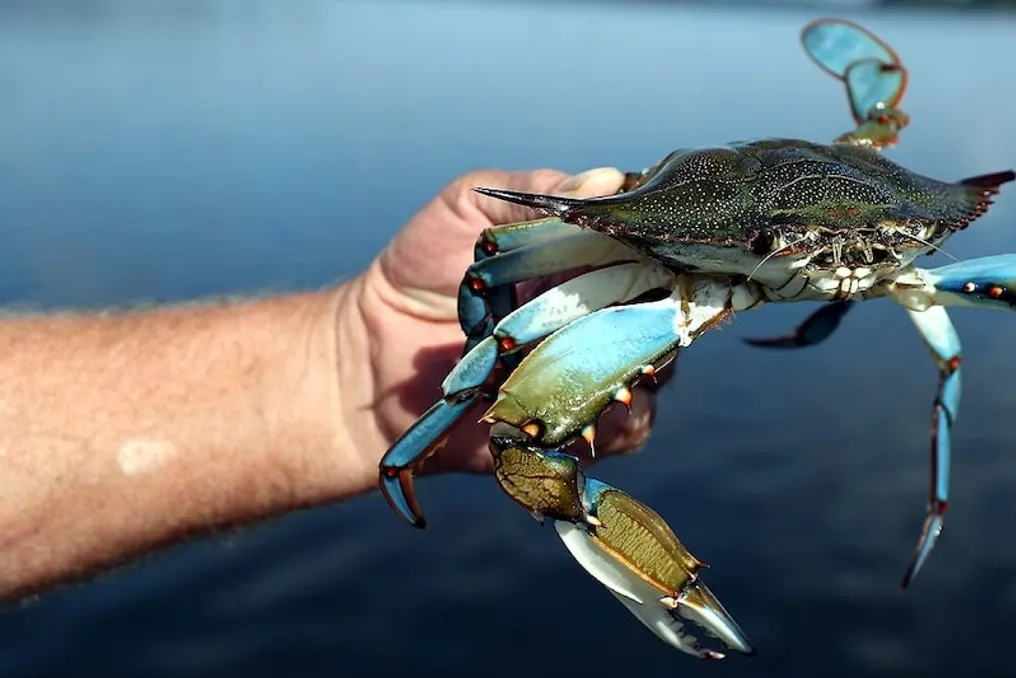
There are many marine species that have already migrated beyond their original habitats. Examples include the Pacific oyster in Europe, the Atlantic crab, and the Wend Rapa Velk. Sea level rise could give these animals the opportunity to reach and establish themselves in new areas, potentially creating problems for native species, as well as increasing competition for resources and habitats.

The impact of invasive species extends beyond just marine fauna; they are capable of transforming the entire ecosystem. This can also affect fishing and other activities related to coastal areas. According to IPBES, biological invasions caused economic losses exceeding $423 billion worldwide in 2019. Scientists emphasize the need to consider the threat of invasive species spread when planning and monitoring coastal zones in light of rising sea levels.

Similar stories

50 tons of trash removed from Munak Canal in Delhi as part of public initiative
Read more
thebetterindia.com

50 tons of trash removed from Munak Canal in Delhi as part of public initiative

The garbage cleanup initiative, which began with individual efforts, has turned into a large-scale public movement. Since September 1, 2018, Vinay Das and his team have regularly been cleaning up public spaces every Sunday, motivating people to take responsibility for the environment.

Volunteers have covered various areas, including Ashok Vihar, the banks of the Yamuna, and the Munak Canal itself. They have been cleaning parks, streets, and polluted areas while simultaneously planting trees and caring for young saplings.

This movement has united over 1600 children and youth, and there are about 350 active volunteers. The recent work conducted on the Munak Canal had a particularly significant impact. Over the last two cleanup cycles, 50 metric tons of waste were removed, which is also recorded in official MCD records.

However, what is most valuable to Vinay is not the amount of tons removed. He finds the greatest satisfaction in the words of a child who says, 'Bhaiya, my street is clean today. Maa is happy.'

The mission goes beyond simple trash collection. Vinay dreams of building a school for 1500 children where environmental protection becomes an integral part of the education and life of the next generation. He emphasizes that real change can start with a simple action, such as showing up every Sunday.

Change in Water Age in the Pacific Ocean Due to Rising Temperatures
Read more
www.aajtak.in

Change in Water Age in the Pacific Ocean Due to Rising Temperatures

As the Pacific Ocean warms, the 'age' of the water within the ocean is also changing. Scientists from the University of California, San Diego, used a model to study the changes that will occur over the next hundred years. The research showed that in some parts of the Pacific Ocean, new water can become old, while in other areas, old water can become new.

The main reason for this phenomenon is the decrease in activity between different layers of water following global warming. These changes are particularly observed in the layer ranging from 200 to 1000 meters deep, known as the thermocline. The thermocline is the boundary between the warm upper layer and the colder waters below. As the ocean heats up, these layers stop mixing as easily, which slows down the vertical movement of water. This leads to changes in water age and oxygen levels in different locations.

'Water age' refers not to the number of years the water has existed, but to the period during which it has not reached the sea surface. When water is at the surface, it becomes saturated with oxygen from the air. Then, as it sinks, it is used by marine organisms and bacteria to consume this oxygen. Therefore, water that remains in the depths for a long time is considered 'old' due to reduced oxygen content, whereas recently sunk water is considered 'new' and is usually rich in oxygen.

Since warm water is lighter than cold water, there are distinct layers in the ocean: warm water on top and cold water below. Rising temperatures intensify the gap between these layers. This reduces the mixing of water vertically in the ocean. Scientists recorded this slowing of water movement in their model.

In one area of the North Pacific Ocean, new water coming from above reaches the thermocline, but due to rising temperatures, it may penetrate less deeply. As a result, this water may remain in the ocean longer, meaning the new water gradually becomes 'old.' This could also lead to a decrease in oxygen levels in this area. According to the study, this may affect marine life that requires oxygen to survive.

The situation in the tropical part of the Pacific Ocean may develop in the opposite way. There, water rising from below is initially old and low in oxygen. Warming may slow down the movement of water from the depths to the surface. Consequently, old water will reach the upper layer less frequently, which could lead to a decrease in the average age of the water in the upper layer.

Thus, in one part of the Pacific Ocean, water may age, while in another part, old water may become relatively new.

Scientists also noted the role of the Southern Ocean, which surrounds Antarctica. Temperature rise in this region can alter large-scale water movement, which directly affects the Pacific Ocean. This is why scientists view this as an influence of warming in one part of the ocean on another.

Warm water may contain less oxygen. Furthermore, the slowing of water movement changes how oxygen is delivered to greater depths. Although this study did not examine all consequences for marine organisms, scientists note that in areas with low oxygen content, no sharp increase in oxygen deficiency is expected in the next hundred years.

However, in the northern part of the Pacific Ocean, the change in water age and oxygen levels may have a more significant impact on marine life, as oxygen is already deficient there.

In this study, scientists used a simple ocean model to predict changes over the next approximately 100 years. Future research should include the analysis of ocean winds and changes in their patterns. This study makes it clear that the impact of climate change will not be uniform across the entire Pacific Ocean. In different parts of the ocean, water movement, its 'age,' and oxygen levels may change differently, potentially affecting the marine environment in the future.

How to make organic fertilizer from banana peels: 5 home methods
Read more
www.aajtak.in

How to make organic fertilizer from banana peels: 5 home methods

After consuming bananas, their peels are often thrown in the trash, but they can be used to enrich houseplants. Banana peels contain nutrients such as potassium, phosphorus, calcium, and magnesium, allowing them to be used as a natural homemade fertilizer. Notably, creating organic fertilizer from banana peels does not require purchasing special ingredients from a store.

If you have pots of various sizes on your balcony, roof, or near a window, instead of throwing away banana peels, you can use them with the following five simple methods. Below is how what is considered waste can be turned into organic fertilizer.

Methods for making fertilizer from banana peels

1. Making fertilizer from soaked peels

The simplest way to create fertilizer from banana peels is by preparing a water solution from these peels. You need to cut the peel into small pieces, place them in a clean jar or container, and cover them with water so that the peel is completely submerged. Leave this mixture for about two to three days. Then, strain the water and separate the peel. The resulting solution should be diluted before applying it to plants and added to the soil. The remaining peels can be added to compost for future use.

2. Boiling and making liquid fertilizer

If you want to prepare a liquid feed in a slightly different way, you can try the following method. First, cut the peel into small pieces and soak them in water for two to three days. After that, boil them for about 30-45 minutes. Let the liquid cool completely, and then strain it. Before applying this liquid mixture to plants, it must be diluted with clean water. It is advisable to avoid pouring the thick solution directly onto the plant soil.

3. Drying the peel and direct application to soil

If you do not want to prepare liquid fertilizer every time, you can simply dry the banana peel. Cut the peel into small pieces and dry it thoroughly in the sun. It is also possible to dry it in an oven at a low temperature. It is important to ensure that the peel is completely dry. After that, it can be mixed with the soil in small pieces. Dried peels can be stored for some time.

4. Using powder from dried peel

Making powder from dried banana peel is also quite simple. When the peel is completely dry and crispy, grind it in a blender, food processor, or coffee grinder. The resulting powder can be mixed with a small amount of soil. It can also be given to plants by mixing it with water. The advantage of this method is that the powder is easy to store and dose in small amounts for plants.

5. Fermented liquid from banana peel

If you have more time, you can prepare a fermented liquid from banana peel. For this, take equal parts of ripe banana pieces and dark brown sugar, place them in a container, and let them ferment for about two weeks. However, caution should be exercised when using this method. Due to the presence of sugar, flies and other insects may appear. Therefore, before applying it to plants, be sure to dilute the liquid with water.

Important points when using fertilizers from banana peels

Popular