Educational platform Arivihan raises $10 million to expand AI learning
Read more
Business Standard
business-standard.com

Educational platform Arivihan raises $10 million to expand AI learning

Edtech startup Arivihan, which uses artificial intelligence for student education, has raised $10 million in a Series A round. The round was led by existing investors Accel and Prosus Ventures, with an additional $200,000 secured from angel investors GSF.

This new funding brings Arivihan's total raised capital to over $15 million, following a pre-Series A round of $4.17 million in July 2025. The company plans to use these funds to expand into new states and the CBSE system, as well as to enhance its R&D in AI and support for local languages.

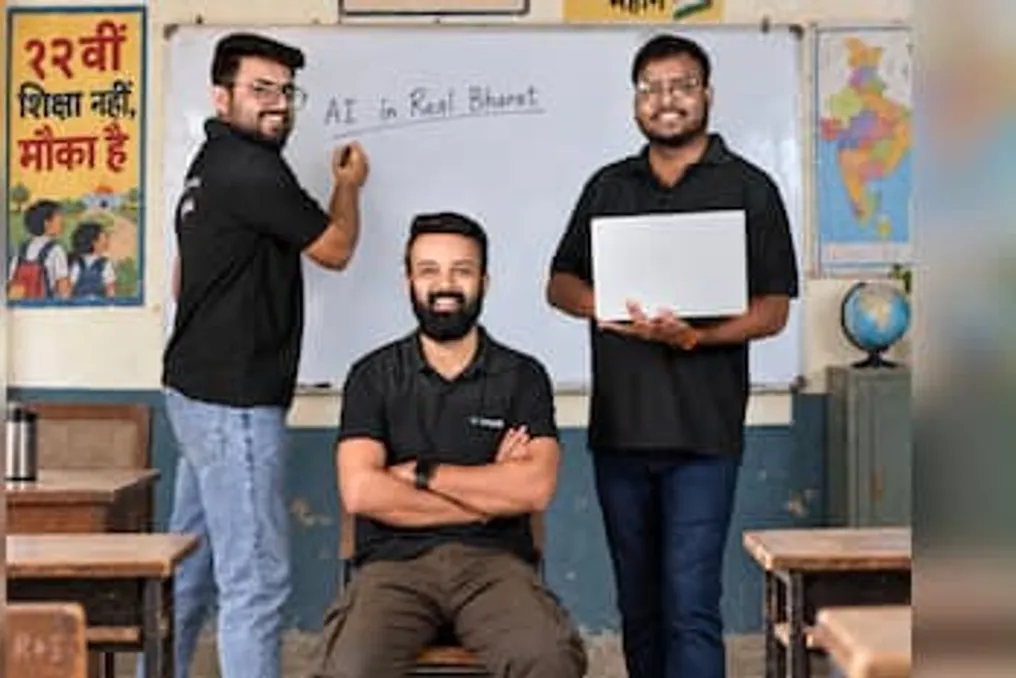
This expansion will also help the company scale its marketing campaigns and on-the-ground distribution nationwide. Arivihan was founded in 2022 by IIT Roorkee graduates Ritesh Singh Chandel and Sonu Kumar, along with experienced math teacher Rashab Kotahari. The company developed an automated AI-based tutoring platform that provides personalized learning through interactive video lectures, instant query resolution, and study plans.

The company claims that by eliminating reliance on live instructors, its platform offers ten times greater scalability and cost-efficiency compared to traditional tutoring models, making quality education accessible to students in underserved regions of India.

Views from Leaders and Investors

Ritesh Singh Chandel, co-founder and CEO of Arivihan, noted that since 80 percent of the company's subscribers are located in Tier-3 cities and rural areas of India, there is a significant opportunity to make personalized, high-quality education accessible regardless of location or language of instruction. He added: 'Edtech has so far only made content cheaper. We are making the entire personalized learning system accessible to every student—and making AI deliver real results for the real students of Bharat.'

Durv Gupta, an investor at Prosus, stated that Arivihan has made impressive progress since Prosus's initial investment, rapidly scaling while maintaining high student engagement. According to him, the company demonstrates that AI can provide high-quality individualized learning experiences at mass-market prices. Gupta emphasized: 'We support companies that use AI to provide critical digital services to hundreds of millions of users across India.'

Anag Prasad, an investor at Accel, believes that working with Arivihan shows that AI-based tutoring is a breakthrough solution for grassroots education in India. He noted: 'AI has finally made it possible to provide truly personalized online education that can match the effectiveness of expensive one-on-one tutoring.'

Prasad added that he considers Arivihan's AI tutor the first large-scale example of this concept in the country, as it has already helped several hundred thousand students prepare for important exams.

India's education system faces a major personalization challenge affecting 250 million enrolled students. Due to a teacher-to-student ratio of less than 1:200 and unusually large class sizes, the system is dominated by standardized classroom learning, despite clear evidence that personalized tutoring significantly improves student performance. This issue is particularly relevant given that success on standardized tests often represents the only viable path to improving the financial status of millions of students.

Currently, Arivihan serves students preparing for State Boards, CBSE, and NEET, focusing primarily on 12th-grade students from Tier-2+, Tier-3, and rural areas. With the current round, the company plans to deepen its presence in Madhya Pradesh, Uttar Pradesh, Rajasthan, and Bihar, while expanding into other states and strengthening its work with CBSE and upcoming intensive courses.

Previously, Arivihan participated in the Accel Atoms accelerator program, where it received seed funding in March 2024.


Similar stories

Corporate AI startup Ema raises $77 million in Series B round led by Creaegis
Read more
yourstory.com

Corporate AI startup Ema raises $77 million in Series B round led by Creaegis

The corporate startup Ema, founded by former Google and Coinbase executive Surajjit Chatterjee, has successfully closed a Series B funding round, raising $77 million. The round was led by Creaegis.

Investors such as Accel, S32, and Prosus also participated in the round. According to the startup, this funding increases its valuation fourfold, although the exact valuation amount was not disclosed.

Ema plans to use the raised funds to expand its product market rollout operations and enter new geographical regions, including the Asia-Pacific (APAC) and Europe, Middle East, and Africa (EMEA). The company was founded in 2023 and has headquarters in California, along with an office in Bengaluru.

Surajjit Chatterjee, founder and CEO of Ema, noted that 'corporations don't need more software; they need results. Our latest funding round will help us drive agentic business transformation in enterprises that are still stuck in pilot purgatory.'

Ema has developed an agent platform that allows enterprises to automate workflows in functions such as Human Resources (HR) and finance. The startup claims that its product-oriented model enables companies to implement and scale AI capabilities without the need for complex service support.

The company has moved beyond the stage of pilot projects and concepts, beginning to provide AI agent-based solutions for large enterprises. Its clients include Wipro, Hitachi, and NTT Data.

For example, at Wipro, the Ema platform powers an employee assistant that supports over 240,000 employees across 65 countries. The system automates over 100 workflows and processes approximately 2.9 million employee queries annually. The company reports that response time has decreased from days to seconds, and employee satisfaction has increased by 20%.

Prakash Partasarathi, Managing Partner and CTO of Creaegis, emphasized: 'The Ema platform already supports millions of employee interactions in some of the world's largest organizations, delivering measurable results required for management. Ema has created a scalable, productive platform with exceptional cost-efficiency, rather than a service model dependent on individual implementations.'

Arcee AI raises $150 million to create American open models for enterprise use
Read more
ventureburn.com

Arcee AI raises $150 million to create American open models for enterprise use

Companies that use services like ChatGPT or Claude via API do not actually own these models because they send their data to third parties, pay for tokens, and have no access to the internal workings of the model. This situation is a serious concern for banks, hospitals, and government institutions.

For this reason, Arcee AI announced it has raised $150 million in funding to develop open models that enterprises can run directly in their own data centers.

The San Francisco-based company Arcee AI announced its Series B funding round. The leaders of this round were Vista Equity Partners, Cambium Capital, and Emergence Capital, with participation from Microsoft M12's venture division, AI10 Ventures, Hitachi, IAG, P7, and Wipro.

This funding valued Arcee at over $1 billion, making it a new unicorn; after accounting for the new capital, the post-investment valuation reached approximately $1.15 billion.

In 2025, McQuade decided to invest in the company and build advanced models from scratch. He noted in an interview that the startup had about $30 million and decided to allocate 65–70 percent of these funds to training new models.

The result of this investment was the Trinity model line. Over a period of about six months, Arcee transformed from a dense model with 4.5 billion parameters into Trinity Large—a mixture of experts (MoE) model with 400 billion parameters and 13 billion active parameters per token.

Trinity Large was released in early 2026 as a highly efficient, permissively licensed model, fully developed in the United States. It is considered the first frontier-scale open model created end-to-end in America since Meta stopped releasing Llama models.

The most interesting aspect in the industry was the development cost. Arcee reported that the entire model line for 2025, including Trinity Large, was created for approximately $20 million. This amount covers salaries, computing power, data, infrastructure, and operating expenses.

In an industry where many believe that training a new model requires billions, $20 million is an astonishingly low figure. This common view was already being challenged when DeepSeek announced the creation of a top-tier model for less than $6 million.

Tests show that the Trinity models outperform Meta's Llama 3 and match the level of Mistral and leading Chinese models. This allows Arcee to become one of the few American labs capable of competing convincingly in the open-weight segment.

The startup plans to use the raised funds to accelerate the development of the next generation of the Trinity model family. This involves creating larger models, improving reasoning capabilities, and developing more efficient architectures that can run on less powerful hardware.

Another important direction is expanding collaboration with the U.S. Department of Energy and its national laboratories. Open models that users can deploy on private infrastructure are very attractive for governmental and research tasks where data cannot leave secure environments.

The third direction is product development. Arcee intends to create a new generation of tools to help organizations fine-tune, evaluate, implement, and operate open models. This includes tools for fine-tuning, security assessment, and deployment within the Vista Equity Partners portfolio companies. Vista owns over 90 corporate software companies, all of which are potential customers for the open models they can own and manage.

Popular