AMD acquires World Labs, a 3D world-creating AI startup, for about R$ 43 billion
Read more
Tecnoblog
tecnoblog.net

AMD acquires World Labs, a 3D world-creating AI startup, for about R$ 43 billion

AMD announced the acquisition of World Labs, an artificial intelligence startup co-founded by researcher Fei-Fei Li. The value of this transaction was estimated at approximately US$ 8.2 billion, which is equivalent to about R$ 43 billion, based on a direct conversion. However, the completion of the deal is still subject to obtaining regulatory approvals, which AMD expects to occur by the end of 2026.

With this acquisition, the semiconductor manufacturer plans to integrate a highly specialized team in AI models into its structure, aiming to apply this knowledge to improving its future products, covering hardware, software, and infrastructure.

Founded in 2024, World Labs focuses its efforts on spatial intelligence. The company develops sophisticated AI models capable of generating, reconstructing, and simulating interactive three-dimensional environments using commands provided by text, images, or videos. Furthermore, the startup dedicates research to technologies related to robot learning and simulation scenario design.

This approach goes beyond the scope of large language models used in services like chatbots. The systems developed by World Labs have potential applications in various areas, including robotics, simulation, and AI solutions that can interact with real physical environments.

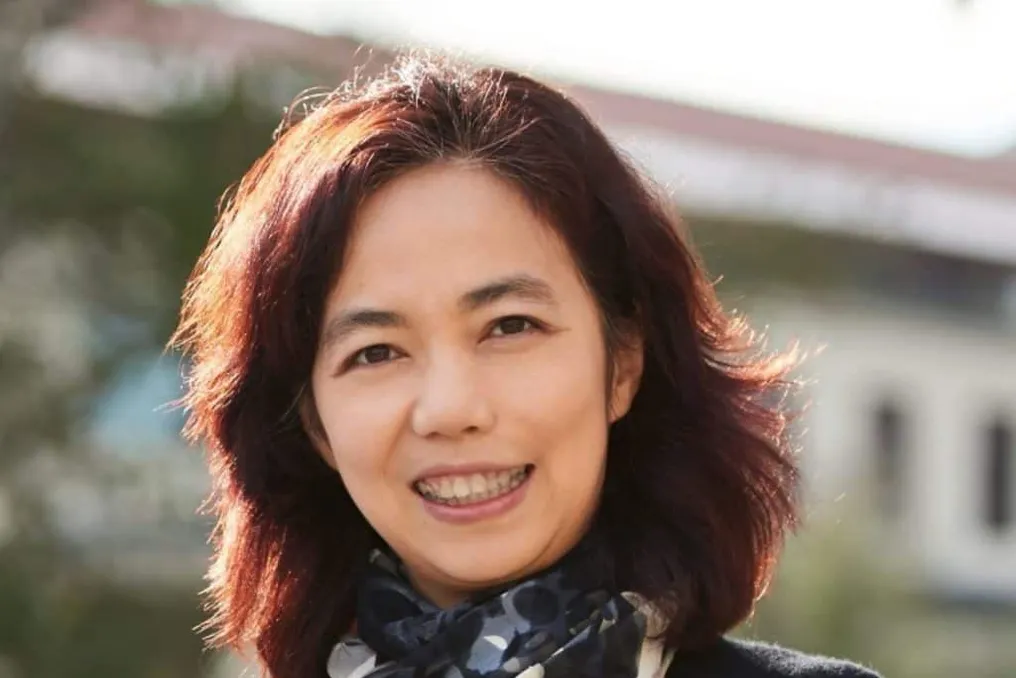
After the acquisition is finalized, Fei-Fei Li, co-founder and CEO of World Labs, will assume the roles of Executive Vice President and Chief Scientist at AMD. The World Labs team will continue to work on developing artificial intelligence models within AMD.

This purchase is part of a period of strong expansion of AMD's business focused on AI. Recently, the company surpassed the US$ 1 trillion market capitalization (approximately R$ 5.2 trillion), growth driven by expectations of increased sales of products intended for data centers.

Additionally, AMD has been forming partnerships to expand the use of its GPUs in both training and execution of models. A recent example is the partnership established in July with Anthropic, which foresees a computational capacity of up to 2 gigawatts based on the Instinct MI450 chips.

World Labs adds a new dimension to this corporate strategy. Instead of focusing exclusively on the infrastructure needed to run the models, AMD now has an internal team dedicated to researching and creating these AI systems themselves. According to the chip company's CEO, Lisa Su, understanding the evolution of these models can help the company determine the direction for the development of next-generation systems, software, and hardware.
Similar stories

AMD announces acquisition of World Labs, Fei-Fei Li's AI laboratory, for US$8.2 billion
Read more
olhardigital.com.br

AMD announces acquisition of World Labs, Fei-Fei Li's AI laboratory, for US$8.2 billion

AMD announced an agreement on Monday, the 28th, to acquire World Labs, an artificial intelligence (AI) laboratory established by researcher Fei-Fei Li. The total purchase price is US$8.2 billion, which is equivalent to approximately R$44.3 billion. Payment will be made entirely through shares of the chip manufacturer.

World Labs, headquartered in San Francisco, USA, specializes in developing world models, which are systems designed to simulate three-dimensional environments. This technology has potential applications in the development of robots, vehicles, and other AI solutions that need to interact with the physical environment. Previously, AMD had already invested in World Labs before formalizing the acquisition agreement.

With this transaction, Fei-Fei Li will take on the role of Chief Scientist at AMD and will also be appointed Executive Vice President of the company. The researcher has academic experience as a professor at Stanford and previously worked at Google, in addition to leading significant research in the field of AI.

Li's entry comes at a strategic time, as AMD seeks to strengthen its position in the competition against Nvidia for dominance in the processor market dedicated to AI. In a post on her social media on the same Monday (28), Li expressed appreciation for Lisa Su, referring to her as 'a great friend.' She stated: 'We are unwavering in our mission and even more excited to continue building a world-leading, enduring frontier research organization for decades to come.'

AMD communicated that World Labs will remain operational separate from its chip manufacturing segment until the transaction is finalized, which is expected to occur at the end of this year. The research conducted by the laboratory on next-generation models may also help AMD predict what functionalities its future AI chips should have in the coming years. This strategic approach allows the manufacturer to use World Labs' long-term research to plan ahead for the demands of its AI processors.

This US$8.2 billion deal constitutes the second largest acquisition made by AMD. It is surpassed only by the purchase of Xilinx, completed in 2022 for about US$50 billion (approximately R$270.5 billion). Furthermore, the acquisition marks AMD's biggest move to date in the AI-focused mergers and acquisitions sector.

The move is part of a context where large American technology corporations are intensifying their financial investments with the aim of attracting engineers and researchers specialized in AI, including the acquisition of companies in early stages of development. Last year, OpenAI acquired the AI device startup io, founded by Jony Ive, for approximately US$6.4 billion (about R$34.6 billion), aiming to integrate the renowned designer responsible for iPhone products into the group. Meanwhile, Nvidia invested a total of US$33 billion (about R$178.2 billion) in the AI chip manufacturer Groq and the open-source platform Hugging Face, acquiring assets from Groq in December and closing a deal for Hugging Face this month. Meta, on the other hand, allocated US$14 billion (about R$75.6 billion) in 2025 for a minority stake in Scale AI, which also resulted in the integration of the startup's founder, Alexandr Wang, into Meta, where he began managing a new AI division.

Popular