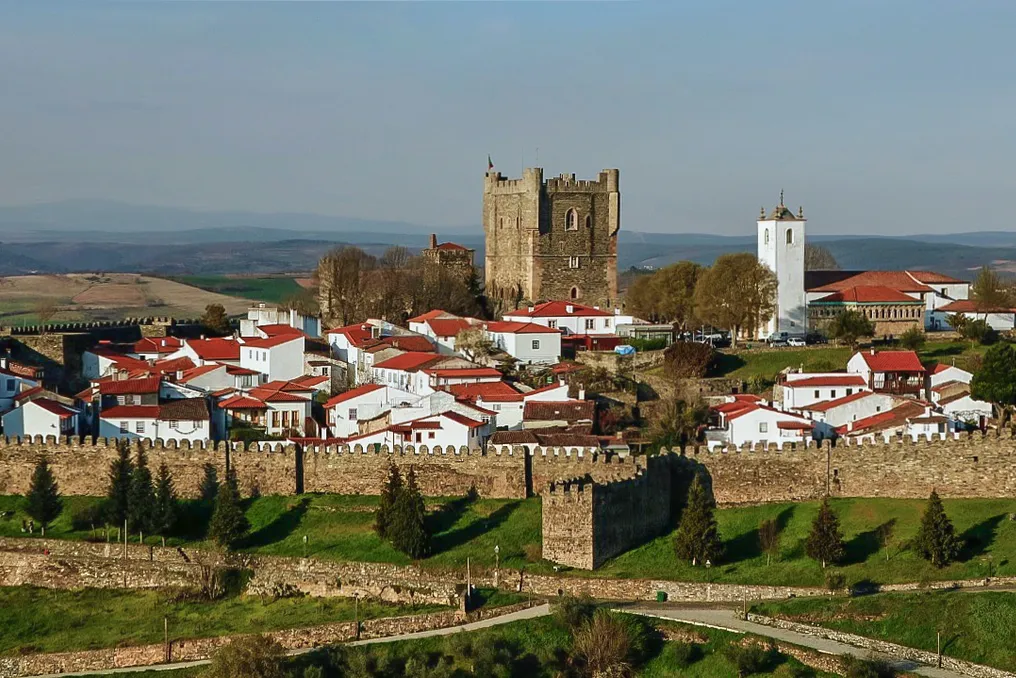
Bragança, in northeastern Portugal, reveals its forgotten historical and cultural beauties
Read more
Viagem e Turismo
viagemeturismo.abril.com.br

Bragança, in northeastern Portugal, reveals its forgotten historical and cultural beauties

Although relatively accessible, the city of Bragança, located in the far northeast of Portugal and with just under 35 thousand inhabitants, remains outside the main tourist circuit due to its distance from large urban centers. From Lisbon, the bus journey takes about six hours, while from Porto it is approximately three hours. It is important to note that there is no rail connection to the city.

Situated in the historic region of Trás-os-Montes, on the border with Spain, Bragança gained notoriety recently precisely because it is not an overly frequented destination. This place offers an alternative for exploring Portuguese history in an area often neglected in the country's internal itineraries.

The Castle of Bragança

Founded in the 12th century by King Sancho I, the Castle of Bragança constitutes one of the most emblematic points in the city's historic center. Recognized as one of Portugal's best-preserved fortifications, this citadel was declared a National Monument in 1910, featuring robust walls reinforced by fifteen towers.

Keep Tower

The Keep Tower, dated to 1430, is the main structure of the fortress and the greatest symbol of Bragança. The completion of this construction is credited as the milestone that led to the locality being elevated from a village to a city during the 15th century.

Furthermore, there is mention of the Princess Tower, where figures such as Dona Leonor, wife of the fourth Duke of Bragança, were held (supposedly unjustly) for adultery and subsequently murdered by her husband, Dom Jaime. This story may have served as inspiration for the local legend about an orphaned princess who rejected suitors proposed by her uncle, opting instead for a humble knight, which resulted in her imprisonment in the tower.

Inside the fortress, the Domus Municipalis stands out as a unique architectural attraction. This pentagonal structure historically served as a cistern and, on its upper floor, hosted meetings of the Bragança municipal administration. It is considered the only remaining example of Romanesque civil architecture in the entire Iberian Peninsula, displaying medieval characteristics with references to Roman and Byzantine constructions, which usually only survive in religious temples.

The Bragança region is world-renowned for the tradition of the 'caretos', recognized as Intangible Cultural Heritage of Humanity since 2019. In this event, people dressed in masks, colorful costumes, and bells on their waists parade through the streets to celebrate the end of winter, coinciding with Carnival's Entrudo. Although the tradition exists throughout the area, it is more prominent in the locality of Podence, located about half an hour south of Bragança.

More details about this cultural practice can be found at the Iberian Museum of Mask and Costume, which exhibits elements of local caretos and also of similar festivities held in the Spanish district of Zamora, across the border.

When heading towards the border with Spain, those seeking to learn about other aspects of local culture should visit the famous 'raiana' villages (where 'A Raia' designates the entire dividing line between the countries). Among them, Rio de Onor deserves special mention: this small settlement, with fewer than a hundred inhabitants, keeps the 'rionores' dialect alive, a specific type of Portuguese-Spanish spoken in the region. The village was even elected as one of the 7 Wonders of Portugal, in the 'Villages' category.

For nature lovers, the Bragança side offers the Montesinho Natural Park. This park covers 75 thousand hectares in the northernmost part of the region, providing mountainous landscapes reaching altitudes close to 1.5 thousand meters.
Similar stories

Falconry can be experienced in Alentejo (Portugal)
Read more
viagemeturismo.abril.com.br

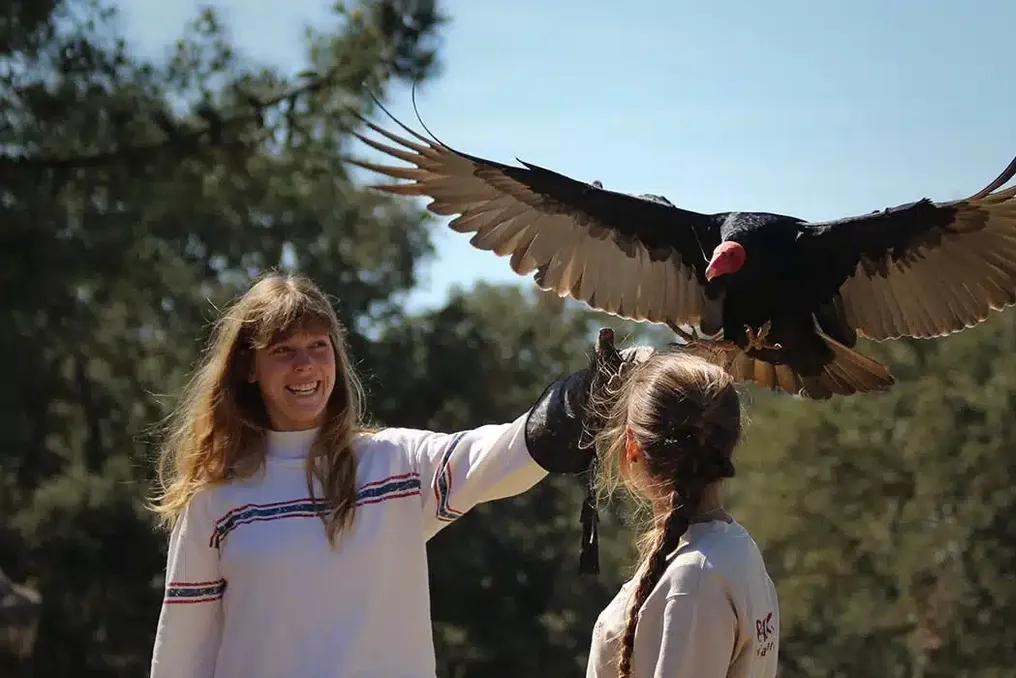
Falconry can be experienced in Alentejo (Portugal)

Falconry, an ancient practice involving the training and flight of birds of prey, remains popular in the Alentejo region. Originally used for hunting and gathering food, this activity has evolved over centuries and is now part of the local culture, involving species such as falcons, eagles, and buzzards.

In Portugal, this tradition has been included in the UNESCO Intangible Cultural Heritage National Register since 2016. The knowledge associated with this practice is passed down from generation to generation through training and preparation, and in recent years, particular attention has been paid to bird welfare, habitat conservation, and respect for nature.

The activity has two traditional formats. In high-altitude flight, falcons are released to gain altitude and pursue prey in the air. In low-altitude flight, birds such as buzzards and eagles take off from the falconer's palm and follow trajectories close to the ground, tracking the terrain and vegetation.

Those who wish to see falconry up close can visit Vila Galé Collection Alter Real, a four-star hotel in Alter do Chão. This complex is located near Coudelaria de Alter, which was founded by King D. João V in 1748 and is considered the oldest continuously operating site in the world, dedicated to breeding purebred Lusitanian horses.

The visit includes falcon flight demonstrations and the opportunity to try 'flying with a bird in a glove,' during which the visitor interacts with the predators, guiding them toward their glove. The hotel also features a Falconry Museum, displaying knowledge about the practice and animal handling.

In addition to the bird presentations, the stud farm offers tours, riding lessons, galloping, and harness driving—three disciplines of equestrianism. The hotel is situated on the grounds of Herdade da Tapada do Arneiro, a vast area of about 800 hectares, where outdoor activities such as hiking, trekking, and horseback riding are also available.

The hotel's infrastructure includes 77 apartments, two outdoor pools for adults and one for children, a spa complex with an indoor heated pool, a regional cuisine restaurant, a bar, a library, conference rooms, and a banquet hall. There is also a wine tasting room and a restored old olive oil mill with a wood-fired oven.

Accommodation starts from 150 euros per couple. Further information can be found on the Vila Galé Collection Alter Real website.

Another option for observing falcons in action is Badoca Safari Park, located in Vila Nova de Santo André. The park covers an area of 90 hectares and houses about 600 animals from over 80 species, including zebras, giraffes, and even kangaroos.

One of the complex's activities is a presentation of birds of prey featuring eagles, hawks, and vultures. For 30 minutes, a trainer demonstrates the animals' flight and discusses the characteristics of each, related to their habitat. The demonstration also reveals the anatomy of the animals and their feeding habits, distinguishing between predators that kill prey and scavengers that consume it. Visitors also observe simulations of hunting scenes inspired by the birds' behavior in nature.

Falconry sessions are held twice a day; the schedule is provided at the reception upon arrival at the park. Ticket prices start from 24 euros. Details are available on the official Badoca Safari Club website.

Popular