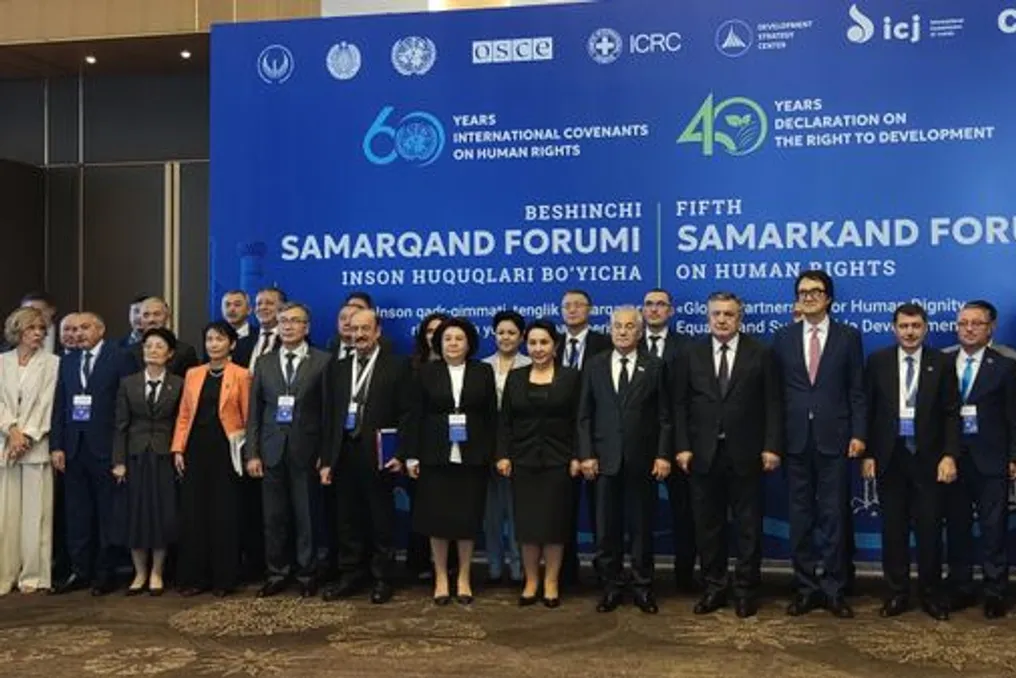
The V International Samarkand Human Rights Forum is currently being held in Tashkent and Samarkand. According to the Uzbek correspondent of Sputnik, forum participants are discussing international standards for protecting individual rights, challenges of the digital age, and the right to development.
Following the meeting, a document titled 'Samarkand's View – 2040' is planned to be adopted. This year marks historical dates: the 60th anniversary of international human rights pacts and the 40th anniversary of the Declaration on the Right to Development.
Experts emphasize that the forum is organized not for official reports, but to align international human rights standards with real life and find common answers to modern threats. Huge changes have occurred in the world over the 60 years since the adoption of the main pacts.
The Chairperson of the Senate of the Supreme Council, Tanzila Narbaeva, opened the conference and noted that numerous legislative acts aimed at ensuring citizens' rights and freedoms have been adopted in the country in recent years. She stated: 'In recent years, the Supreme Council ratified the Convention on the Rights of Persons with Disabilities, adopted laws on equal rights and opportunities for women and men, on the protection of women from coercion and violence, as well as laws on the rights of persons with disabilities and a new Civil Code. Each such law must answer a simple question: has it become easier for people to protect their rights?'
After the general sessions, the forum continued with seven parallel sessions. Participants discussed the protection of civil and political, economic, social, and cultural rights, the rights of children, women, and persons with disabilities, climate justice, the use of artificial intelligence, and the prevention of statelessness.
The development of the document 'Samarkand's View – 2040,' which aims to advance the approach to human rights, was one of the central themes of the forum. Tanzila Narbaeva put forward three proposals. The first concerns strengthening parliamentary oversight of the implementation of UN recommendations and the universal periodic review mechanism. According to her, national parliaments must ensure transparency and accountability in this activity.
The second proposal relates to the protection of human rights in the context of digitalization. The speaker stressed the need to consider human responsibility and participation when making decisions concerning fundamental freedoms. The third aspect is the principle of 'nothing about us without us,' which implies the involvement of interested groups in the decision-making process. Initially, this applied to the rights of persons with disabilities, but according to the speaker, this approach should also apply to issues related to women, youth, climate, and global security.
The importance of international and regional cooperation in the field of human rights protection was also emphasized in the address by CIS Secretary General Sergey Lebedev. He noted that 'the forum serves as an authoritative platform to unite efforts to protect individual rights, realize the right to development, and effectively respond to modern threats based on the interests of each citizen, combining international and regional experience.'
The final plenary session of the forum is scheduled to take place on September 29 in Samarkand. There, participants will continue discussions on the agenda for human rights protection and review the forum's final documents.