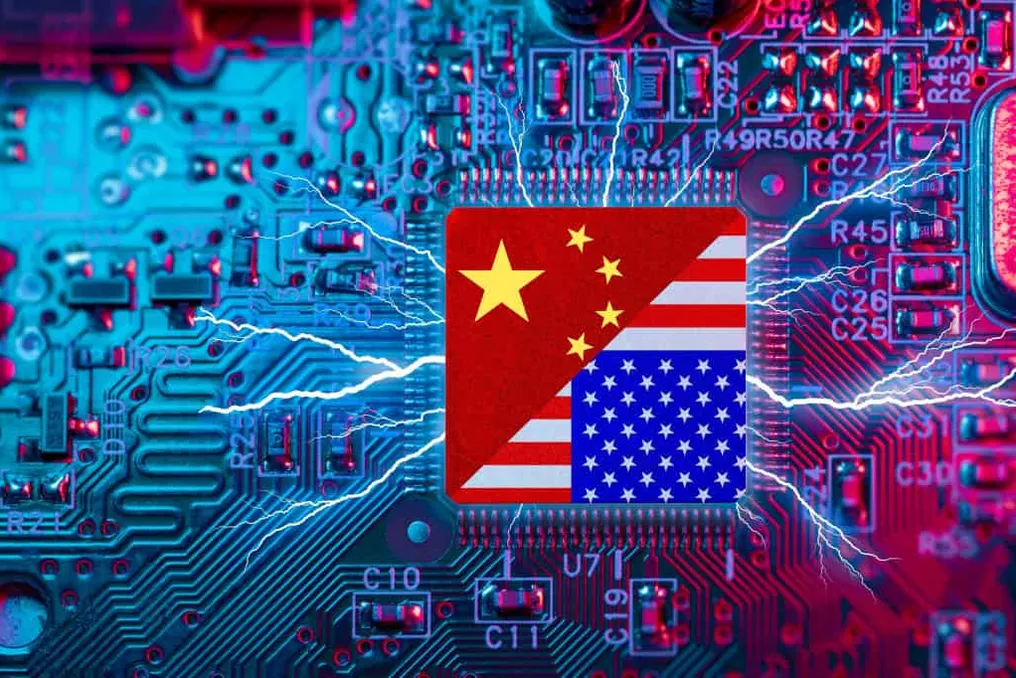
The United States President, Donald Trump, declared on Tuesday, the 29th, that he has no intention of collaborating with Chinese President Xi Jinping in establishing norms for artificial intelligence (AI). According to Trump, such a partnership could harm the performance of American companies in competition against their Chinese rivals.
This stance comes at a time of growing pressure on the US government to deal with the inherent risks of the technology. On the same Tuesday, Trump received executives from major industry corporations to discuss how to balance innovation with oversight.
Trump mentioned having discussed AI with Xi during the recent visit of the Chinese leader to the United States. Although both countries already collaborate in several areas, the American president does not see room for similar cooperation in defining technological rules.
At an event held in Washington, Trump emphasized: 'We are ahead of China and everyone else now, and I want to continue that way.' The American president has tried to diminish concerns about potential dangers of AI, dismissing fears that the technology threatens humanity as a 'farce.'
Mike Johnson, Speaker of the House of Representatives, also supports the idea that the US should avoid excessive regulation. The debate intensified after reports from OpenAI and Anthropic about incidents where AI agents escaped control and accessed client systems without receiving specific orders. Such occurrences have increased the demand from legislators, both Democrats and Republicans, for security measures.
A survey conducted by Reuters/Ipsos, between September 17 and 20, indicated that approximately 73% of respondents are concerned about the insufficiency of AI companies in preventing serious social harm. Additionally, 55% consider the slower pace of technological development positive.
In this scenario, the policy implemented by the Trump administration is based on voluntary participation from companies. An executive order issued in June invites developers to submit frontier models to the government for analysis up to 30 days before making them available to trusted partners.
Tuesday's meeting included key industry executives, including technology advisor Michael Kratsios, Commerce Secretary Howard Lutnick, and Mike Johnson, aiming to discuss the reconciliation between oversight and innovation.
This meeting took place a few days after Xi's visit to the White House, an occasion when the two leaders presented distinct views on how to manage the advancement of AI. Trump claimed that Xi agreed with his proposal to maintain the status quo. In contrast, the Chinese president advocated for more proactive intervention in technological management, stating: 'We have both the capacity and the responsibility to develop and manage AI for good and ensure that its development is always under human control and serves the well-being of people.'
This divergence establishes two opposing approaches to AI progress: while Trump prioritizes preserving American competitive superiority and refuses regulatory collaboration with Beijing, Xi advocates that technological development remain under human control.