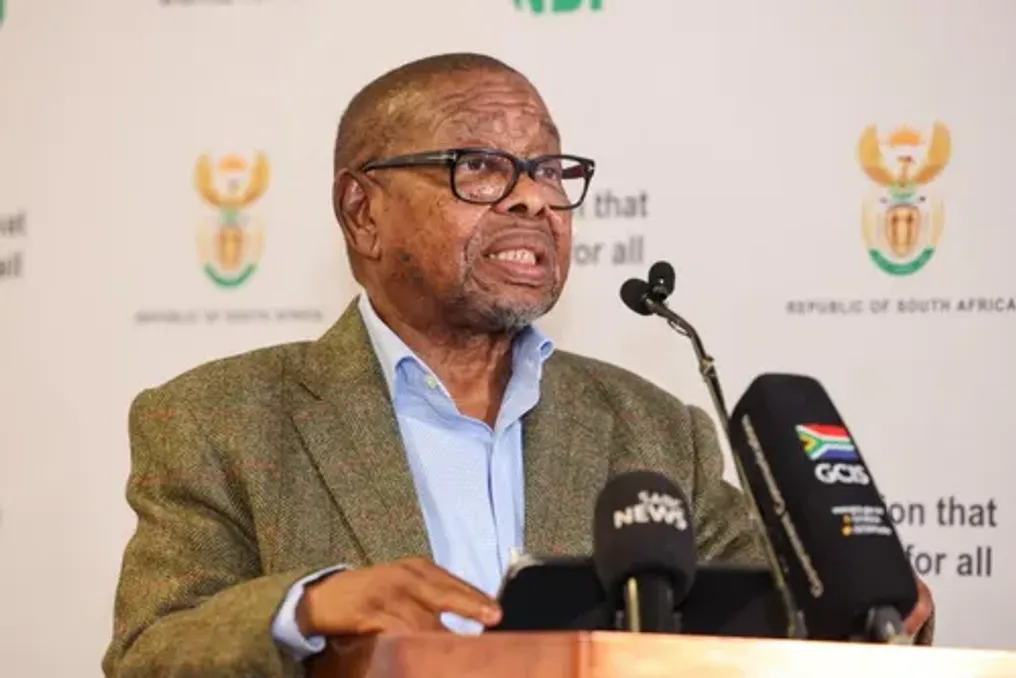
The Minister of Science and Technology, Blaise Nzimande, stated that research funding cuts from the United States have cost South Africa's science system approximately 2.5 billion rand, jeopardizing research positions and student degrees. He emphasized that the withdrawal of American funding exposed the country's dependence on external sources of funds.
Nzimande expected to present the report of the Ministerial Working Group on Science, Technology and Innovation Funding for public discussion in Pretoria. According to him, these cuts highlighted weaknesses in the financing mechanisms for crucial research programs.
The working group was established after the US government ceased funding clinical trials and medical research programs in South Africa, including work on tuberculosis and HIV. Nzimande specified that the total financial damage from this withdrawal amounts to 2.5 billion rand.
Among the institutions affected by these measures are the University of Cape Town, the University of Witwatersrand, the University of Pretoria, the South African Medical Research Council, and CAPRISA.
According to Nzimande, the South African Medical Research Council estimated that the 1.6 billion rand cuts related to the US National Institutes of Health (NIH) put 1930 research positions and 108 student degrees at risk. One of the affected projects was an HIV vaccine trial that recently lost a five-year grant worth $45 million.
Nzimande reported that the NIH indicated the possibility of restoring some funding once it is determined that it does not fall under the definition of foreign aid. The report contains several recommendations, including the need for more predictable domestic funding for strategic research, protection of critical platforms in healthcare, genomics, biotechnology, and public health, as well as increased public and private spending on research and development.
Currently, South Africa allocates about 0.62% of its GDP to R&D, which is below the national target of 1.5%. Nzimande noted that approximately 17.3% of the country's R&D funding depended on foreign donors, with medical research proving more vulnerable than some other fields.
The main recommendation, according to Nzimande, is for the country to ensure that its core priorities do not depend on foreign funding. While acknowledging the impossibility of avoiding donor funding for a developing country, he insisted that key tasks must not be dependent on it. The report also calls on South Africa to diversify its international partnerships instead of relying excessively on partners from the US and Europe.
Nzimande mentioned growing cooperation with countries such as China, as well as continuing partnerships with the US, the UK, and the European Union where mutually beneficial. He defined scientific sovereignty as South Africa's right to independently set research priorities, maintain strategic capabilities, and protect intellectual assets while maintaining international cooperation.
Furthermore, the report includes a requirement to strengthen conditions in international research agreements concerning data, intellectual property, technology transfer, local production, and skills development. Director-General Mlungisi Sele stated that achieving the 1.5% GDP target for R&D would require reviewing existing research incentives and increasing investment from the private sector.
He added that the private sector spends less than 50% of the total R&D investment and lags behind international benchmarks, while ongoing engagement with the National Treasury continues. Nzimande reported that the government is already working to strengthen domestic scientific capacity, including vaccine development. He noted that South Africa is moving beyond the 'fill and finish' stage in vaccine production and is developing its own active pharmaceutical ingredients, including in the work on an oral cholera vaccine.
Strengthening the domestic scientific base is also necessary to prepare for future health emergencies, as scientists have warned about the potential emergence of another major pandemic within the next eight to ten years, exacerbated by climate change. The report is open for public comment until December 31, and its 11 recommendations will be reviewed by the Cabinet for approval of main provisions and subsequent release for comment. The Presidency will also appoint a Scientific, Technological and Innovation Sovereign Risk Advisory Council, overseen by the National Innovation Advisory Council, as part of the implementation of the adopted recommendations. Nzimande concluded that this funding shock should serve as a catalyst for strengthening South Africa's science system, rather than a reason to abandon international cooperation, noting that the funding withdrawal revealed a vulnerability but simultaneously created an opportunity.