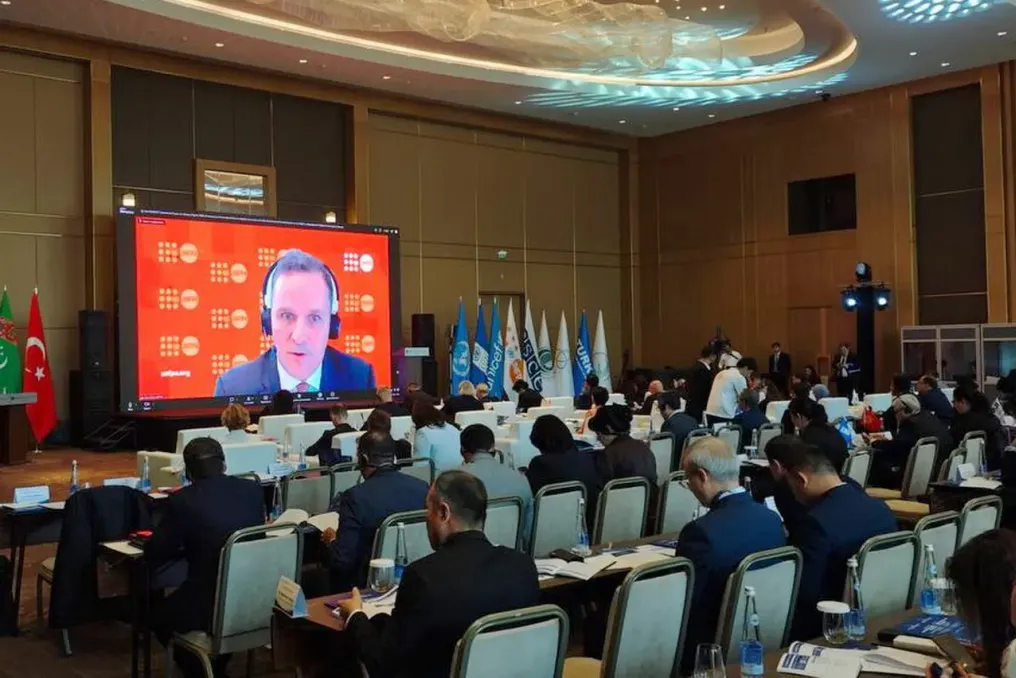
The question of how demographic changes can open new opportunities for people and contribute to sustainable development was one of the key topics at the Fifth Samarkand Forum on Human Rights. At this event, the United Nations Population Fund (UNFPA) presented international experience and approaches related to demographic sustainability, human capital, and human rights.
UNFPA's participation in the Forum began with a global discussion on the right to development. Klaus Beck, Deputy Regional Director of UNFPA for Eastern Europe and Central Asia, spoke at a panel discussion titled 'International Human Rights Covenants, the Right to Development, and Global Solidarity: A New Perspective Facing Modern Challenges.'
In his remarks, he noted that societies are undergoing profound transformations. Demographic shifts are altering population structures: some countries have a large number of young residents, while others face rapid aging and a decline in the working-age population. Migration and urbanization are transforming living and working conditions for people.
Simultaneously, climate change, digital transformation, artificial intelligence, conflicts, and humanitarian crises are creating new opportunities, but at the same time deepening existing inequalities and vulnerabilities.
From UNFPA's perspective, these changes confirm a fundamental principle: human rights are an integral part of development policy. Respecting human rights ensures sustainable development and allows societies to adapt effectively to changes.
This principle gains particular significance against the backdrop of demographic changes. Demographic trends cannot be viewed solely as numbers to be increased or decreased. Behind this data are people's lives and choices—whether it is the decision to study, work, migrate, start a family, determine the timing and desire to have children, or participate in public life.
Therefore, UNFPA promotes the concept of demographic sustainability—the ability of societies to forecast demographic changes and adapt to them while protecting human rights and expanding opportunities.
For countries with young populations, demographic sustainability means investing in education, skills, healthcare, decent employment, and the full participation of youth in society. For countries with aging populations, this implies creating conditions for a longer and healthier life, adapting labor markets and social protection systems, and recognizing the contribution of older people.
Gender equality is critically important in all demographic conditions. Women must have the opportunity to realize their professional and personal goals, build desired families, and fully participate in economic and social life. Family policies, accessible and quality childcare services, a fairer distribution of care responsibilities, safe workplaces, and equal opportunities create the necessary prerequisites for this.
The discussion continued with the UNFPA thematic session 'Demographic Sustainability: Human Rights, Human Capital, and the Well-being of Current and Future Generations.' Representatives from state bodies of Uzbekistan, international organizations, the academic community, and the private sector participated.
The discussion focused on how countries can prepare for demographic changes while keeping people, their rights, dignity, and freedom of choice at the center of state policy. Participants examined the practical significance of this approach.
For youth, this means access to quality education, modern skills, medical care, decent work, and opportunities to participate in decision-making. For women and families, this implies equal chances in education and employment, safe workplaces, accessible childcare services, and a fairer distribution of family responsibilities. For older people, this is the right to a dignified, healthy, and active life, social protection, and the opportunity to continue participating in society. For migrants, this means safe and orderly migration, protection of rights, decent working conditions, and recognition of professional skills.
Fabio Loza, UNFPA Regional Advisor on Demographic Sustainability and Policy, presented international experience. He demonstrated approaches to how states can anticipate demographic changes, utilize data and forecasts, and consider long-term trends when developing state policy.
Representatives of Uzbek state structures, international organizations, academia, and business participated in the discussion, presenting various aspects of demographic sustainability—from youth and gender equality to active aging, migration, urbanization, and the role of business. Special attention was paid to the links between demographic processes and technological development, migration, urbanization, and other socio-economic transformations.
Participants emphasized the importance of reliable data, evidence-based approaches, long-term planning, and cooperation between government, civil society, international organizations, science, and the private sector.
For Uzbekistan, this discussion is part of broader efforts to develop approaches to human capital and demographic sustainability. UNFPA continues to cooperate with Uzbekistan, providing international expertise, data, and analytical methods to support the development of long-term, human rights-based solutions.
The main conclusion of the session was that demographic sustainability starts with people. The ability of countries to forecast changes and adapt education, healthcare, employment, and social protection systems in a timely manner expands people's opportunities to realize their rights and potential. Investments in health, education, equal opportunities, and human rights today shape the human capital and well-being of current and future generations.